Section 12: Personal Safety
Each field participant is responsible for adhering to the safety rules set by the trip leader. The following provides general personal safety advice examples; be sure to provide advice so that it is appropriate for your fieldwork and location.
Behavior
- Respect cultural sensitivities and norms when preparing for fieldwork, including appropriate field clothing and use of identifiers or signs
- If permission is required, always carry documentation that grants permission to work in the area, along with personal identification
- Always maintain a professional demeanor; horseplay is strictly prohibited
- Carry a personal first-aid kit during field activities where relevant
- Practice good hygiene and wash hands before eating, taking medications, or administering first aid
Attire and Personal Protective Equipment (PPE)
- Wear clothing and take actions appropriate to the fieldwork being performed (e.g. long pants, long sleeves, and sturdy footwear with ankle support in brushy terrain; secure long hair and avoid loose clothing when working around equipment with moving parts, etc.)
- Safety glasses are mandatory when using equipment that may generate flying debris (e.g., rock chisels, chainsaws)
- Hard hats and protective footwear (hard-toed boots or slip-on protectors) must be worn as directed if advised in the Field Safety Plan
- Spare clothing and extra protection options are recommended for inclement weather
- Wear work gloves if advised in the field safety plan
- Additional PPE may include respirators, fall restraints, high-visibility safety vests, harnesses, chemical- or fire-resistant clothing, and other specialized gear as advised in the field safety plan
Respirators
The following sections explain when respirator use is required and what procedures apply, as well as the expectations for employees who choose to use disposable N95 masks voluntarily.
Required Respirator Use
Respirator use may be required if Environmental Health & Safety has determined that your exposure to a specific airborne contaminant is likely to exceed an established Occupational Exposure Limit or your supervisor or department has chosen to require respiratory protection as part of a specific job activity. If a respirator is required, the employee must contact Environmental Health & Safety to obtain medical clearance and perform a respirator fit test, as required by law, prior to use of the respirator. Fit testing and training are performed on campus, in person, and will need to be completed prior to wearing a respirator in the field.
Voluntary Respirator Use
Personnel who wear a disposable N95 mask voluntarily are not required to get a medical clearance or participate in respirator fit testing. However, the user must fill out and submit the voluntary use form in the Respiratory Protection Program Appendix H Voluntary Use of Respirators page. Please be advised that this form is mandatory for voluntary respirator use by employees.
See the Environmental Health & Safety Respiratory Protection Program for more information.
Hearing Protection
Hearing protection is required when employees are exposed to noise levels of 90 decibels or above over a time-weighted average of eight (8) hours. Exposure to noise at very high decibels would correspond to averages over shorter amounts of time (see the Hearing Conservation Program Appendix II for sound level duration). Excessive noise may be indicated by having to shout to communicate with others near you or if it is difficult to hear back-up alarms on equipment. If you have these exposures or learn of noise complaints or concerns from the team while performing work activities, consult Environmental H&S so that an adequate assessment can be made and further actions can be taken to reduce the risk of hearing loss. Do not modify equipment that has mufflers or noise reducing controls.
See the Environmental Health & Safety Hearing Conservation Program for more information.
Establishing Campsites
The following are general recommendations for camping safely during fieldwork; always be sure to provide information about the hazards in your specific location.
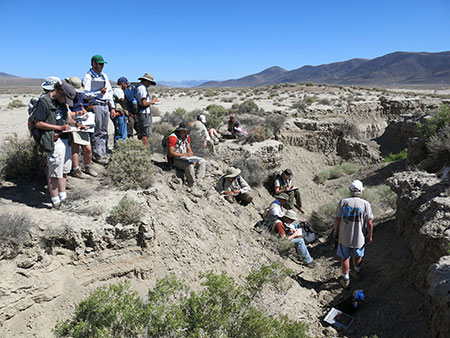
Site Selection
- Campsites should be well-drained and avoid areas prone to flooding
- Avoid camping in proximity to swamps, pools, sinkholes, or other standing water unless mosquito and other aquatic insect control is in place
- Keep the campsite and surrounding open spaces clean and free from debris, garbage, or other refuse. Locate camps to ensure drainage will not threaten water supplies
- An ideal site should be graded and free of depressions where water could collect
- Camps must be large enough to prevent overcrowding. Where animal hazards exist, consider proper food preparation, food storage, and sleeping areas that won’t attract intruders or intersect animal paths, nests, or burrows
Potable Water
Provide an adequate, approved water supply for drinking, cooking, bathing, and laundry as necessary
Refuse Disposal
- Keep garbage containers clean to maintain hygiene and deter pests
- Use fly-tight, rodent-tight, impervious, cleanable, or disposable containers for garbage storage
- Store garbage away from campsites or work areas to prevent attracting insects and animals
Campfires
Use campfires only where allowed, and seek the necessary approvals or permits for the duration of your stay. Even with the appropriate permits, do not light campfires unless conditions are safe to do so. In addition the general guidelines below, read the National Fire Protection Association (NFPA) Campfire Safety Tip Sheet and consider adding a copy to your Field Safety Plan or distributing it to team members.
- Never leave a campfire unattended for any length of time and the attendee should have the appropriate tools for controlling the fire (bucket, water, shovel, etc.)
- Keep fires as small as possible to achieve their intended purpose (cooking, warmth); you should be able to extinguish a campfire at any time
- Before going to bed or leaving, thoroughly drown fires until ashes are cool to the touch
- In some camp locations, before leaving, it may be advisable to remove fire rings and charred wood to preserve the pristine nature of the area
International Travel
Faculty, staff, volunteers, or students participating in International Travel sponsored by, related to, or affiliated with the University shall first submit an International Travel Authorization Request to BCN Risk Management prior to the date of travel. Please review the View Employee Travel Procedures section in the international travel information.
See the University Administrative Manual section 1,404 for more information about the following:
- International travel policy and procedures
- Export controls
- Insurance and travel services
- Rental vehicles
- Emergency procedures
Section 13: Workers’ Compensation Overview for NSHE Employees