Section 11: General Field Safety Guidance and Hazard Mitigation
The following guidance contains general information and links to resources where you can find specific details about various field hazards and risks, along with mitigation and emergency responses. This guidance is not comprehensive; field trip leaders must identify and consider risks associated with their fieldwork and location during pre-planning and account for these in the field safety plan.
Vehicle Use for Fieldwork
Only employees or registered volunteers of the University of Nevada, Reno may operate University-owned vehicles. All drivers of vehicles owned by the State of Nevada must complete Defensive Driving Training or an approved, follow-up refresher course within the last four years.
Use vehicles suitable for the terrain, road conditions, and predicted hazards in the area. Rental vehicles are not approved for off-road use; use departmental or fleet vehicles.
Avoid storing vehicles near fuel storage tanks, and when possible, maintain clear, well-lit space around vehicle storage areas to prevent accidents. Secure vehicle keys when vehicles are unattended and lock storage structures upon departure.
Reduce speed in rocky and dirt/gravel terrain and maintain safe distances between vehicles to prevent accidents due to sudden braking in a preceding vehicle.
Ensure regular maintenance per manufacturer recommendations and perform safety inspections prior to departure for field work. Equip vehicles with a spare tire, jack, tire irons, a flashlight, and safety signage.
Off-road Vehicle Handling and Tips
- Use slower speeds on ice and wet roads to prevent sliding or hydroplaning
- Slow down when crossing water bodies to avoid loss of control, engine flooding, or other vehicle damage
- Don’t attempt to use 2-wheel drive vehicles in muddy, sandy, rocky/rough, or snowy/icy terrain; use the appropriate high or low setting in 4-wheel drive based on the road conditions
- When meeting on a narrow road on a hill, the uphill person should pull to the side of the road or back up to a wider portion of the road to allow safe passing
- If airing-down tires for loose terrain, use an inflator device or pump to return tires to the recommended pressure for paved road travel
Use of All-Terrain Vehicles (ATVs), Utility-Terrain Vehicles (UTVs or Side-by-Sides) and Related Equipment
Some fieldwork participants will be unfamiliar with ATVs/UTVs. Be sure to provide training where they can demonstrate competency in conditions similar to where they will be working in the field. See the ATV Safety Program content on the Consumer Product Safety Commision ATV Safety site for ATV use guidance. Additionally, follow these general recommendations:
- Require use of a DOT-, Snell-, or ANSI-approved helmet at all times
- Wear goggles, gloves, over-the-ankle boots, long sleeves, and pants
- Read owners’ manuals carefully and operate equipment according to manufacturers’ recommendations
- Never allow more passengers to ride on ATVs or UTVs than the rated for the vehicle
- Attached equipment may affect stability; evaluate before and after installation
- Do not operate ATVs or UTVs on streets, highways, or paved roads
Machinery and Equipment
- Read owners’ manuals carefully and operate equipment according to manufacturers’ recommendations
- Inspect all tools, equipment, and machinery for proper function before and after use
- Perform maintenance according to manufacturers’ recommendations
- Do not use damaged or malfunctioning equipment; report issues immediately
- Only trained personnel should operate equipment independently
- All training should be documented
Loading and Unloading Equipment
- Secure loads with straps, chains, or lines before moving vehicles
- Provide proper unloading equipment and safety gear at the field site
- Use proper techniques and control measures when lifting or moving equipment
- Label equipment "too heavy for manual lifting" if manual handling is unsafe
Boats and Watercraft
- At least one team member must hold a valid certification appropriate to the watercraft size and use (where certification is needed)
- Follow all local and other applicable rules and regulations
- Inspect boats for damage before departure
- Always carry life jackets and buoyancy aids for all participants; know regulations regarding when and where they should be worn or stored
- Even if life jackets are only required to be on board for each passenger, wear them during rough, stormy conditions or when perming work where someone may fall overboard
- Use proper anchor points and anchor boats securely before shutting off engines
- Check small craft and weather advisories; do not attempt to perform field work during dangerous conditions or when weather is expected to deteriorate
Terrain
Identify expected terrain types and their hazards prior to departure; prepare accordingly. The following sections list examples of hazards and mitigation strategies for some of the more common terrain types found in Nevada to help with ideas to include in your field safety manual, but there are many more terrain types where University research happens. Be sure to identify hazards and mitigation strategies for the specific terrain in the areas where your team performs fieldwork.
High Altitude Areas
Low temperatures and humidity, increased ultraviolet radiation, and lower oxygen content at elevation can lead to health risks. See the CDC guidance for High-Altitude Travel and Altitude Illness for guidance as well as adhering to the following recommendations:
- Plan for acclimatization time when gaining altitude in elevations where altitude sickness may occur
- Medical evaluation is recommended before high-altitude excursions
- Stay hydrated, rested, and aware of acute mountain sickness (AMS) symptoms
- Use buddy systems for safety
Slopes
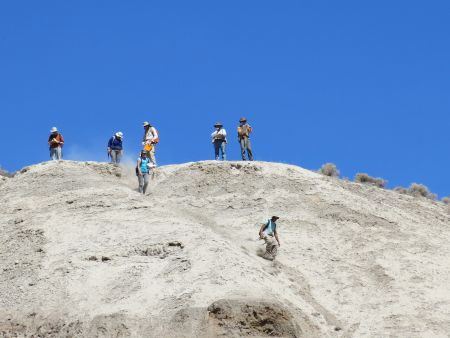
Ascending and descending slopes can be facilitated by using trekking poles, wearing supportive footwear, ensuring secure footing for each step, and using switchbacks.
Waterbodies
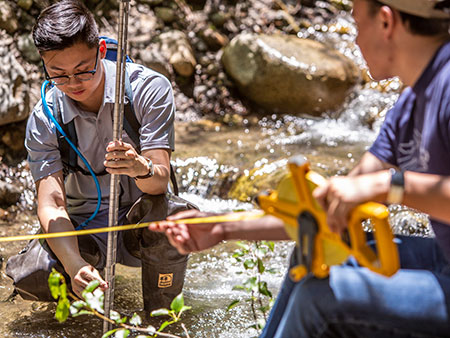
- Wear Personal Floatation Devices (PFDs) when working near moving water and follow PFD rules within watercraft
- Select the appropriate PPE (wetsuit, drysuit) considering water temperature
- Use extreme caution with hip-boots or waders near moving water where falling can cause a person to be swept away
Desert Areas
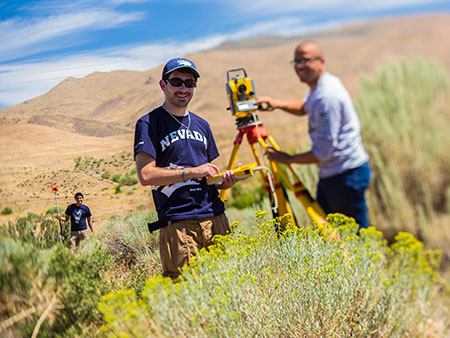
Deserts commonly have drastic temperature shifts between day and nighttime extremes due to lack of humidity. In addition to the guidelines below, see the CDC guidance for sun exposure, heat illnesses, and cold weather and travel for further guidance. Also review the Environmental Health & Safety Heat Illness Prevention Program for responsibilities and control measures.
- Document expected local weather patterns and potential temperature extremes in the Field Safety Plan
- Employ measures to prevent dehydration and sun overexposure
- Be safety-conscious when trekking, working, or camping in dry waterways and channels, which can flood quickly even with storms at a distance
Trenches and Excavation
- Follow all OSHA regulations on trenching and excavations to prevent cave-ins
- SLOPE or bench trench walls
- SHORE trench walls with supports, or
- SHIELD trench walls with trench boxes
- Consult Environmental Health & Safety for further guidance
Weather and Climate
In addition to the expected weather patterns and climate conditions for a location, be aware that storms and other environmental factors can cause rapid changes in the field environment. Check weather forecasts before departure; adverse exposure prevention is preferable to treatment. In addition to guidance listed below, remember that appropriate clothing for the conditions, extra clothing and the ability to add or remove layers will be important for maintaining comfortable working conditions.
Heat-Related Hazards
- See the Environmental Health & Safety Heat Illness Prevention Program for responsibilities and control measures
- Supervisors are required by Nevada law to ensure a job hazard analysis (JHA) is completed for positions where employees may be exposed to conditions that may result in heat illness for more than 30 minutes in any 60-minute period
- See the OSHA Job Hazard Analysis guide (PDF) or contact the University of Nevada, Reno Environmental Health & Safety Department for information about conducting a JHA
Cold-Related Hazards
See the OSHA winter weather guidance for preventing cold stress in addition to the CDC guidance for cold weather and travel.
Severe Weather
- Research the types of severe weather that can occur in your research area and plan accordingly. Examples include blizzard/white-out conditions, high winds, lightning storms, tornadoes, hurricanes/monsoons, dust storms and many more.
- Use weather alerts, alarms, or apps
- Review the National Weather Service lightning safety facts (PDF) to learn about the 30-30 lightning rule and other important recommendations
- Seek shelter for 30 minutes if thunder occurs within 30 seconds of lightning
- At high elevation/exposed sites, move to lower elevations or sheltered areas during lightning or high winds; during lightning storms, avoid wet caves where water can carry current
- If caught in an open area during a lightning storm, lie flat and cover your head; do not sit
- Seek shelter during hail storms, dust storms, and severe winds where blowing objects can be hazardous
- Leave early to avoid severe weather when possible; plan safe routes to exit hazardous areas
Rain and Flooding
- Do not enter creeks or fording points unless water depth is verified to allow safe crossing or sampling activities
- When driving, avoid entering water if the depth meets or exceeds vehicle clearance
- Avoid using long water boots and waders, which can increase the chance of drowning, unless necessary for toxicity or temperature concerns
- Don’t wade into water bodies without another individual present on shore
Native Fauna and Flora in the Field
All field workers must recognize that they are entering the natural habitat of native flora and fauna. As visitors, it is every worker’s responsibility to minimize their impact and leave minimal evidence of their presence.
Research and plan for encounters with potentially dangerous flora and fauna endemic to your specific research area before embarking. Address location-specific hazards in the Field Safety Plan and during the Field Safety Briefing.
University of Nevada, Reno field research occurs in a variety of environments where safety and illness hazards vary widely. The examples and guidance in this Field Safety Manual Development Guide are provided as examples of general hazards and mitigation strategies. The following guidance does not account for all hazards and may overrepresent other. As a local example, in Nevada, black bears live in some mountain ranges, but are completely absent from others. Research and prepare for the situation in your specific research location.
Fauna
Fieldworkers should protect themselves and others by avoiding hazardous wildlife, using basic protective measures, and preventing the spread of zoonotic diseases through careful hygiene and equipment decontamination.
General Precautions
Injury or illness from living organisms can result from a variety of physical and trauma hazards. These hazards may be a result of animal attacks and defensive actions (bites, scratches, trampling, constriction, and goring), envenomation (snakes, spiders, scorpions, jellyfish), allergic reactions to animal products (dander, fur, saliva, excrement), parasitic infections, and other interactions with animals. To minimize chances of injury or illness related to living organisms, follow these general precautions:
- Carefully inspect for insects or other hazardous animals (e.g., snakes, scorpions, spiders) before placing hands, feet, or your body in areas where these creatures may live or hide, such as wood piles and crevices
- Use appropriate insect repellents as needed, but only if they will not endanger susceptible animals being studied
- Equip first aid kits to treat bites or stings. Seek immediate medical attention if bitten or stung by a venomous organism, if a bite/sting becomes inflamed, or if a person exhibits signs of anaphylaxis
- Shake clothing and bedding before use to dislodge any hidden pests
- Avoid contact with sick or dead animals to reduce risk of disease
- Minimize use of lights after dark, as they may attract certain unwanted organisms
- Take appropriate precautions where a heightened chance of illness occurs in animal habitats (e.g. hantavirus from rodent droppings, histoplasmosis from bat guano, water parasites, etc.)
Zoonotic Diseases
Specific caution should be given to preventing zoonotic diseases, which result from germs that spread between people and animals. Zoonotic illness can be caused by bacteria, viruses, parasites, and fungi associated with animals and can be transmitted through food and water; contaminated bodily fluids, such as saliva and urine; close contact; and bites and scratches. These illnesses can range from relatively mild (e.g. ringworm) to life threatening disease (e.g. rabies). Field participants should decontaminate all field materials both prior to the field trip and before leaving the field site to avoid moving disease vectors between locations.
A helpful list of zoonotic diseases can be accessed through the Center for Disease Control and Prevention (CDC) Facts About Diseases that Can Spread Between Animals and People. Examples of the types of illnesses that can be contracted around Nevada are listed below; it is not a comprehensive list. Ensure that fieldwork participants know which vectors and diseases are endemic to your field site. Visit the links below for specific information about the following diseases:
- CDC information about Hantavirus
- American Lyme Disease Foundation information about Lyme Disease
- CDC information about Rabies
- CDC information about plague
- CDC information about tularemia

Flora
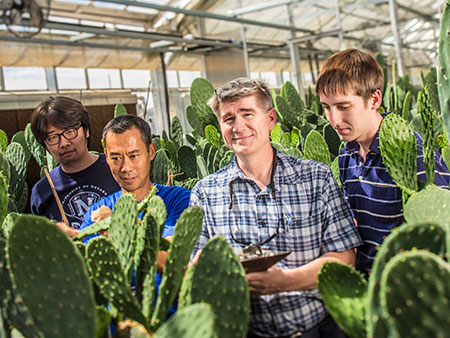
Plants can create certain hazards for field work teams, which can include cuts and puncture injuries, rashes and skin irritation, and poisonings, among others. The following are some general guidelines to follow when working around plants that could potentially be hazardous:
- Do not eat any wild plants unless you have properly identified them and are certain they are not poisonous nor carry parasites
- For information on poisonous plants, consult the FDA’s Poisonous Plant Database
- Be aware that plants may be coated with airborne pollutants (e.g. pesticides, toxic dusts), may cause skin irritation (e.g. poison oak, stinging nettle) or may harbor pests (e.g. ticks); avoid brushing against hazardous plants with bare skin
- Take appropriate precautions and consider PPE (gloves, special clothing, eye protection, etc.) when working in areas that have hazardous plants
- Be cautious of low, overhanging branches that could cause injury or vegetative tripping hazards on the ground
Contaminated Water
Be aware of health risks associated with waterborne pathogens, parasites, and water contaminants. Some water sources are stagnant, and others may pose health risks due to natural (e.g. arsenic) or human-influenced contaminants (e.g. mercury from past mining activities). Additionally, running water that has been tainted by runoff containing improperly treated waste can contain microbes or harmful chemicals, making it unsafe to drink.
Examples of a few illnesses resulting from pathogens and parasites include hepatitis A, leptospirosis (Weil’s Disease), schistosomiasis, polio, Legionnaires' disease, giardiasis, cryptosporidiosis, and neurotoxic effects from harmful algae blooms (HAB). The CDC offers resources on waterborne diseases. A few, generalized tips include:
- Wear waterproof gloves when handling water that may be contaminated
- Do not drink water that has been not confirmed to be safe
- If filtering/treating water, use a system that is appropriate for the local conditions (microbes, chemical contaminants, etc.)
Biologic Hazards Related to Remote and International Locations
When working in remote or overseas locations, exercise caution when consuming food and drinks prepared by others where safety standards and norms may differ. Be cautious about accepting ice in drinks in these locations as well. Learn about local hygiene, customs, and safety considerations. For example, fields may be cordoned off in certain ways where there are soil-borne pathogens that can easily spread from one field to another if walked or driven through.
Chemical and Biological Materials
Fieldwork may involve research with chemical and biologic agents. Some general recommendations regarding safety and hazard mitigation when using these materials follow, but as with other areas of this guidance material, these are generalized recommendations. Add guidance for the specific chemical and biological hazards you may encounter with your field work to your field safety plan.
Chemicals
Understand the safety and risks associated with chemicals you expect to use or encounter. The Environmental Health & Safety Training page allows employees to register for an online Hazard Communication training. This course satisfies the OSHA Standard 1910.1200, which requires training for all employees who use or are exposed to chemicals and/or hazardous materials in the workplace in order to protect them from potential hazards. Environmental Health & Safety also offers general and group-specific training related to lab safety, biosafety, and specific training with materials that may be encountered in the field or used for research (e.g. asbestos, silica, formaldehyde, radioactivity, laser safety, etc.). Contact Environmental Health & Safety at (775) 327-5040 to inquire about training availability or to request training for your group.
Handle chemicals according to the guidelines outlined in the Chemical Hygiene Plan, including proper transportation procedures for hazardous materials. Researchers using laboratory chemicals at a field site must consult with the Environmental Affairs Program before departure to ensure proper segregation, collection, and transportation of waste back to campus, if necessary. Additional precautions such as extra secondary containment, absorbent pads, and waste containers should be specified in the Field Safety Plan.
When gas cylinders are needed for field activities, follow proper transportation procedures: remove regulators, close valves, and securely place cylinder caps prior to transport. Toxic, reactive, pyrophoric, or corrosive gases should not be transported by students or faculty in vehicles. Cylinders must not be placed inside the passenger compartment and must be secured in the cargo area to prevent movement. Avoid exposing cylinders to high temperatures.
Biological Materials
Handle biological materials in accordance with the Biosafety Manual and consult with the Institutional Biosafety Committee.
Agrochemicals
Obtain information from the landowner about recent or upcoming crop spraying to determine when field entry is safe. Do not enter fields until it is confirmed safe to do so, as skin contact with chemicals may be hazardous. Wear PPE as warranted by the conditions and substances in use.
Interacting with the Public
The following sections provide guidance for safely and professionally interacting with the public, landowners, and community members during fieldwork.
Private Property
- Whenever possible, contact property owners or managers before arriving and remind them about the purpose of your visit and how long you expect to be there
- Do not enter private land, property, or buildings unaccompanied or without explicit (preferably written) permission from the authorized person. Ensure that landowners and their employees are aware of your permission to perform work
- Leave gates as you found them (opened or closed)
- If accompanied by a landowner or designee, respect that it is their territory and allow them to lead the way
- Exercise caution when documenting findings, especially if the information is sensitive
- Maintain professionalism and be mindful of your body language, as it can communicate more than words
- Keep your work area orderly and maintained; remember you are a guest on someone else’s property
Unexpected Behavior
- Be aware of local customs and attitudes regarding land use and access.
- If individuals on the property appear intoxicated or inexplicably nervous about your presence, do not enter
- If confronted by someone acting aggressively, keep your distance, remain calm, speak softly and slowly, and avoid aggressive gestures or postures
- Avoid getting drawn into arguments; aim to defuse the situation peacefully
- If you feel you may be in danger, identify possible escape routes and try to leave quickly, moving toward areas where other people are present
- Consider carrying a personal alarm for safety where applicable (e.g. community research)
Strangers and Public Places
- Research and vet individuals you may meet, work with, or interview
- Arrange meetings at neutral locations where neither party is at risk
- Whenever possible, conduct interviews in the presence of an observer