Facundo Scordo: Lakes as sentinels of global environmental change: Wildfires, hydroclimate, and human impacts
 Title
Title
Lakes as sentinels of global environmental change: Wildfires, hydroclimate, and human impacts
Mentor
Department
Biosketch
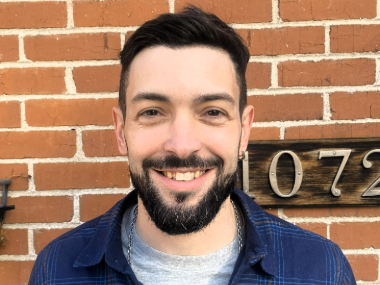
Facundo Scordo, Ph.D., is a research assistant professor in the Department of Biology at the University of Nevada, Reno. His research focuses on wildfire impacts on freshwater ecosystems, human-driven stressors on lakes and rivers, and the resilience of aquatic ecosystems under global environmental change. He also serves as co-coordinator of the Castle Lake Environmental Research and Education Program.
As a limnologist and environmental scientist, Scordo conducts research across a wide range of aquatic systems in North and South America, including extensive work in Argentine Patagonia. His research spans iconic lakes such as Crater Lake, Lake Tahoe, and Castle Lake, and integrates field observations, laboratory experiments, and modeling approaches. His work centers on three main themes: (1) human stressors affecting lake and river systems, (2) freshwater ecosystem resilience under global change, and (3) wildfire emissions and their impacts on water quality. Through these efforts, he examines how global change, land use, and human activities influence water quality, ecological resilience, and community vulnerability.
Scordo has collaborated with state, national, and intergovernmental organizations, as well as Tribal Nations and private landowners. He has established an international research network with collaborators in Argentina, Guatemala, Japan, Cambodia, Italy, and the United States. He is an active member of the Global Lake Ecological Observatory Network.
Project overview
This project uses lakes as sentinels of global change, meaning they act as early warning systems that reflect the effects of climate change, wildfires, and human activities. Because lakes respond quickly to changes in temperature, rainfall, and air quality, they provide valuable insight into environmental conditions. This project focuses on understanding how these factors influence lake water quality and aquatic life, using Castle Lake in northern California as a long-term study site.
The student will receive hands-on training in laboratory work, field sampling, and computer-based data analysis, developing a broad set of transferable scientific skills. The student will work closely with the research team and be trained in laboratory safety, proper use of scientific equipment, and data management.
In the laboratory, the student will analyze chlorophyll, a green pigment used to estimate algae abundance, an important indicator of lake health. The student will extract chlorophyll from water samples using acetone, measure concentrations with a spectrophotometer, and learn proper laboratory techniques, including sample handling, chemical safety, equipment operation, and data recording.
The student will participate in fieldwork at lakes and surrounding areas, collecting environmental samples to assess current lake and watershed conditions. Tasks include collecting water samples to measure nutrients and algae, sampling atmospheric deposition (including wildfire smoke particles), and collecting aquatic invertebrates to evaluate ecosystem responses. The student will learn field sampling methods and proper sample labeling, storage, and transport.
The student will organize and analyze data collected from the laboratory and field. This includes entering and managing data in spreadsheets, creating graphs to visualize changes in lake conditions, and examining how events such as wildfire smoke influence algae growth.
As a final product, the student will produce a poster to be presented at the Wolf Pack Discoveries symposium and a 4-page research report demonstrating how chlorophyll levels in Castle Lake change over time and under different environmental conditions. The project will provide hands-on experience in fieldwork, laboratory work, data analysis, and science communication while contributing to understanding of lake responses to global change.
PACK RESEARCH EXPERIENCE PROGRAM INFORMATION AND APPLICATION