Saeedeh Naziri: Evaluating enzyme-induced carbonate precipitation (EICP) as a bio-inspired approach for sustainable waste containment barriers
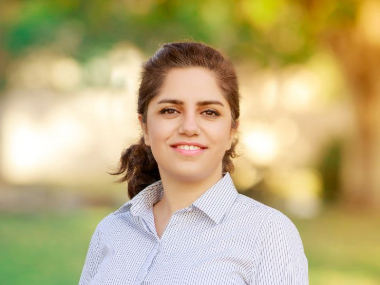 Title
Title
Evaluating enzyme-induced carbonate precipitation (EICP) as a bio-inspired approach for sustainable waste containment barriers
Mentor
Department
Geological Sciences and Engineering
Biosketch
Saeedeh Naziri, Ph.D., is a teaching assistant professor in the Department of Geological Sciences and Engineering at the University of Nevada, Reno. She earned her doctorate in civil engineering, with a focus on geotechnical engineering, from New Mexico State University. Her research interests include bio-inspired techniques in geotechnical engineering, sustainable soil improvement, geoenvironmental engineering and waste containment systems. Her current work explores the potential use of enzyme-induced carbonate precipitation and microbially induced carbonate precipitation to improve soil barriers, reduce hydraulic conductivity and limit the movement of contaminants from waste facilities. She teaches courses in geological engineering data analysis, hydrologic fluid dynamics and geoenvironmental engineering. Naziri enjoys introducing undergraduate students to research and helping them to develop practical skills. Outside the University, she enjoys hiking, playing tennis, swimming, playing backgammon, taking care of her houseplants, and doing 3D puzzles.
Project overview
Waste containment systems, such as landfills, use geosynthetics and compacted soil barriers to limit the movement of contaminated liquids into surrounding soil and groundwater. Improving the performance and sustainability of these barriers is important for protecting soil and groundwater while reducing the environmental impacts associated with conventional engineering materials and methods. This project will evaluate the potential of enzyme-induced carbonate precipitation (EICP), an emerging bio-inspired soil-improvement approach, to enhance soil barriers used in waste containment systems. EICP promotes calcium carbonate formation within soil pores, which may reduce hydraulic conductivity and improve barrier performance.
The Pack Research Experience Program (PREP) student will conduct a focused literature review on EICP-treated soils as part of a broader review study on the application of EICP to waste containment. The student will receive training in searching academic databases, evaluating peer-reviewed literature, organizing references, extracting data, and interpreting scientific findings. For relevant studies, the student will compile data on soil properties, EICP treatment materials and procedures, treatment cycles and conditions, and hydraulic conductivity before and after treatment. The compiled data will be analyzed to evaluate how soil properties and EICP treatment factors influence hydraulic conductivity and to identify trends and gaps in existing research.
The project will also include a laboratory component in which the student will gain hands-on experience conducting particle-size distribution and hydraulic conductivity tests on soils. With guidance from the faculty mentor, the student will integrate findings from the literature, data analysis, and laboratory activities into summary tables and figures. By the end of the project, the student will contribute to a literature review and prepare a research report and poster summarizing the major findings and the potential of EICP to support more sustainable and environmentally friendly waste containment systems.
Student Training Opportunities
- Guided training in developing keywords and search strategies for academic databases and identifying relevant peer-reviewed literature
- Hands-on training in using Zotero to organize, manage, and cite scientific references
- Training in extracting, organizing, and analyzing published experimental data to identify trends and relationships
- Hands-on laboratory training in soil particle-size distribution and hydraulic conductivity testing
- Training in communicating research findings through technical tables, figures, a research report, and a research poster
Required Qualifications
- Interest in environmental engineering, geological engineering, civil engineering, sustainability or related fields
- Basic reading, writing and computer skills
- Strong organizational skills and attention to detail
- Willingness to learn new research and reference-management tools
- Ability to work independently, communicate regularly with the faculty mentor and meet project deadlines
Maximum hours per week
The PREP student will be expected to work on the project for a maximum of 10 hours per week.
Pack Research Experience Program information and application