Andrew Hess: Seasonal changes in wool fiber diameter
 Title
Title
Seasonal changes in wool fiber diameter
Mentor
Department
Agriculture, Veterinary, and Rangeland Sciences
Biosketch
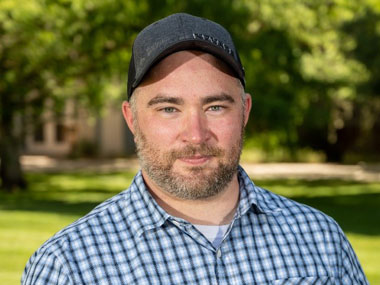
Andrew Hess, Ph.D., earned his doctorate in interdepartmental genetics (animal breeding and genetics, with a statistics minor) from Iowa State University in 2016. He is an assistant professor of animal genomics at the University of Nevada, Reno, where his research combines genomics and precision livestock technologies to study resilience and productivity in small ruminants. His work with the Rafter 7 flock uses tools such as GPS collars, temperature sensors, and genomic data to understand how animals adapt to challenging environments. Hess is dedicated to connecting data-driven approaches to real-world agricultural challenges and to preparing the next generation of scientists and agricultural leaders to address pressing challenges in animal production and sustainability.
Project overview
The project will focus on the question: how does wool fiber diameter change across the year, and what do those changes reveal about animal health and adaptation? Wool growth is a continuous process, but fiber diameter can shift in response to nutrition, environment, and physiological stress. These changes affect both product quality and animal welfare. The student will work with existing wool samples from the University’s research flock, which already have detailed measurements of fiber diameter taken along the length of the staple. They will analyze seasonal patterns, summarize results, and relate them to environmental or management conditions. Students will gain skills in handling and interpreting biological datasets, statistical analysis, and scientific communication.
PACK RESEARCH EXPERIENCE PROGRAM INFORMATION AND APPLICATION