Ran Duan: Visual design in wildfire smoke communication: Promoting message effectiveness and informed decision-making
 Title
Title
Visual design in wildfire smoke communication: Promoting message effectiveness and informed decision-making
Mentors
Department
Biosketch
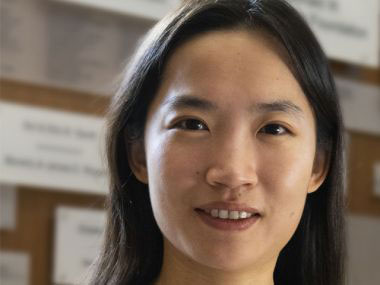
Ran Duan is an associate professor at the Reynolds School of Journalism at the University of Nevada, Reno. Her research interests span the areas of environmental, science, risk, and visual communication, such as the uses and effects of visuals in the communication of wildfire and climate change, and the development of scales for measuring visual literacy in science communication. She received a Ph.D. in Media and Information with a Specialization in Environmental Science and Policy from Michigan State University in 2018.
Project overview
Currently, in wildfire smoke risk communication, warning messages are sometimes vague. The differences in exposure, health impacts, and coping strategies for different risk groups are not clarified. Warning graphics must be designed in a way that elicits attention to important threat facts and key call-to-action information. In this project, the student will work with the mentor on designing an online experiment that tests how visual symbols, colors, and (un)familiar icons carry core threat and efficacy messages effectively. In addition, we will test how audience characteristics influence the message processing mode, causing message fatigue or overwhelmingness, overreaction or underestimation of the wildfire smoke risks. The Pack Research Experience Program (PREP) student will be trained in questionnaire design, social science experimental protocol development, and risk perception data cleaning and analysis.
Student Training Opportunities
- Questionnaire design
- Social science experimental protocol development
- Data cleaning
- Data analysis
Required Qualifications
- Good GPA
- Can dedicate 7-10 hours per week for Spring 2027
- Have passion for visual communication, health communication, and media research
Maximum hours per week
The PREP student will be expected to work on the project for a maximum of 10 hours per week.
Pack Research Experience Program information and application