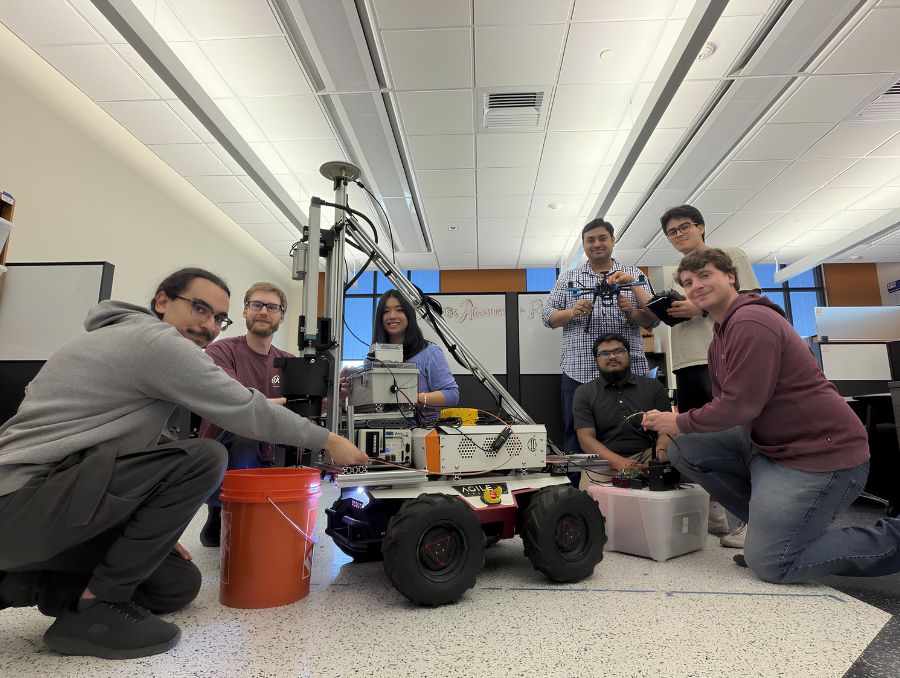
The Basque sheepherders who emigrated to Nevada in the 1800s would be amazed to see what’s going to be happening in the hills of Nevada today: a “RoboHydra” robot wandering with the sheep, providing them with water and tracking their movement and health.
Researchers at the University of Nevada, Reno are developing an autonomous mobile robotic watering system, paired with a facial-recognition artificial intelligence model, that will digitally identify each sheep and automatically capture and store detailed health and performance data that can help producers identify early signs of illness and make more informed breeding and management decisions.
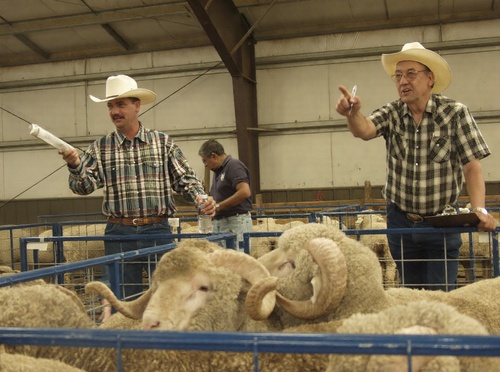
The project is one of two University projects recently awarded $1,150,000 each over the next four years to promote sheep production and health and enhance grazing management. The second project complements the first, creating a broader, national set of data for the sheep industry, including traits such as health indicators, feed intake and wool quality, and pairing it with genetic, microbial and economic data. Both projects are funded by the Agriculture and Food Research Initiative, a program of the U.S. Department of Agriculture’s National Institute of Food and Agriculture. The projects build on the University’s long-standing sheep research programs, including its development of the Rafter 7 Merino line more than 30 years ago, which is internationally recognized for its fine wool and meat quality.
RoboHydra: Delivering water, protecting pastures
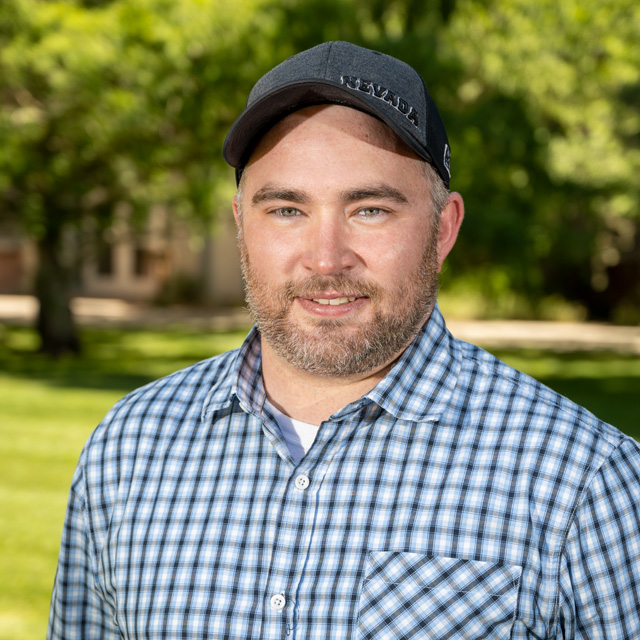
The first project is a first-of-its-kind project in the sheep industry and includes a multidisciplinary team of researchers from the University’s College of Engineering and College of Agriculture, Biotechnology & Natural Resources. The team is led by Parikshit Maini, assistant professor of robotics in the Department of Computer Science & Engineering; and comprises Andrew Hess, assistant professor of animal genetics and breeding in the Department of Agriculture, Veterinary & Rangeland Sciences; Ankita Shukla, assistant professor of artificial intelligence in the Department of Computer Science & Engineering; and Tracy Shane, livestock specialist with the University’s Extension unit. The project team also includes collaborators at Texas A&M University.

In the first phase of the project, Maini and his students in the Systems and Algorithms For Robot Autonomy Lab will develop the RoboHydra robotic watering system designed to guide sheep to underused pastures, promoting uniform grazing and improved rangeland soil health. The team will build RoboHydra in stages, beginning with a small prototype that can carry about 110 pounds to test movement and basic functions. Once proven, the team will scale up to a rugged, full‑size platform weighing up to 4,000 pounds and able to haul up to 1,100 pounds of water, enough to support a flock of about 50 sheep.

Instead of relying on a fixed trough, RoboHydra will carry a closed water tank and use a push‑activated bowl so sheep can drink on demand. A flow meter will track how much water each animal consumes. An onboard computer will use this information to evaluate grazing and water‑use patterns and determine when and where the robot should move next.
“We’re putting autonomous robots and sheep together in real pastures, not controlled labs, and developing advanced algorithms to let them interact safely,” Maini said. “That gives us a powerful way to provide water, protect the land, and learn how individual animals are coping with heat and limited water.”
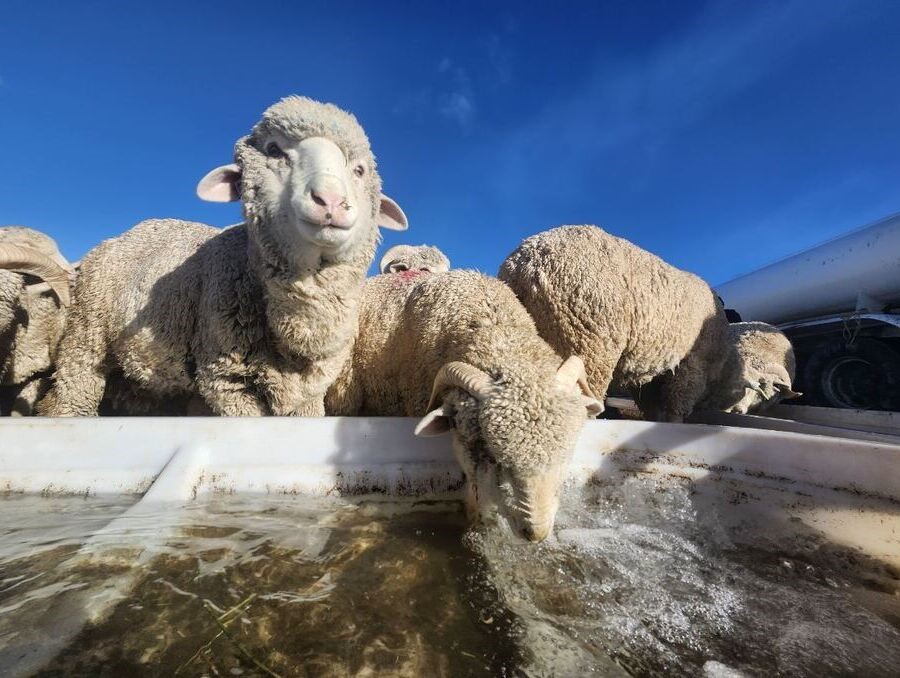
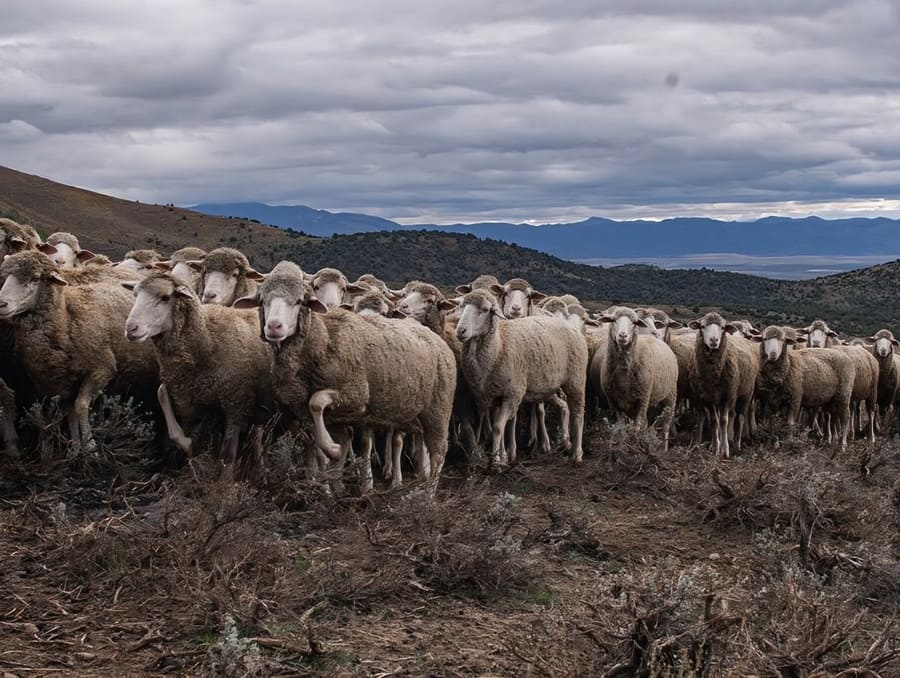
RoboHydra will be tested at the University’s Main Station Field Lab using 300 of the Rafter 7 Merino yearling rams. Hess oversees breeding selection of the sheep at the University’s Great Basin Research & Extension Center in Eureka, Nevada, and conducts research as part of the University’s Experiment Station, which houses both the Center and the Main Station Field Lab.
RoboHydra: Collecting data
Equipped with sensors, RoboHydra will also capture data on individual animals as they approach to drink water, including facial and overhead images, thermal images showing temperature differences across the body, water intake, body condition, movement patterns and activity levels. Shukla will lead the development of the project’s AI models.
“We’ll clean this stream of information and analyze it using AI and machine learning models,” Shukla said.
Shukla said the system will be trained to recognize individual sheep based on facial features and link those identities to physical condition, movement and behavior patterns, an approach that could eventually reduce the need for ear tagging and extensive notetaking.
By drawing from multiple data collections rather than a single observation, the system aims to produce a more comprehensive and objective picture of each animal’s health. The data will be shared with Hess, who will also provide input on what data to collect. Hess’ research focuses on innovation in genetics and breeding of livestock. He will pair the data collected with genetic information to better understand how performance is shaped by both DNA and management. The insights could help improve wool and meat quality while supporting overall flock health.
Connecting research to the real world
Bringing research data from the lab to the classroom and to producers is Shane. She will help translate findings into course materials for a new class to be offered at the University on precision livestock management using artificial intelligence, robotics and genomics.
Off campus, Shane will lead outreach to producers, providing them with information on the research. She works regularly with producers across the state, organizing workshops, demonstrations and educational materials for industry meetings, such as those for the Nevada Farm Bureau, Nevada Cattlemen’s Association and Nevada Wool Growers Association.
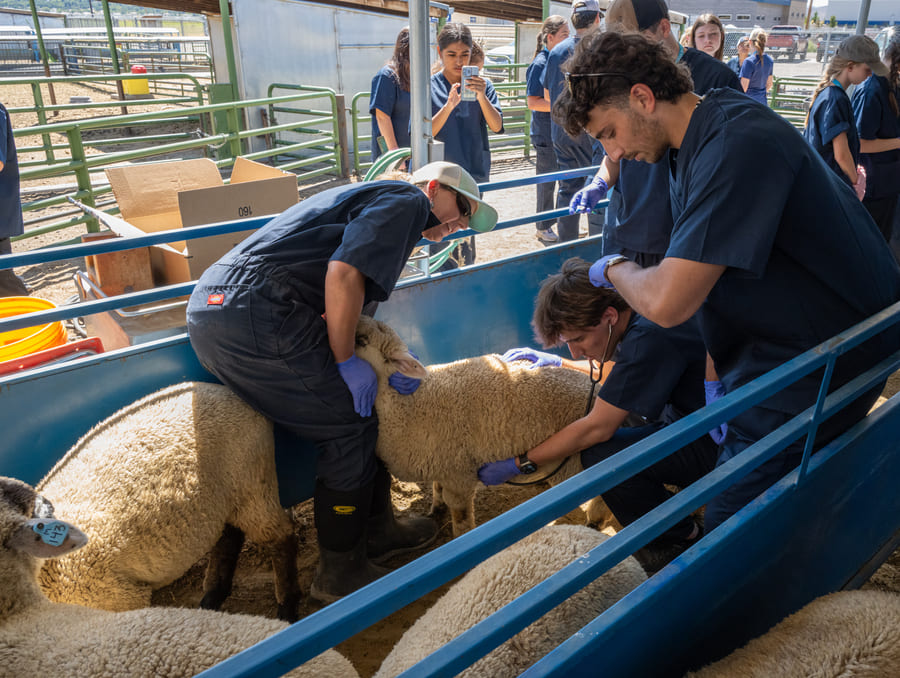
The team will share research findings and introduce robotics to K-12 students through outreach in several Washoe County schools, summer camps, Extension’s 4-H Youth Development Program and other after-school robotics programs. Through short videos and hands-on activities, students will explore how robotics and artificial intelligence can support animal care and welfare.
Drawing on her own experience in 4-H, and now as a parent with children in the program, Shane said the effort will help young people see how technology and agriculture intersect and how they can play a role in the future of agriculture.
Taking the data to a national level
The second, complementary project, led by Hess, will expand data collection and sharing to the national level. It will generate a broader dataset, including health indicators, feed intake, wool quality, carcass traits, movement, body weight and growth rate, and pair it with genetic, microbial and economic data from multiple sheep operations and research flocks nationwide, including Nevada’s semiarid regions and collaborating institutions in North Carolina and Wyoming.
The goal is to develop comprehensive breeding indexes to guide feeding, health management and breeding decisions. The team will also create decision-support tools to help producers manage daily operations, such as predicting disease risk, estimating days to market weight and tracking feed efficiency over time.
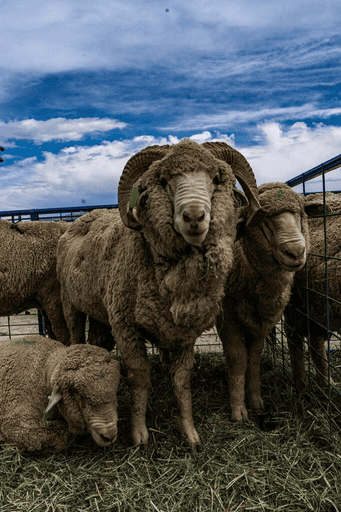
To support these tools, the project will draw on detailed data, including repeated weight and growth measurements, feed intake records, and rumen and nasal microbial samples, combined with genetics and economic information. A key focus is identifying animals that remain healthy and productive under environmental stressors such as rapid temperature swings and harsh, semi‑arid grazing conditions, enabling producers to breed flocks that are better adapted to a changing climate.
“Sheep producers are being asked to do more with fewer resources and under increasingly unpredictable conditions,” Hess said. “By combining genetics, health records and real-time data from flocks across the country, we can turn complex science into practical tools that help ranchers select the right animals, make smarter feeding decisions and keep their operations profitable and sustainable over the long term.”
Data collected through the project will be contributed to the National Sheep Improvement Program, a nonprofit that provides genetic evaluation services to sheep producers.
“We’ve seen significant investment in genetics and management tools for other livestock industries such as cattle and swine, but sheep producers haven’t always had access to the same level of resources,” Hess said. “It’s exciting to see that starting to change and to be part of efforts that bring more attention and practical tools to an industry that plays an important role, especially in many rural communities.”
Hess’ team will also train graduate students and early career researchers in data-driven livestock production, helping to build a workforce capable of applying advanced analytics alongside hands-on knowledge of ranch systems. The team includes incoming doctoral and master’s students, as well as co-principal investigators from Purdue University and the U.S. Department of Agriculture’s Agricultural Research Service Meat Animal Research Center. Also central to the effort are researchers from North Carolina State University; the University of Wyoming; and AbacusBio, an international livestock technology company.
Looking ahead
Looking ahead, the University of Nevada, Reno researchers see the two projects as an important first step in addressing persistent challenges in sheep production, with more work needed to strengthen the sector. A successful pilot could pave the way for a future in which robotics and artificial intelligence work alongside sheepherders to support flock management with data delivered directly to producers through reports or dashboards.
“The future of the U.S. sheep industry is in data-driven management,” Hess said. “Our goal as a research College is to provide high-quality data and practical outreach so all producers, large and small, can better manage their operations for productivity and profitability and help sheep become a stronger sector in agriculture.”


