
The pitcher steps onto the mound, and the game slows, just for a moment.
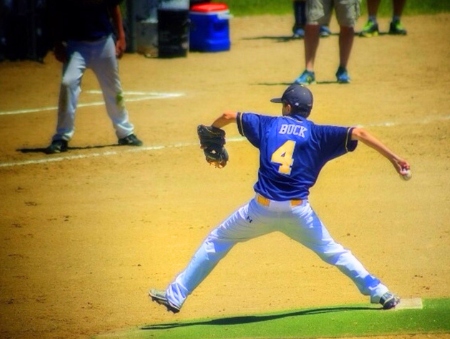
Cleats press into the dirt. Fingers find familiar seams. There is a brief pocket of quiet where years of training, repetition and muscle memory settle into place. Before the arm moves, before the ball leaves the hand, the body balances on one leg. The motion begins.
That sequence unfolds over and over again. Pitch after pitch. Inning after inning. Over the course of a season, a pitcher may repeat the same movement thousands of times.
As the Nevada Baseball team returns from the Mountain West Championships and prepares for the annual Wolf Pack Baseball Camps in July, new research from the University of Nevada, Reno is taking a closer look at how a pitch truly begins, even as the Major League Baseball season continues across the country.
Before fans focus on velocity, movement or location, the mechanics of a pitch are already in motion. The process starts during the wind-up, when a pitcher balances entirely on the drive leg. From there, the body moves down the mound in a controlled fall, pushing off the pitching rubber as the stride foot reaches forward. The length of that step, known as stride length, reflects how efficiently the lower body transfers energy upward.
Research suggests an optimal stride length falls between roughly 80% and 87% of a pitcher’s height. Falling below or above that range, the body compensates elsewhere, often placing additional demands on the shoulder, arm and wrist.

For Zack Buck, MS, '26 (kinesiology) stride length research is personal.
Buck’s interest in pitching mechanics traces back to his earliest days in baseball. He remembers stepping onto the field with his T-ball team in Spanish Springs, long before velocity, statistics or biomechanics entered the picture. He played from a young age through high school and into college, repeating the same pitching motions numerous times. Over the years, that experience sparked a deeper curiosity about how the body moves and how small adjustments can help athletes perform more efficiently and sustainably.
That curiosity shaped Buck’s graduate research in kinesiology at the School of Public Health. Working with advisor Phil Pavilionis, Ph.D., associate teaching professor and athletic training education lead, Buck examined how ankle mobility and lower-extremity stability influence pitching stride length, a key component of efficient and repeatable movement on the mound.
“Pitching is a full-body movement,” Buck said. “Before the arm ever comes forward, the lower body has already done a lot of the work.”
The movement the recent graduate studied is small but complex. It begins at the drive-leg ankle and continues through the foot and toes, forming the foundation for everything that follows in the pitching motion.
As the pitcher balances during the wind-up, the drive leg ankle must bend slightly forward, a motion known as dorsiflexion, while remaining stable side to side. At the same time, the foot adapts to the mound and stays centered over the ground. When the foot rolls too far outward or inward, movements known as excessive pronation or supination, the drive leg can lose stability.
“Pitching is a full-body movement. Before the arm ever comes forward, the lower body has already done a lot of the work,” said Buck.
From a kinesiology perspective, that loss of control matters. Instead of forming a firm base, the foot becomes less efficient at transferring force into the ground. That instability can affect how a pitcher pushes off the rubber, altering stride length and the timing of movement up the body into the throwing arm.
Buck and Pavilionis describe the drive-leg foot as working much like a spring-loaded base. It needs enough give to settle into the mound and enough stiffness to rebound out of it. When that balance is right, the pitcher can move down the mound smoothly and stay centered as energy transfers upward through the trunk, into the throwing arm.
When the motion is limited, even subtly, the effects can ripple upward. A foot or ankle that cannot adapt and push off smoothly can change how force is generated off the pitcher’s rubber, alter stride length and disrupt the timing of hip and trunk rotation. Over thousands of pitches, those small changes can influence how efficiently a pitcher releases a baseball.
“What we’re really looking at is how the body interacts with the ground,” Pavilionis said. “If the ankle and foot cannot do their job early, the rest of the system has to adjust.”

The study involved Division I collegiate Wolf Pack pitchers during the fall offseason. Athletes complete ankle range-of-motion testing and a dynamic balance assessment that mirrors the single-leg demands of pitching. Stride length is measured during pitching trials before and after a four-week intervention.
The intervention is designed to be practical and accessible. Pitchers complete targeted ankle mobility drills using resistance bands and balance-based exercises that are integrated into normal training routines.
The research was completed recently, and findings were presented during Buck's thesis defense this spring. Buck said the goal of the project is to better understand how targeted ankle mobility and stability training may influence stride length and movement efficiency, rather than to draw conclusions before the study is complete.
“We wanted to study something that could realistically be used in real-world settings,” Pavilionis said. “When research translates easily into practice, it has a much better chance of making an impact.”
While the research is rooted in baseball, its implications extend beyond the sport. Ankle mobility and balance play a role in everyday movement and long-term physical health. The same principles that help pitchers move more efficiently may also inform how clinicians and coaches think about movement across populations, whether it is high school athletes in other sports or older adults looking to increase their mobility.
As pitchers walk on to the mound at the University's Don Weir Field at Peccole Park, Buck’s research offers a reminder that every pitch begins long before the ball is released. In the quiet moments before motion, small details can shape everything that follows.


