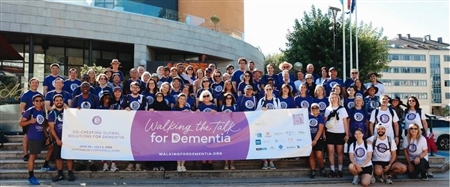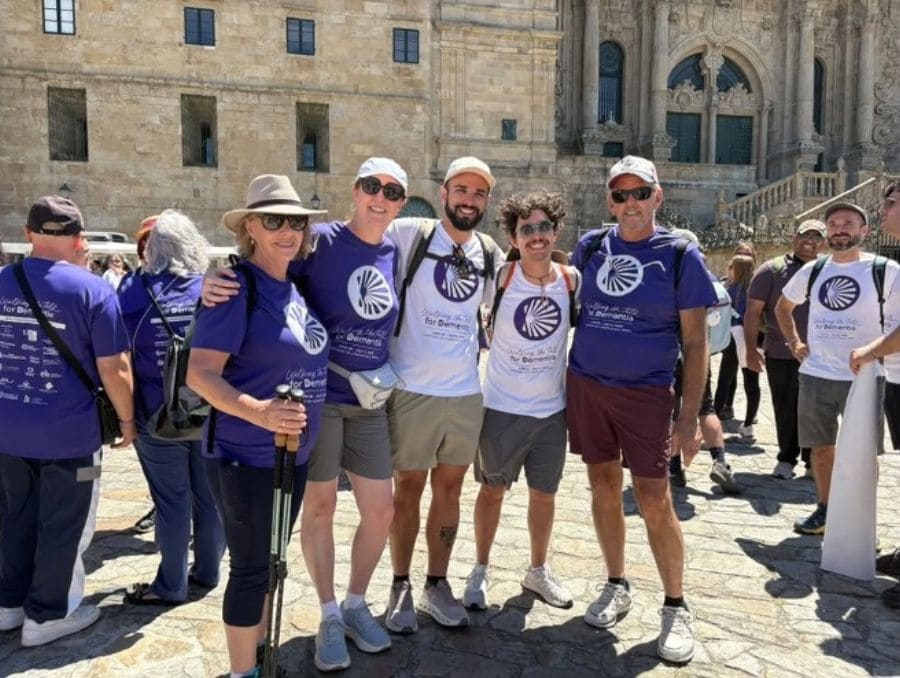
In this first-person narrative, Jennifer Carson, Ph.D., founding director of the Dementia Engagement, Education and Research Program in the University of Nevada, Reno School of Public Health, reflects on her life-changing walk along the Camino de Santiago during the Walking the Talk for Dementia 2026 Global Symposium.
In early July, I had the honor of representing the United States and the University of Nevada, Reno School of Public Health, at the Walking the Talk for Dementia (WTD) 2026 Global Symposium in Santiago de Compostela, Spain. More than a conference, WTD is an immersive, weeklong experience that brings together people living with dementia, care partners, researchers, clinicians, artists, policymakers, innovators and advocates from around the world to co-create systemic change and global solutions for dementia. This year's event brought together 96 participants from 35 countries and was, without question, the most inspiring dementia gathering I have attended in my career: remarkably diverse, intentionally interdisciplinary and internationally connected.
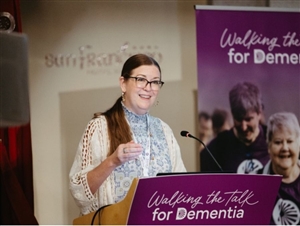
For the first four days, participants walked side by side along one of the world’s most iconic pilgrimages, the Camino de Santiago, sharing stories, knowledge and lived experience. No titles, no hierarchy, just a community of people united by a common purpose. The 40-kilometer walk concluded with a two-day symposium, where I had the privilege of speaking on the opening panel, Dementia, Equity, and Global Justice.
The reflection that follows is what I ultimately chose to share instead of the talk I had originally planned, Locked In, Left Out, and Sedated: Dementia and the Right to Be Free from Restraint. The Camino shaped my thinking. It reminded me that sometimes the most powerful way to challenge injustice is not simply to expose what is wrong but to illuminate what is possible.
"Sometimes the most powerful way to challenge injustice is not simply to expose what is wrong but to illuminate what is possible."
There is a beautiful concept I learned many years ago: vivencia. It means more than experience. It is the kind of shared, lived experience that changes everyone involved. It reminds us that some forms of knowledge cannot be taught in a classroom or discovered by observing something from a distance. It is the kind of knowledge created when we walk together, listen deeply and allow one another to change us. I believe this is what happened here this week.
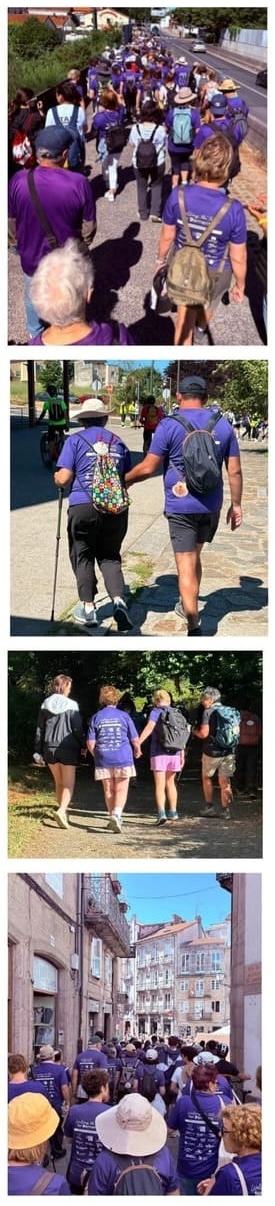
We didn't come together simply to exchange ideas about dementia. We came together to discover new understandings through the simple act of walking beside one another. Every one of us arrived with something to teach, and I suspect every one of us will leave having been changed.
This week, we have not only talked about dementia. We have talked about families, music, theater, travel, politics, architecture, healthcare, the universe, our fears, our hopes, our pets and the ordinary moments that make life worth living. We sang together, danced together, laughed together. We have shared our vulnerabilities and dreams and discovered our shared humanity. We have reminded one another that no person is ever defined by a diagnosis.
And as the week unfolded, I found myself returning again and again to the title of this talk: Locked In, Left Out, and Sedated: Dementia and the Right to Be Free from Restraint. When many of us hear the word restraint, we think of locked doors, belts, bedrails or antipsychotic medications. And those matter; those require resistance. Originally, I thought I would offer a scathing critique of these restraints. But walking beside you offered another vision. I realized how restraint can be much quieter, less visible and more insidious.
Restraint can be felt whenever we value efficiency more than relationships; expertise more than participation; certainty more than curiosity; or managing people more than walking beside them.
So instead of focusing my talk on the ever-growing and deeply disturbing practices of confinement, exclusion and control, I'd like to explore what I experienced on the Camino, their antithesis: freedom, belonging and support.
Let's start with freedom.
The Camino gave us structure. There were big yellow arrows to follow, guides to help us, places to meet, meals to share and air-conditioned buses waiting for us at the end of each day. Yet within that structure was extraordinary freedom. Freedom to walk at our own pace. Freedom to choose our companions. Freedom to stop beneath the eucalyptus trees and feel the breeze. Freedom to accept the level of risk that felt right for each of us. Freedom to talk about dementia or not talk about dementia at all. Freedom simply to be ourselves.
The Camino reminded me that the opposite of confinement is not the absence of structure. It is structure designed to protect and expand human freedom.
Freedom is the antidote to confinement.
Then I found belonging.
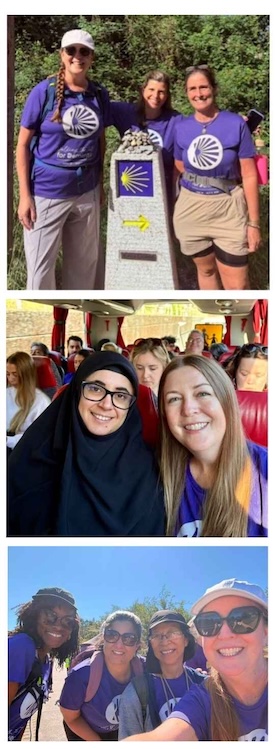
I remember our first hydration stop, standing with a piece of watermelon in my hands, quietly wondering where I belonged in this new community. Then I heard someone say, "Jennifer." It was Damian. It was the second time he had used my name, and this time I smiled because I could respond in kind: "Damian." I sat down, and a small patch of grass along the Camino became a place of belonging.
Over the following days, belonging continued to grow in wonderfully ordinary ways and sometimes in a wonderfully ordinary place: the bus. I first asked Monica if I could sit in the empty seat beside her, and it was delight. I then spanned generations with Ayse, and next, I exchanged professional and political concerns in a safe space with Crystal. Each, a new friend. I deepened my relationships with old friends Michelle and Julie. I discovered that every empty seat beside a fellow pilgrim carried the same unspoken message: You belong here.
And every time another pilgrim passed us on the trail and wished us, "Buen Camino," I was reminded that our community stretches far beyond our group. Because on the Camino and in life, belonging is not something you earn. It is something you extend.
Belonging is the antidote to exclusion.
Perhaps that sense of belonging is why support flowed so naturally among us, unlike anything I’ve experienced or witnessed before. Other than the amazing humans in the matching white Camino shirts (WTD staff), nobody assigned those of us in purple (WTD participants) to support one another. Nobody planned it. Nobody sought recognition for it. Someone quietly offered to carry another person's water. Someone shared a granola bar. Someone offered a steady hand. The group paused until everyone arrived. Daniel shared the shade of an umbrella. These were small acts, but they revealed something profound.
Real support does not replace another person's agency. It protects it. Real support does not diminish dignity. It preserves it. Support is not doing everything for another person. Support is making it possible for another person to continue walking their own path.
"Freedom. Belonging. Support. These are not privileges. They are human rights. These should not be remarkable experiences reserved for a week on the Camino. They should be the ordinary experience of every person, every day."
Support is the antidote to control disguised as care. Support is the antidote to sedation.
By the time we arrived at the Catedral de Santiago de Compostela, I realized something that will stay with me.
Freedom made belonging possible, and belonging made support possible. These are the conditions in which people flourish.
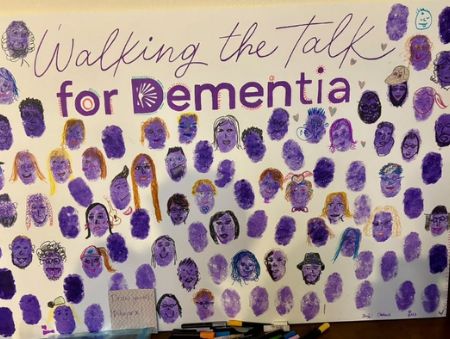
Around the world, our populations are aging. The question is not whether more people will experience dementia. They will. The question is who we will become in response. If our response is greater confinement, greater exclusion or greater reliance on harmful drugs that silence the communication of unmet needs, then the injustices we already recognize will only deepen.
But this week reminded me of something profoundly hopeful. It didn't convince me that another way is possible. It reminded me that we already know the way. The Camino has always meant the way. Not simply the way to Santiago but the way we choose to walk through the world together. The way of freedom. The way of belonging. The way of support.
The Camino shows us that another way is possible, and for a few precious days, we created together the kind of community that every human being deserves.
Freedom. Belonging. Support. These are not privileges. They are human rights. These should not be remarkable experiences reserved for a week on the Camino. They should be the ordinary experience of every person, every day.
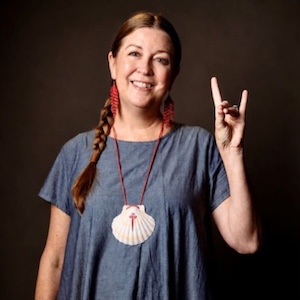
Around the world, these rights have already been recognized. So perhaps the challenge before us is not writing better words into conventions, legislation or policies but living as though we truly believe in these words. I believe them because we have lived them.
As we return home, may we carry more than photographs, seashells, blistered feet, new friendships and satisfaction. May we carry this vivencia. I know I will.
May we create places where people remain free. May we create communities where every person feels they belong. May we offer support that strengthens rather than replaces another person's agency. And when we encounter confinement, exclusion or sedation presented in the name of "dementia care," may we have the courage to lovingly and persistently say, “There is another way.” We know there is. We have walked it together. We have lived it.
Thank you for changing me.
Thank you for walking beside me.
Now let's walk beside others.
Let's go change the world.
Buen Camino!
About the author
Jennifer Carson, Ph.D., works to envision and develop opportunities for individual, organizational and collective growth to combat ageism and ableism, and to improve the inclusion and well-being of elders, with a special focus on persons living with dementia. Carson, a critical gerontologist, is the founding director of the Dementia Engagement, Education and Research (DEER) Program in the School of Public Health at the University of Nevada, Reno.