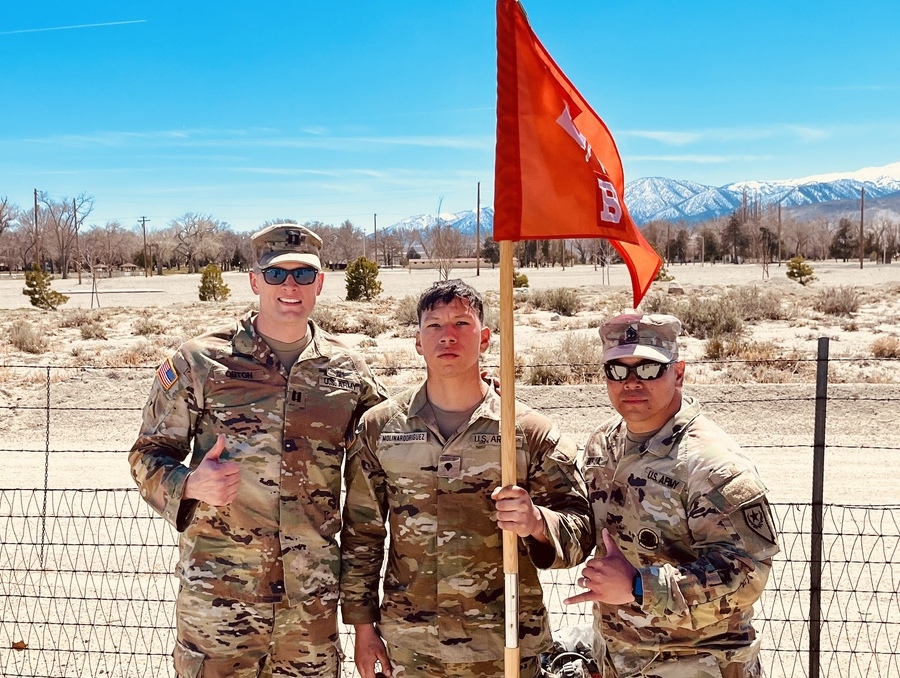
In this first-person narrative, Director of Special Projects Michael Orton reflects on the lessons in service and leadership he carries with him, and what it means to return to the University in a new capacity.
In 2018, when I graduated from Officer Candidate School and commissioned as an officer in the United States Army, one of the proudest moments of my military career wasn't receiving my commission. It was standing across from my father and exchanging our first salute.
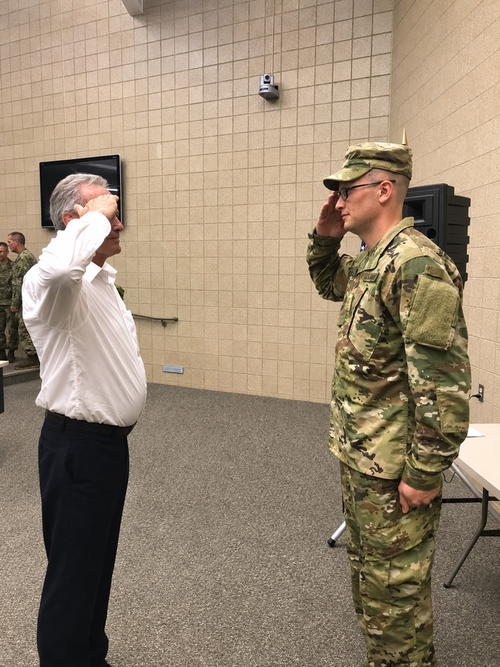
My father served in the Army as a sergeant in the infantry during the Vietnam War. Unlike me, he hadn't volunteered for military service. He was drafted, answering a call that was never part of the life he'd planned for himself. Decades later, there he stood, saluting his son as I began a new chapter in my own military career.
That moment meant more to me than I could express, or even fully appreciate, at the time. Looking back, it also represents much of what Veterans Day means to me today.
My own path into the military wasn't necessarily a straight one. Next year will be my 30th year calling Nevada home, and I graduated from the University of Nevada, Reno, with a degree in criminal justice many years ago. My goal was a career that allowed me to serve my community and country. The Army ultimately offered a combination of service, educational opportunities, and a career path that appealed to me.
The Army ultimately offered a combination of service, educational opportunities, and a career path that appealed to me.
I enlisted in 2010, beginning my career in public affairs as a writer and photographer. In many ways, it was a perfect introduction to the military. My job was to document the people, missions and experiences that make up military service. I had the opportunity to see the Army through a camera lens, share the stories of the soldiers who served in it, and experience a little bit of almost everything the Army offered, without being stuck in a repetitive, Groundhog Day-like routine.
As my career progressed, I moved into operations and planning, and eventually commissioned through Officer Candidate School in 2018, when I became a Signal Corps officer. This chapter of my career would also take me through a variety of assignments.
I came to believe that leadership, at its core, is about service and sacrifice.
Over the years, the Army sent me to places I never imagined I'd visit. Some were remarkable, others considerably less so. My service took me to numerous locations throughout the United States, and to places like Iraq, Kuwait, Tonga, Fiji, New Zealand, South Korea and even North Korea, which is a story for another day. I deployed to Southwest Asia in support of Operation Inherent Resolve and later had the privilege of commanding Bravo Company, 422d Expeditionary Signal Battalion-Enhanced, based in Las Vegas.
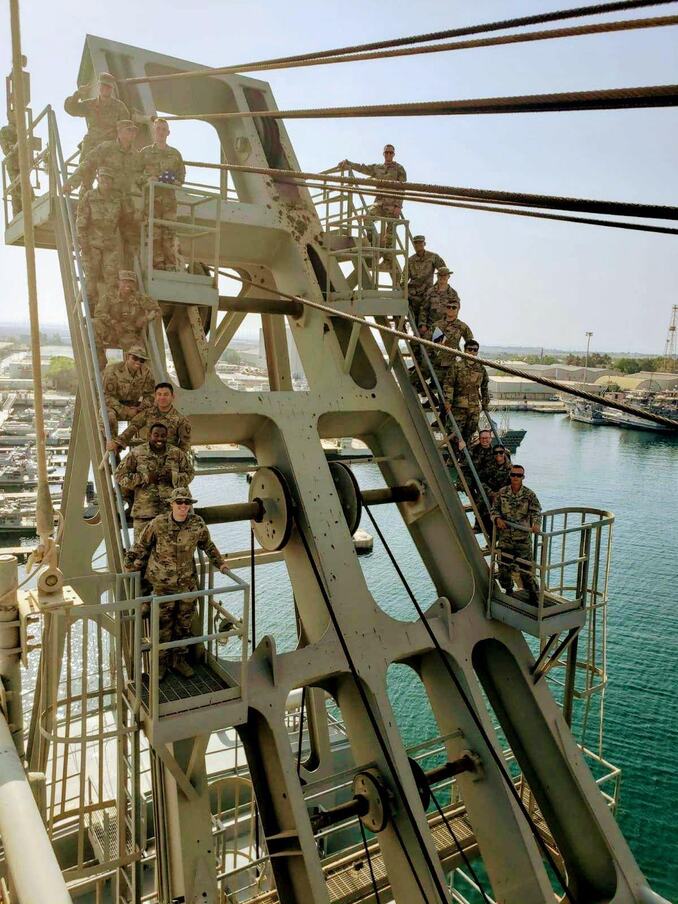 Orton and his fellow soldiers on the platforms and framework of a shipboard crane.
My final military assignment brought me back to my alma mater, where I served as the executive officer, assistant professor of military science, and co-instructor of U.S. military history for the University’s Army ROTC program.
Each assignment brought different responsibilities, challenges, and lessons. Some were rewarding, others frustrating, and more than a few tested my patience and judgment. But taken together, those experiences fundamentally shaped my understanding of leadership.
I came to believe that leadership, at its core, is about service and sacrifice.
A good leader puts the needs of their people ahead of their own. They take responsibility when things go wrong, give credit when things go right, and recognize that their success is measured by the success of those they lead.
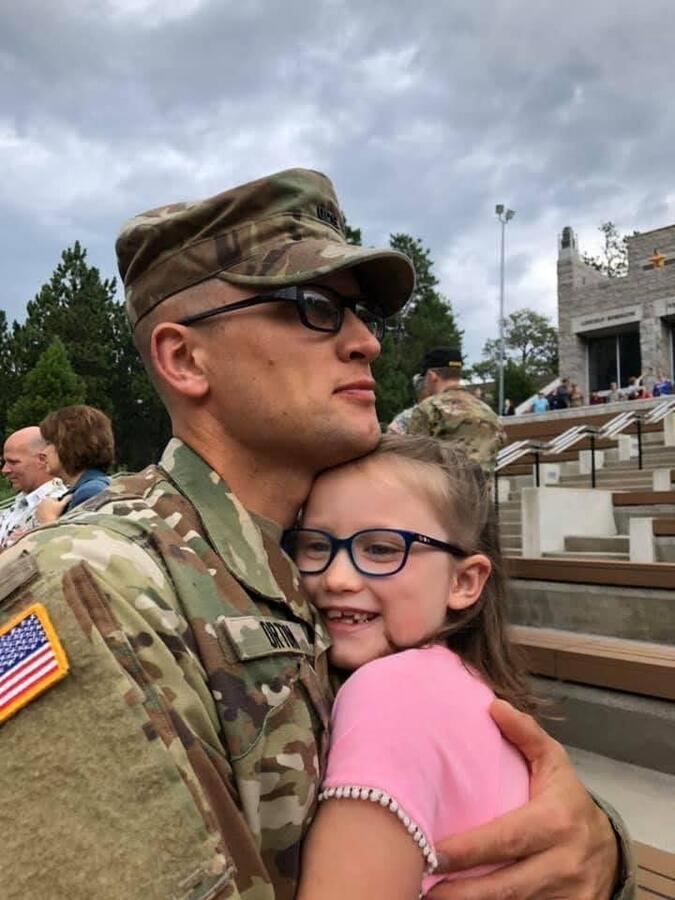
I've always believed that one of a leader's most important responsibilities is to serve as a barrier between their soldiers and the unnecessary obstacles, distractions and burdens that prevent them from doing what they raised their right hand and swore an oath to do. Leaders clear the path and lay the groundwork for others to succeed in their assigned roles and responsibilities.
Sometimes that means making difficult decisions, challenging established practices or shouldering responsibilities so others don't have to. It's rarely convenient, comfortable or popular. But leadership should never be about the privileges that come with a position. It should be about the obligations you accept when entrusted with the well-being of others.
I learned many of those lessons from leaders I admired, but honestly, probably a lot more from experiences that showed me the kind of leader I never wanted to become.
After years of assignments and travel, returning to the University to help prepare the next generation of Army officers should have felt like a natural fit. I'll admit, though, that when I first learned I was assigned to ROTC, I wasn't particularly enthusiastic. I had convinced myself that the assignment would amount to little more than babysitting cadets, keeping them out of trouble, and making sure nobody did anything too foolish. As it turned out, I couldn't have been more wrong.
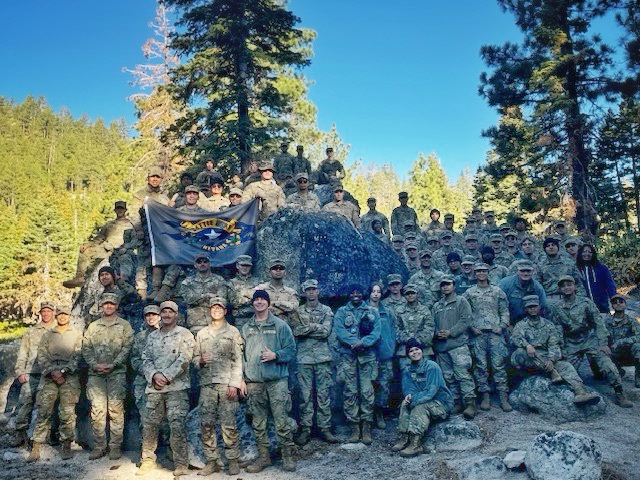
What I found instead was a group of young people whose dedication, ambition and willingness to learn continually impressed me. Working with cadets gave me the opportunity to share lessons from my own experiences, but it also reminded me of the enthusiasm and sense of purpose that first draws people to military service. What I initially approached with skepticism ultimately became one of the most rewarding assignments of my time in uniform.
My military career is now drawing to a close through a medical retirement following injuries sustained during my service. It isn't the ending I originally envisioned, and transitioning away from something that has been such a significant part of my life comes with its own challenges.
There's something especially meaningful about beginning a new professional chapter at the same institution where so much of my journey began.
But it has also created an opportunity for a new beginning.
This fall, I joined the Office of the President as director of special projects. It's an opportunity I'm particularly excited about, not simply because it's a new professional challenge, but because it allows me to continue my career at a university that has been part of my life for so many years.
I'm looking forward to getting to know my new colleagues, building relationships across campus, and contributing to projects and initiatives that support the University's mission. There's something especially meaningful about beginning a new professional chapter at the same institution where so much of my journey began.
Beginning this new chapter has also given me an opportunity to reflect on the one I'm leaving behind. And while Veterans Day naturally brings those reflections to the forefront, I've always found myself thinking less about my own accomplishments and more about the generations of Americans who served before me.
To me, Veterans Day is about honoring the willingness to serve, the sacrifices that service demands and the generations of Americans who accepted those responsibilities.
I've always been interested in military history, particularly the experiences of those who served during the Civil War, World War I, World War II, Korea and Vietnam. Teaching U.S. Military History at the University only reaffirmed my passion for the subject. Each of those generations faced its own extraordinary circumstances, and their experiences helped establish the traditions, expectations and ideals that continue to shape military service today.
I think particularly about those who were called to serve when military life wasn't something they had chosen for themselves. People like my father, who had other ambitions and plans but answered when their country called.
To me, Veterans Day isn't necessarily about celebrating military accomplishments, rank or recognition. It's about honoring the willingness to serve, the sacrifices that service demands and the generations of Americans who accepted those responsibilities, often at considerable or immeasurable personal cost.
It's also an opportunity to acknowledge that military service is rarely an individual undertaking. Behind so many veterans are spouses, children, parents and families who have made sacrifices of their own. I know I owe a debt I can never fully repay to my wife, Mallory, and my three daughters, Aubrey, Bailey and Reagan, for their love, patience, forgiveness and support throughout my Army career.
I'm proud of my military service and grateful for the opportunities it afforded me. But I'm even prouder of the example set by those who came before me, particularly my father.
When I think back to that first salute in 2018, I see more than a father and son sharing a proud moment. I see two generations of soldiers whose paths into military service were very different, but whose experiences became connected through a shared commitment to something greater than themselves.
And as I begin my next chapter, that connection is something I'll always carry with me.


