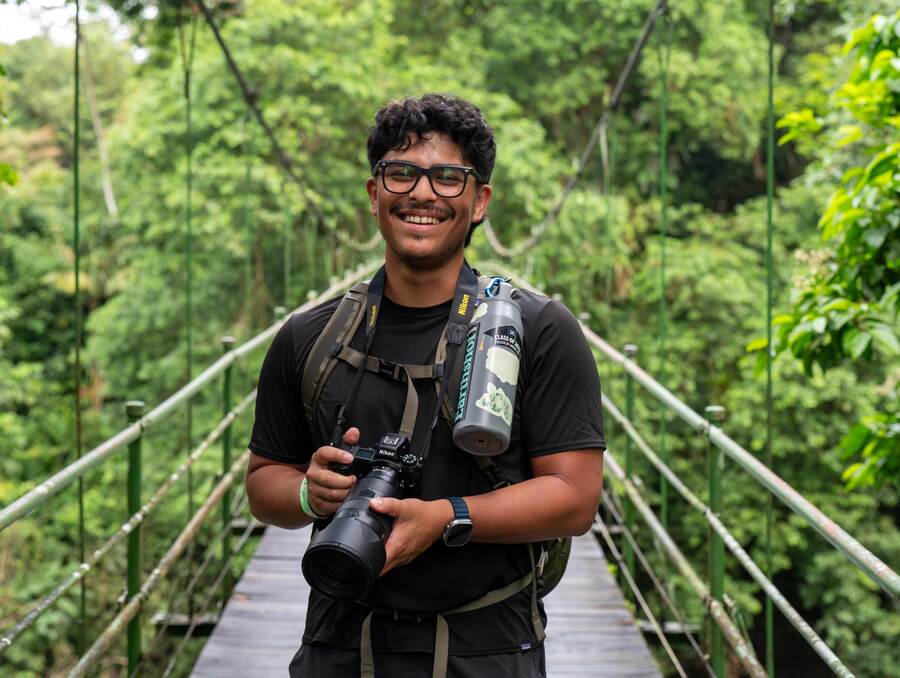
In this first-person narrative, Josue Ponce, a graduate student in the Reynolds School of Journalism, tells Nevada Today about his experience traveling to Costa Rica and creating on-the-ground storytelling through the Hitchcock Project for Visualizing Science.
In May, I was given the opportunity to travel to Costa Rica for 10 days with The Hitchcock Project for Visualizing Science, an initiative founded by Mick Hitchcock with the goal of delivering scientific stories in creative forms.
As a graduate student in media innovation at the Reynolds School of Journalism and someone with a deep love for animals, I knew this was an opportunity I could not pass up.
Take a step with me into the Costa Rican rainforest through my photos and meet some of the animals that call that place home.
Now in its second year under Director Jennifer Kent, this summer trip continues to grow, not only in Costa Rica, but in Reno too. Last spring, the Nevada Discovery Museum held an event, “Science Distilled,” where all the students on the trip were able to present their documentaries. My group made a children’s mini documentary on an animal called the pecarry. I had the role of cinematographer, writer and editor on this project.
Photographing the Jungle
Once the group stepped foot onto the rich soil at La Selva Research Station in Sarapiquí, Costa Rica, our senses were hit with signs of a rainforest: 90 percent humidity, the squawks of toucans in the cecropia trees, and the howler monkeys complaining about the rainy season from miles away.
Costa Rica has the highest density of biodiversity in the world, containing nearly 6 percent of all the world's species in its relatively small country. Although I knew this statistic before our trip, it wasn’t until I arrived and saw the flora and fauna firsthand, the wide array of wildlife in person, that I understood just how diverse the biodiversity is.
Being from Reno and growing up spending time outdoors still did not prepare me for the dense biodiversity in Costa Rica.
Being raised in Reno, Nevada for a majority of my life, I have always lived 30 minutes away from nature. Hiking around the sierras, swimming in the astonishing lakes, and appreciating all the wildlife was how I enjoyed life growing up. But being from Reno and growing up spending time outdoors still did not prepare me for the dense biodiversity in Costa Rica.
And, because they say a picture is worth a thousand words, below are some of the images I took on the trip that I hope capture that feeling. Take a step with me into the Costa Rican rainforest through my photos and meet some of the animals that call that place home. Thanks to a couple of amazing field guides, Reyder Mesen, and Geremi Telecaluna, I learned how to find and identify a lot of the species. They taught us the sounds, appearances, smells and habits of many animals.
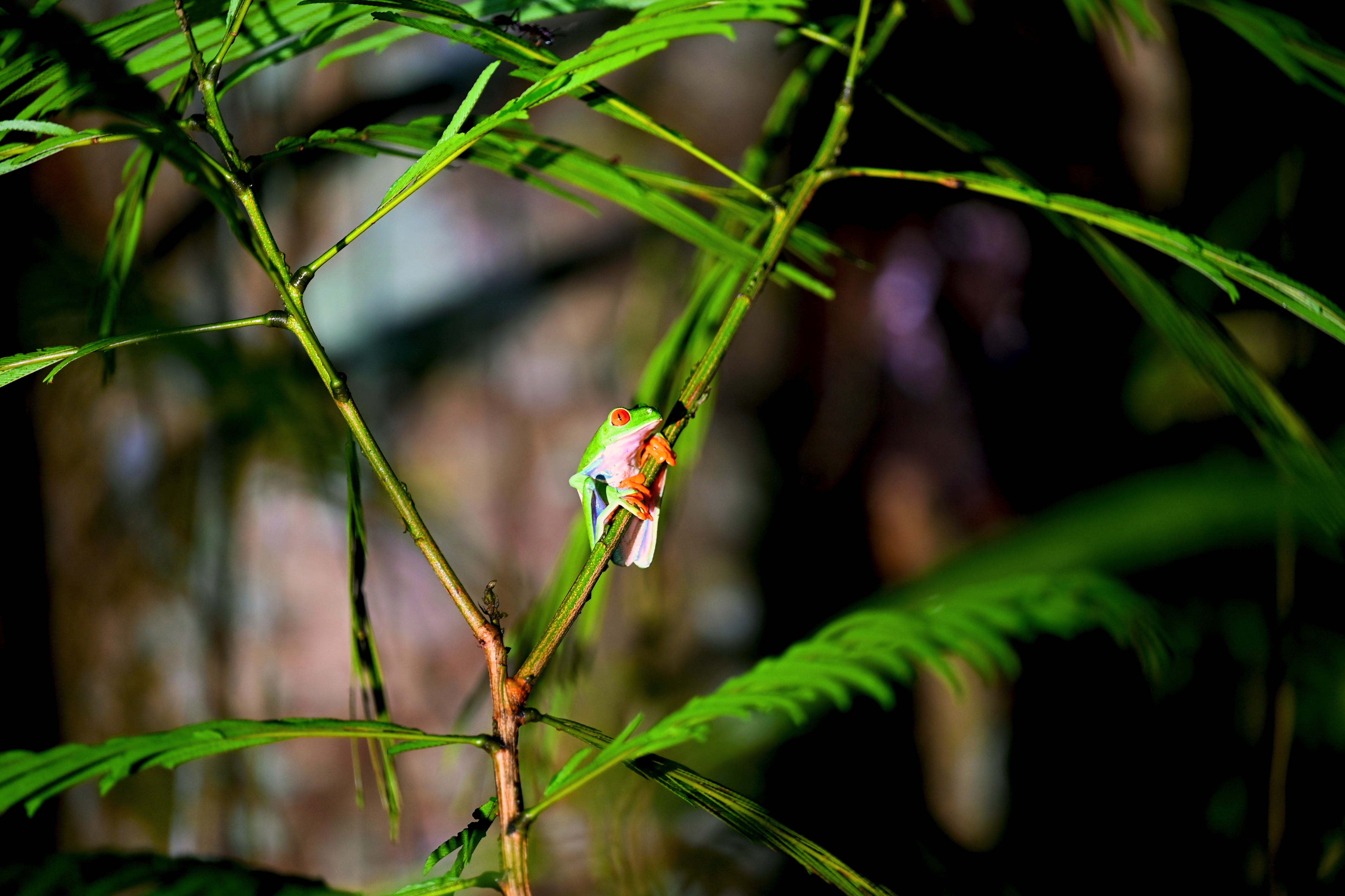
On a group night walk, we found the elusive, red-eyed tree frog as we crossed the bridge over the Sarapiquí river. This nocturnal amphibian was only a few feet away hanging onto some branches. Its iconic, vivid colors made it an easy animal to recognize and admire. We almost missed it, though, as its green skin blended in well with the branch it was hanging onto.
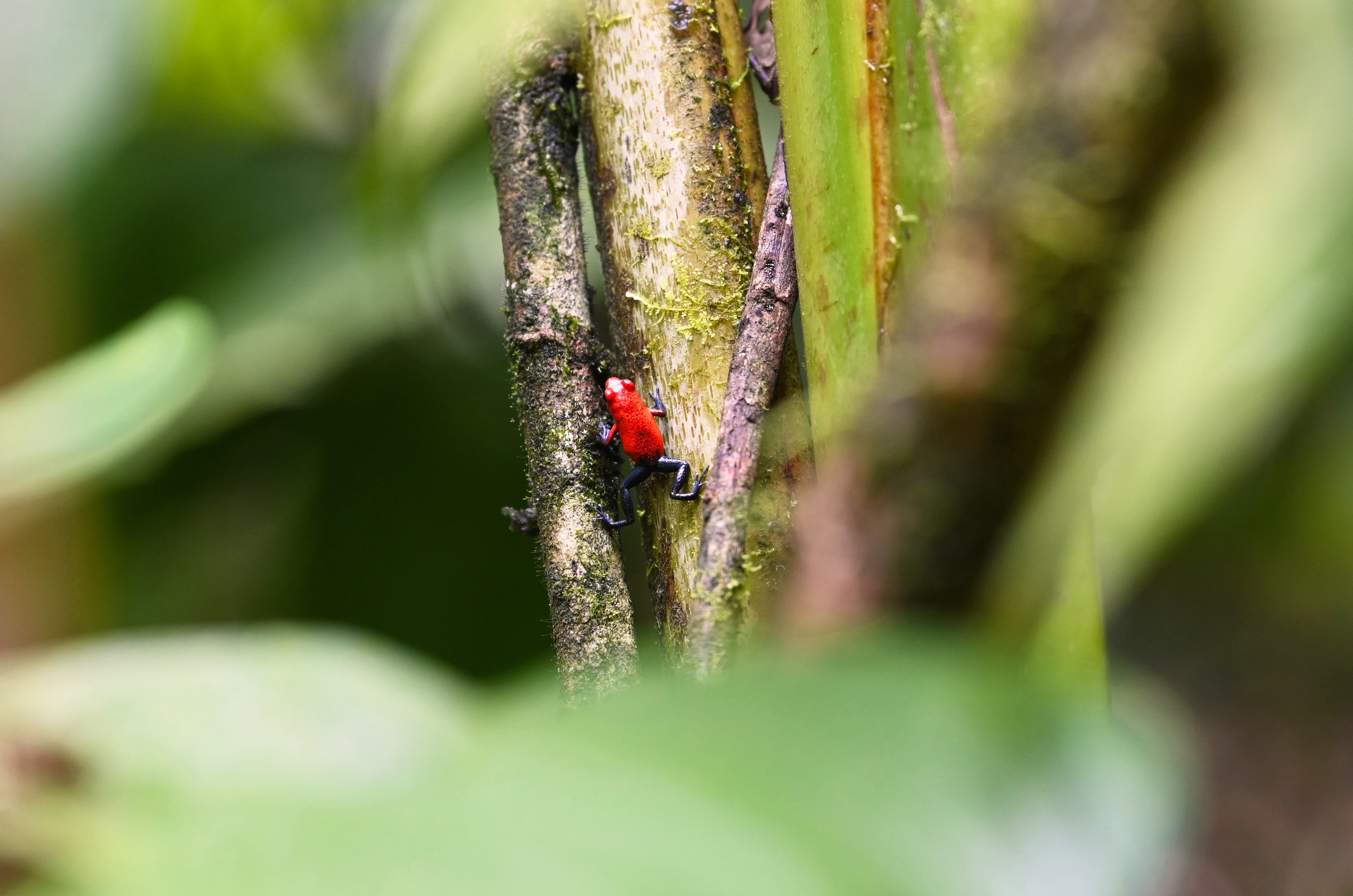
This next diurnal amphibian is a not-so-elusive species. The strawberry poison dart frog is very loud and often mistaken for cicadas. Although it's considered a poisonous frog, it doesn’t produce enough toxin to pose a threat to humans.
Because we were able to see a vast number of these frogs hanging out on leaves at the bases of trees, their sounds made it easy for us to point them out.
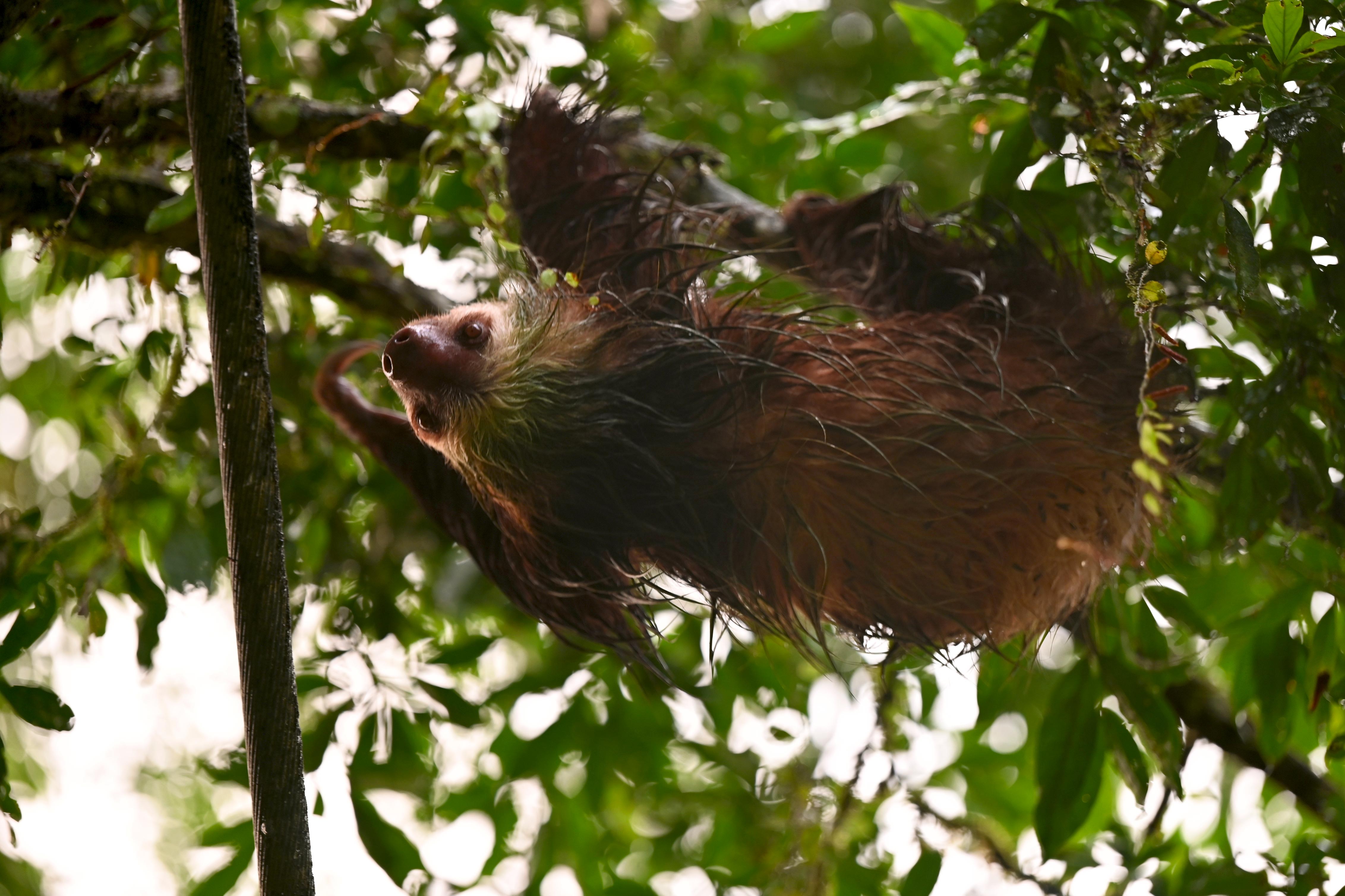
On our last sunset in Costa Rica, I was finally lucky enough to see the only two-toed sloth our group spotted the entire trip. It moved through the canopy with surprising flexibility and control. There are two different species of sloth in Costa Rica, the two-toed and the three-toed. They have a varied diet, but primarily feast on leaves, which we got to see this particular sloth do. Interestingly, we learned on our trip that if you see a sloth on its way down to the rainforest floor, it’s likely heading there to use its all-natural toilet. This sloth seemed to be in a rush to head down.
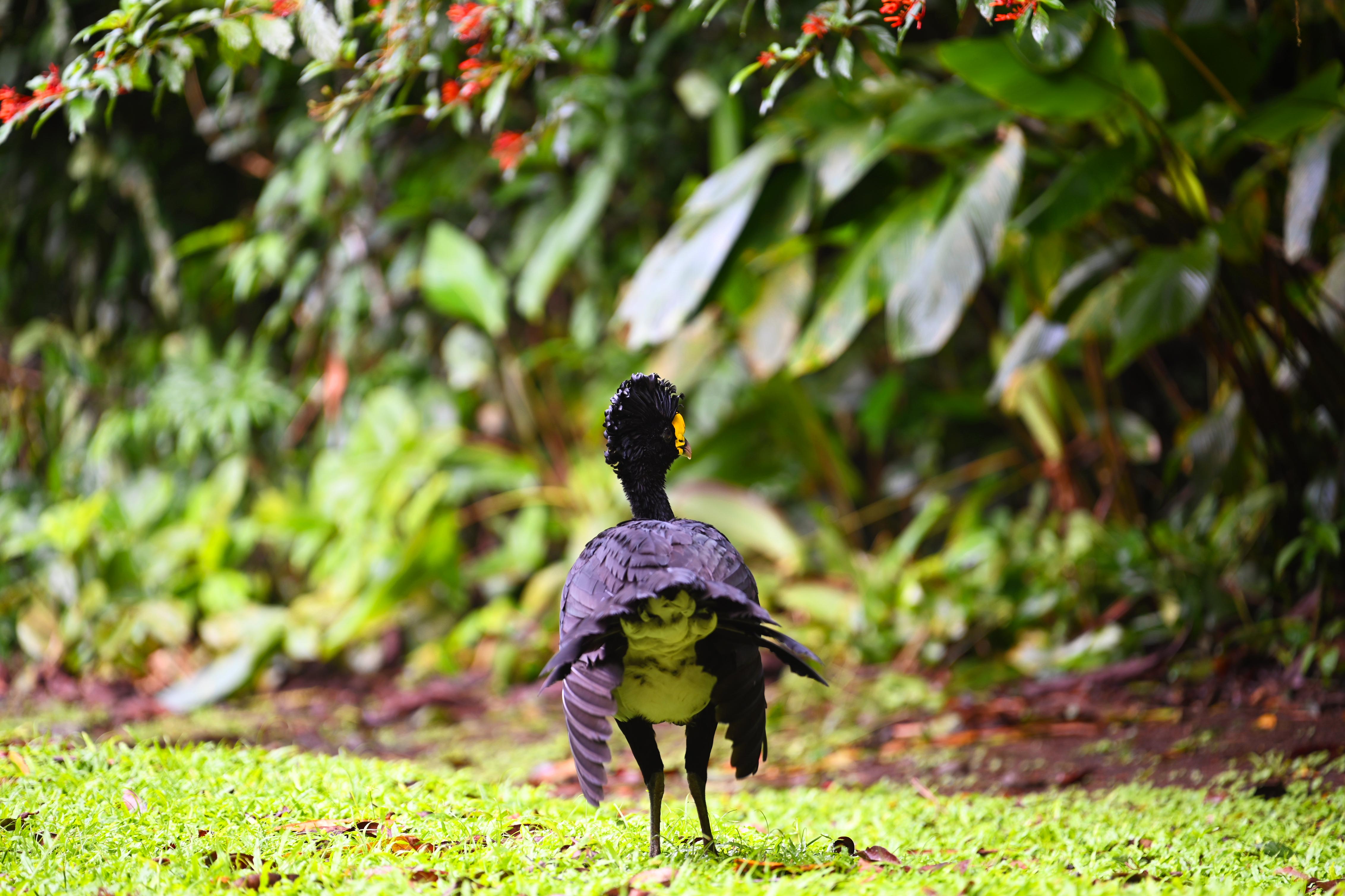
Walking through the rainforest, I spotted the great curassow, a tropical turkey-sized bird foraging along the forest floor, bobbing its head with each step and making a soft humming sound. Watching it walk, it's easy to imagine how some dinosaurs may have moved. The one photographed here is a male and prefers keeping some distance in between us.
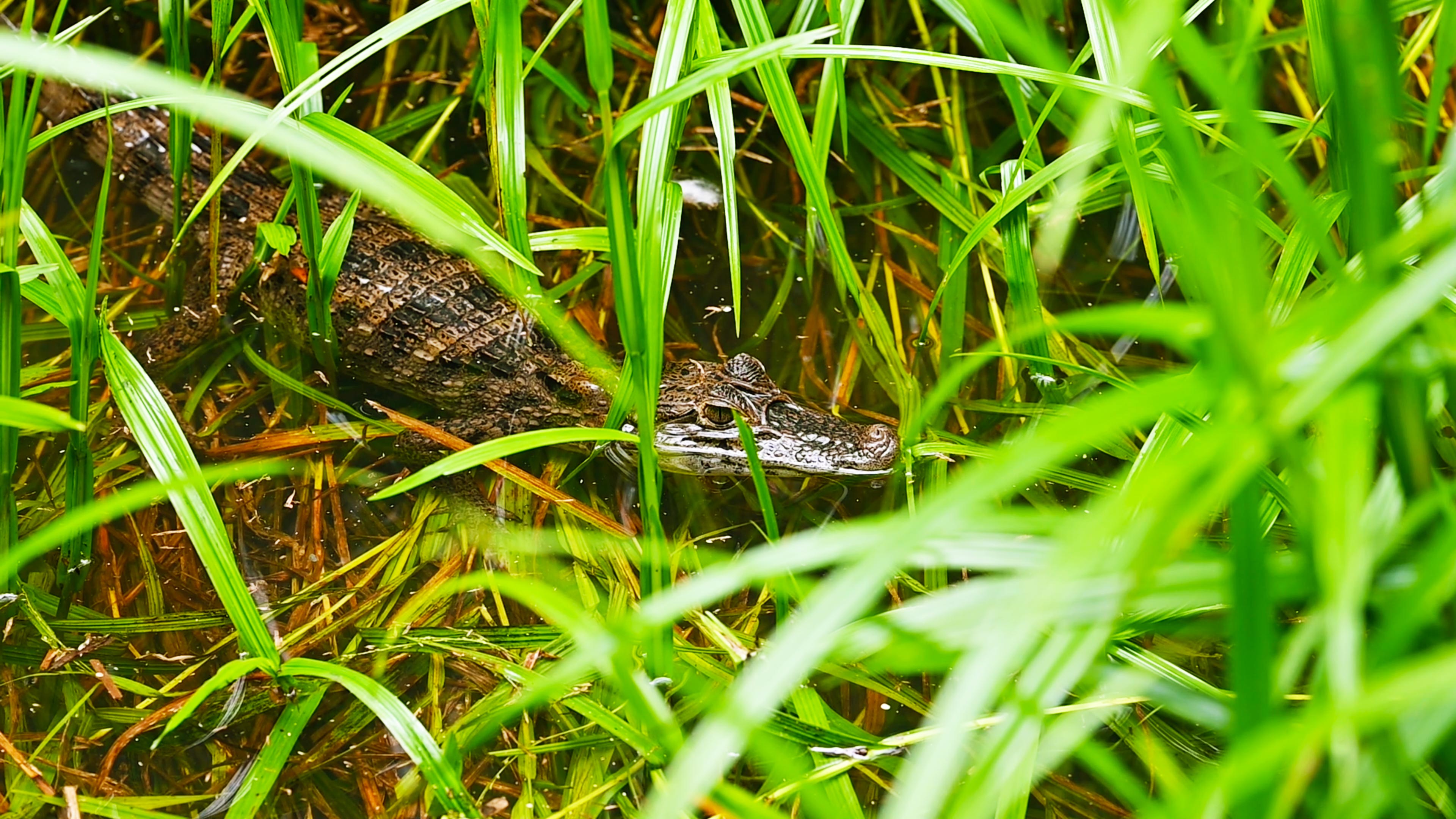
The spectacled caiman. This is the most common of the two crocodile species that can be seen in Costa Rica, compared to the American crocodile. On a group tour, we entered the swamp area to see frogs but were delighted to see this amazing animal sitting so still that you’d think it was fake. The spectacled caiman gets its name from the bone structure around its brow area, making it seem that it is wearing a nice pair of sunglasses as it basks in the sun along the riverbank.
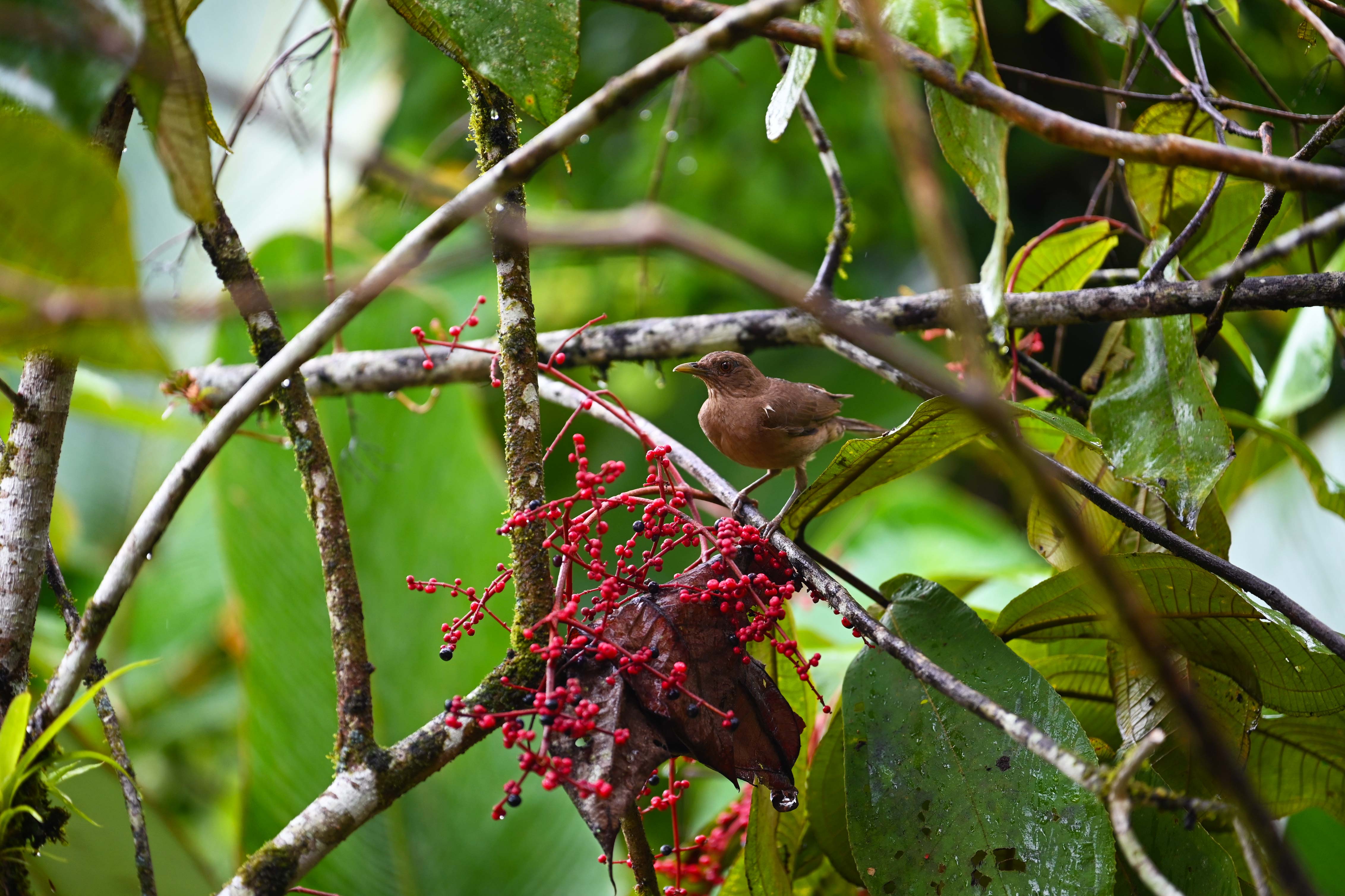
This is the national bird of Costa Rica. The clay colored thrush, also known as the yigüirro by locals. It was chosen because of its close connection and familiarity to locals. Its song becomes especially prominent during mating season. Our field guys taught us that its bright red eyes are a great indicator to identify it in the wild.
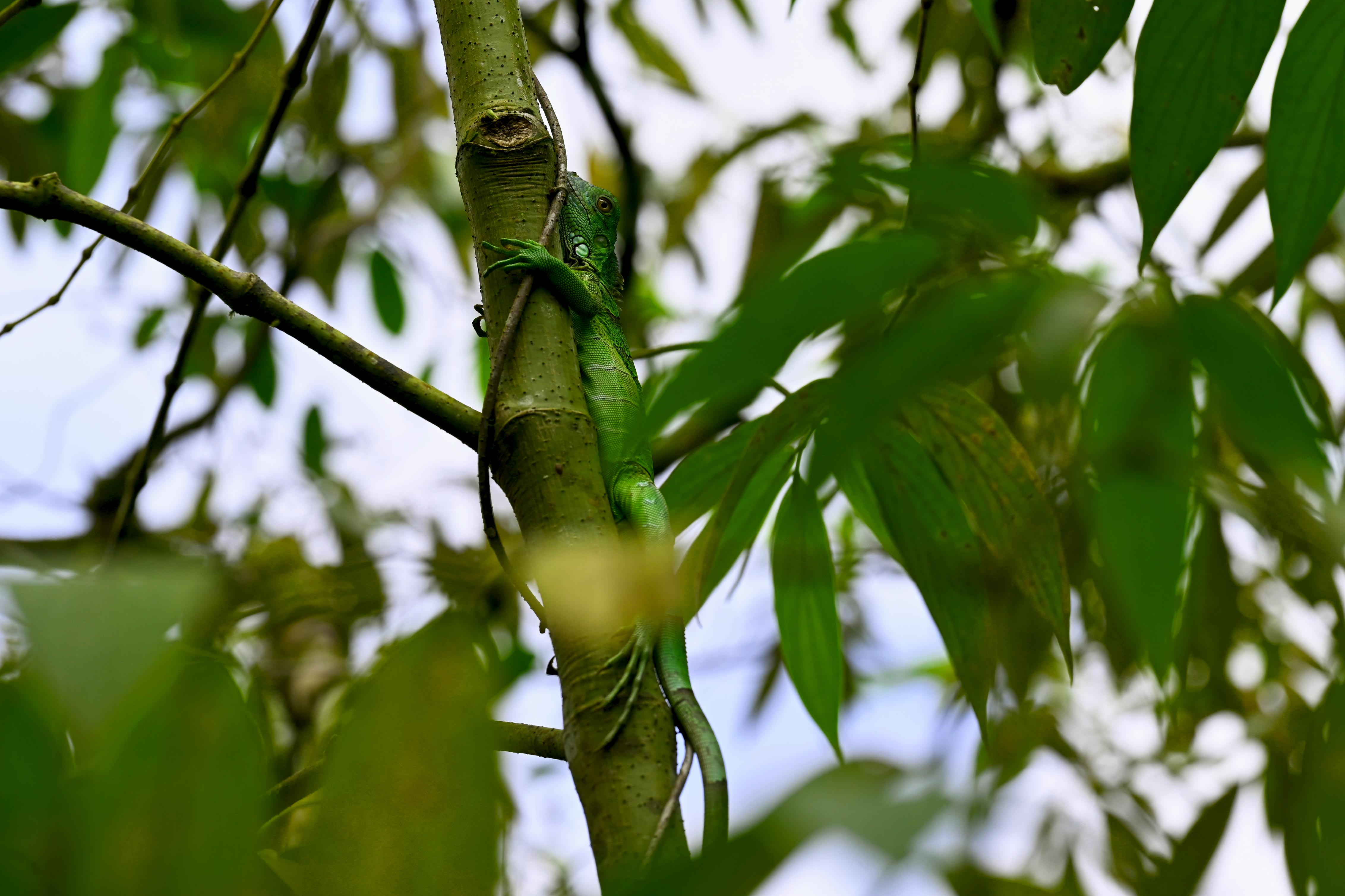
One morning when we ate breakfast together, we saw a juvenile green iguana quickly climb up a tree. I quickly set my fork down and rushed to photograph it. This iguana was not so shy, but constantly kept its eyes on me to make sure I was not a threat. Costa Rica is home to two species of iguanas and this one loves to climb trees. They can climb as high as 100 feet above ground to be as close to the sun as possible. As these herbivores make their way up, they primarily feast on leaves, fruit and flowers.
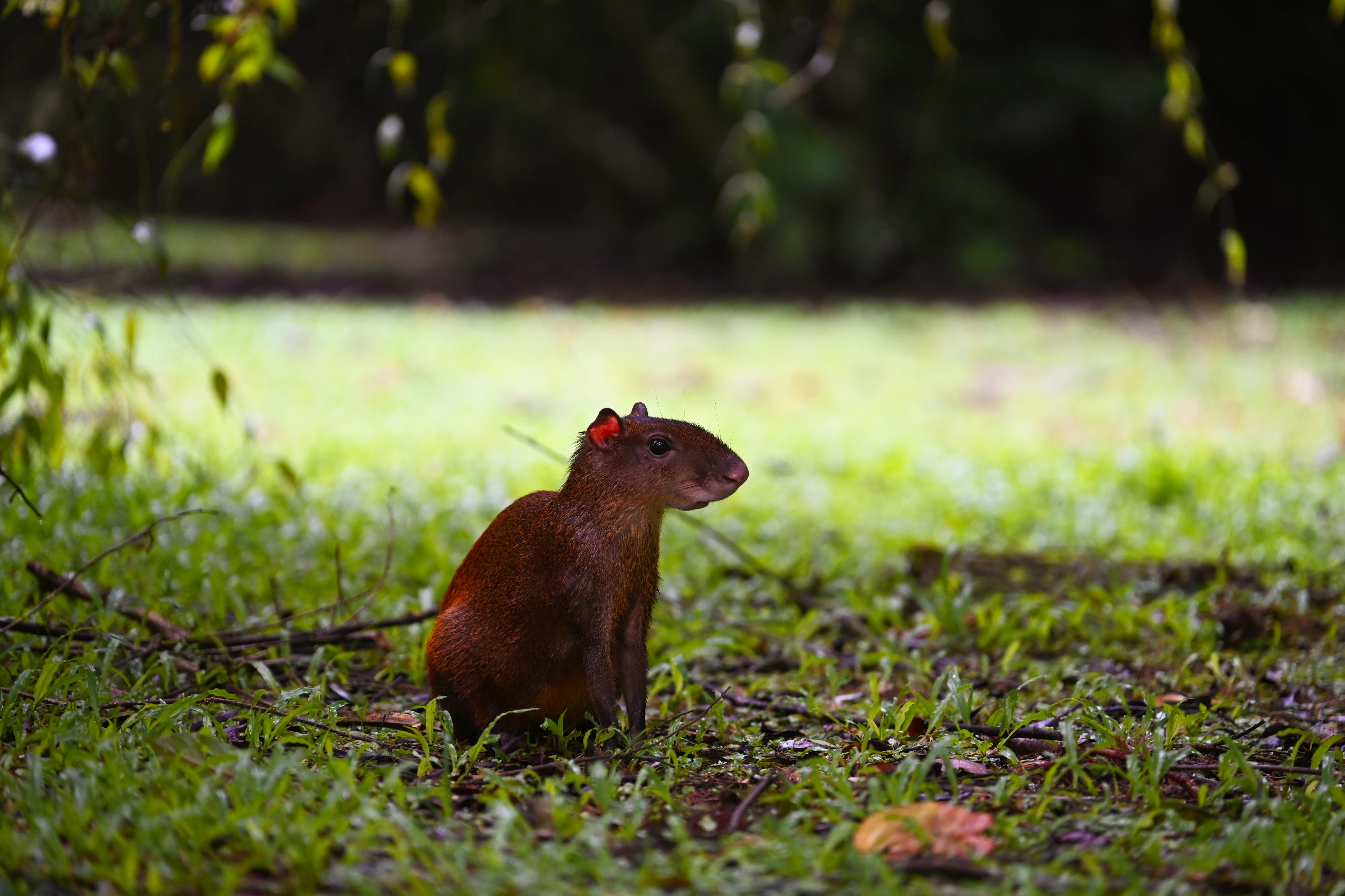
This little rodent had interestingly long limbs. Its longer legs made it look like it pranced as it ran across the grass. It seemed especially camera-shy, so it would always do its best to arch its back and hide behind bushes and trees. As much as it tried to hide, I was still able to sneak in a photo of the agouti, also known as the guatusa by locals.


