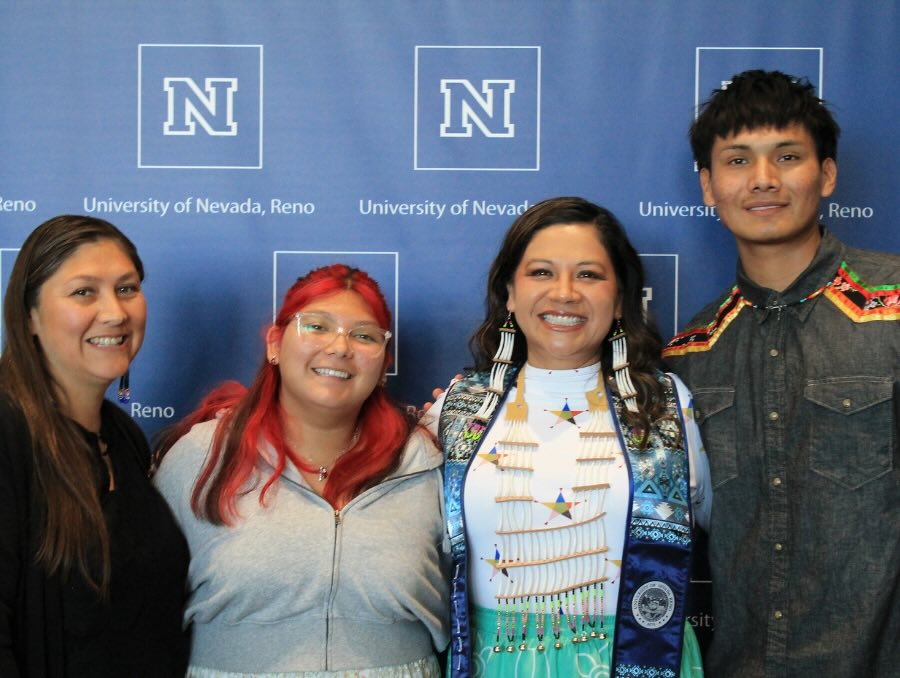
Misty Youngbear spends her days caring for patients at the Pyramid Lake Tribal Health Clinic, but what stays with her are the patterns.
The same conditions. The same challenges. The same questions that do not have simple answers.
As a registered nurse serving the Pyramid Lake Paiute Tribe for the past nine years, she has come to understand that many of the challenges her patients face extend far beyond a single visit.
“I’ve seen firsthand the health disparities that exist in Native communities,” Youngbear said. “Public health is close to my heart because of that, especially when it comes to things like diabetes.”
Now, as an Online Master of Public Health in Public Health Practice student and soon to be graduate at the University of Nevada, Reno, she is expanding her impact, connecting clinical care with prevention, education and long-term community health.
A path shaped by community
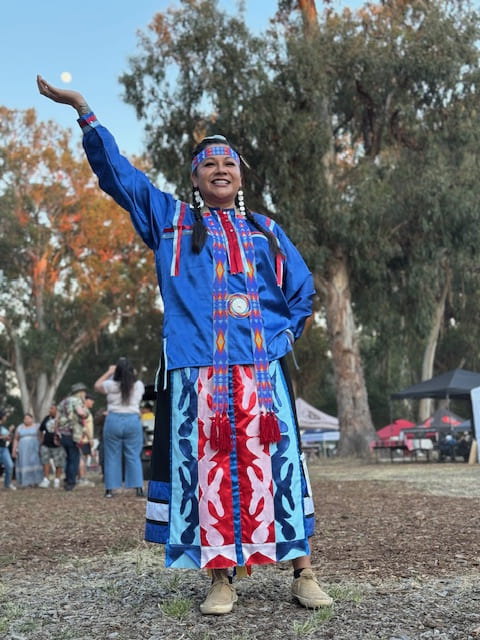
Youngbear’s journey into nursing began with a desire to help people in a direct and meaningful way. Working in tribal health has only deepened that commitment.
“In my role, I see the same challenges come up again and again,” she said. “It made me start thinking about how we can prevent these issues, not just treat them.”
That realization led her to public health.
“I wanted to understand the bigger picture,” Youngbear said. “Not just what is happening with one patient, but what is happening across the whole community.”
Learning while serving
Through the Online MPH program, Youngbear is able to continue her work with the Pyramid Lake Paiute Tribe while advancing her education.
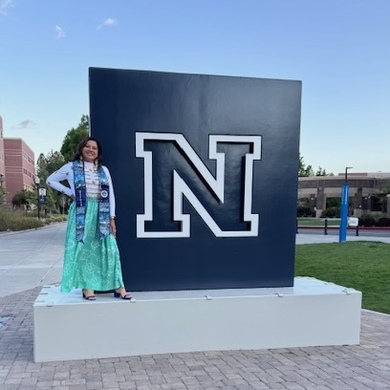
"It’s definitely a balance,” she said. “But what I’m learning in my classes connects directly to what I see at work. I can apply it right away.”
“That connection has made the experience especially meaningful.
“I’m not just learning theory,” she said. “I’m seeing how it plays out in real life, in my own community.”
For Youngbear, that shift in perspective has been powerful.
“It changes how you think about care,” she said. “You start asking, ‘What can we do earlier? What can we do differently?’”
Culture as a foundation for health
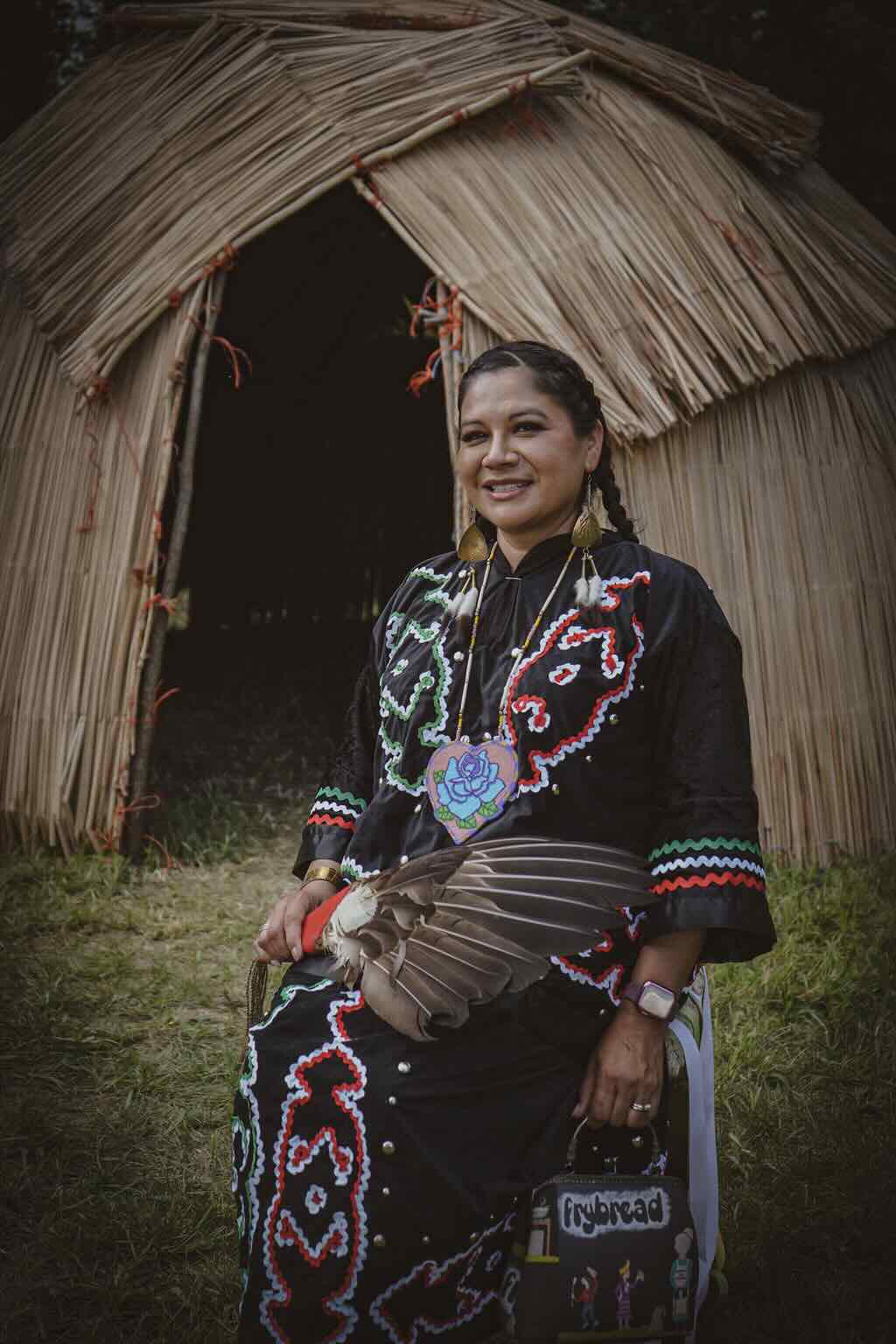
Youngbear, who is Meskwaki, also sees a strong connection between cultural identity and community health.
She participates in the Meskwaki language immersion program through her tribe in Iowa, an experience that has shaped how she understands well-being.
“Language and culture are a huge part of who we are,” she said. “When those are strong, our communities are stronger too.”
That perspective carries into her work in Nevada. “Working with the Pyramid Lake Paiute Tribe, I see how important it is to approach health in a way that respects culture and community,” Youngbear said. “It’s not one-size-fits-all.”
Looking ahead
Youngbear will graduate this May with her Master of Public Health degree, but she is not stopping there.
She plans to continue her education at the University of Nevada, Reno through the Donor Management and Transplantation Science Certificate Program, expanding her ability to support patients and communities in new ways.
“I want to help people understand the power of organ donation and why it matters,” Youngbear said. “There’s a lot of need for education and support around that process.”
She also hopes to serve as a bridge between patients, families and the healthcare system.
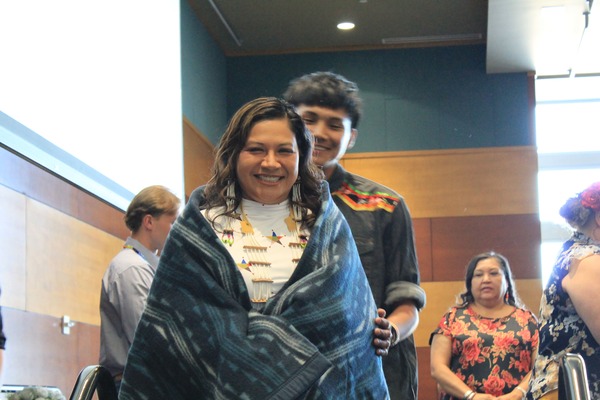
“I want to help guide people through the process,” she said. “Making sure they have the information they need and feel supported.”
Her long-term goal of becoming a nurse practitioner remains central, now paired with a broader focus that includes both clinical care and transplant education.
Youngbear’s commitment to her work and her community has not gone unnoticed by faculty.
“Misty stands out for the way she connects what she learns in the classroom to the work she is doing in her community,” said Adel Mburia-Mwalili, Ph.D., MPH, teaching associate professor at the University of Nevada, Reno School of Public Health. “She is not just learning concepts, she is applying them directly to real health challenges.”
“This is about my community. It’s about making things better, not just now, but for the future,” said Misty Youngbear.
In her coursework that has included using data and analysis to better understand conditions like diabetes in the community she serves.
“She brings a deep understanding of the community and approaches her work with respect and purpose,” Mburia-Mwalili said. “That combination is what makes her work so meaningful.”
“She understands the bigger picture of public health while staying grounded in the needs of the people she serves,” she said.
Advice for others
For other working professionals, especially Native students considering public health, Youngbear encourages taking that next step.
“It can feel like a lot, especially if you’re already working,” she said. “But it’s worth it.”
She emphasized the importance of bringing knowledge back to the community.
“We need more people from our communities doing this work,” Youngbear said. “People who understand the culture and the challenges. That’s how we make a real difference.”
A broader impact
For Youngbear, public health is both personal and professional.
“This is about my community,” she said. “It’s about making things better, not just now, but for the future.”


