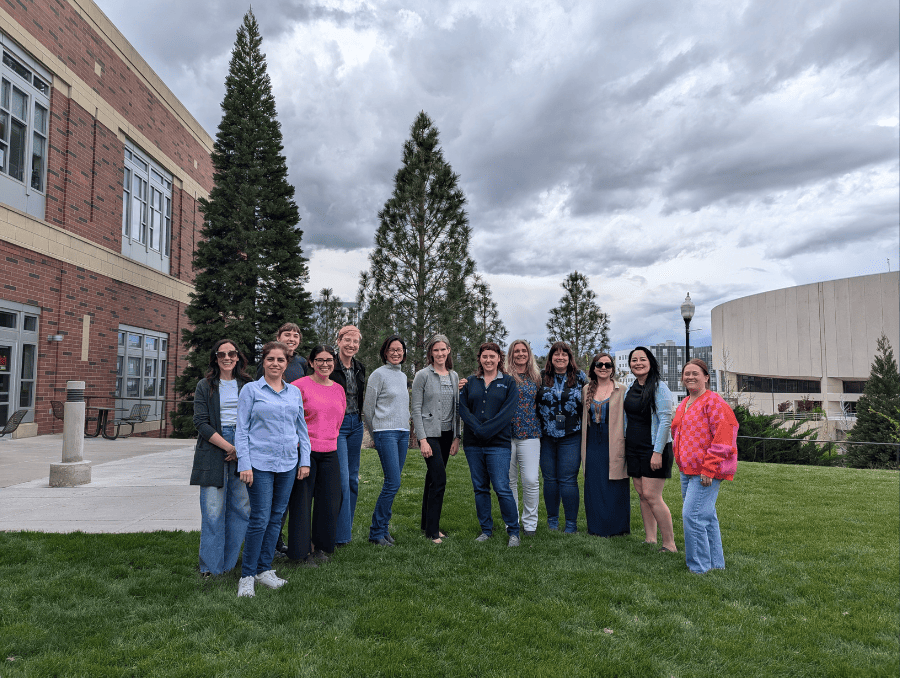
The Committee on the Status of Women (CSW) is composed of faculty and staff focused on gender equity on campus, taking on projects that address related issues and concerns to provide support and networking opportunities. By identifying and addressing systemic barriers facing women and feminine-presenting individuals, including trans women and non-binary people, CSW helps create clearer policies, healthier workplace culture and stronger support systems that benefit all faculty and staff members.
“We are committed to creating a campus environment where all individuals feel supported and valued. By fostering collaboration across faculty and staff, we can continue to move gender equity work forward in meaningful ways,” said Britany Wiele, CSW senior coordinator for workforce development, Center for the Application of Substance Abuse Technologies (CASAT) and co-chair of the committee.
Leveraging the experiences of its members, the committee features subcommittees that are dedicated to additional issues including power-based violence, period products and lactation/quiet rooms.
The power-based violence (PBV) subcommittee formed in fall 2025. The subcommittee focuses on prevention efforts, education about PBV and increasing awareness of campus resources. In the first year, the members focused on increasing the subcommittee’s understanding of campus resources, organizations in this space and the available data, the subcommittee has assessed the campus climate, needs, barriers and strengths with presentations from university entities such as the University Police Department – Northern Command, Pam Payne, Ph.D., of the Hope for Family Resilience Program and NevadaCARES, as well as community resources such as Safe Embrace. As they gather more details, the subcommittee encourages participation in a two-minute survey to assess the knowledge of certain PBV campus resources.
"I really value being a part of this subcommittee, as it has been great to meet people across campus that share my passion in this area,” said Melody Huslage, Ph.D., assistant professor in the School of Social Work and chair of the PBV subcommittee. I enjoy our small group because I have been able to get to know them at a deeper level than when we meet as a larger CSW group."
The period products subcommittee has put forward a proposal to purchase and stock period product dispensers for the university campuses. Offering free items addresses important equity issues that support student and staff health and represents the values and commitment of the broader CSW committee.
"I appreciate the opportunity to interact with other university staff and faculty who are committed to enacting responsible and ethical support and resources,” said Maureen McBride, director of the Writing and Speaking Center and chair of the period product subcommittee. “The CSW has allowed me to develop connections across the campus and to engage in work that I find personally and professionally fulfilling.”
The lactation advocacy subcommittee is committed to expanding access for students, staff, and faculty to comfortable spaces where individuals can attend to personal needs with dignity and privacy. The subcommittee is responsible for overseeing lactation/quiet rooms (LQRs), which are dedicated spaces available to members of the University community to support needs such as lactation, breast/chestfeeding, spiritual or religious practices, medication administration or mental health.
The University maintains several LQRs, including locations on the main campus, the Moana Professional Center, Redfield Campus and the University of Nevada, Reno at Lake Tahoe. Individuals can access the University map for the exact location of the LQRs. The lactation advocacy subcommittee respects the diverse needs of individuals and is dedicated to maintaining spaces that are welcoming, equitable, and accessible to the University community.
“A long-term goal of ours is to have dedicated LQRs within a five-minute walk of every workplace and classroom,” said Jennifer Delaney, organizational resilience training and exercise coordinator for the University Organizational Resilience – Northern Command and chair of the lactation advocacy subcommittee. For more information or to get involved, visit the LQR Webpage.
The CSW and subcommittees welcome campus-wide collaboration and engagement to build on existing efforts and collectively foster an inclusive, supportive environment for all. The committee is also exploring opportunities to expand engagement in the future, including the potential creation of a student advisory board in fall 2026.
Faculty and staff interested in learning more about CSW and its subcommittees can connect with Wiele. The University of Nevada, Reno has many opportunities for faculty and staff to get involved on campus. Each opportunity is designed to give University members a voice in shaping campus culture.


