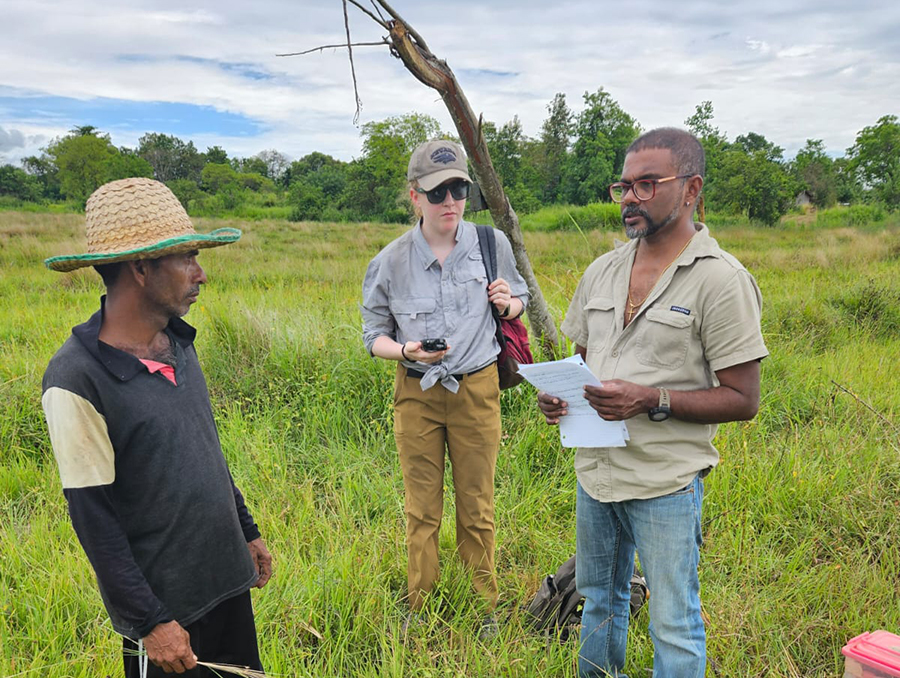
In this first-person narrative, Honors College student and undergraduate researcher Avery Nicholas recounts her experience investigating the relationship between humans and elephants in Sri Lanka during the Summer of 2024. Nicholas was joined by other University of Nevada, Reno Honors College undergraduates for this project, which is funded by the National Science Foundation.
What do you think of when you hear the word elephant? You would be surprised how many different answers exist. Some define elephants as biological animals, others as pests, or “other-than-human persons.” Ever since I was a kid, I have been fascinated by elephants. They were amazing, exotic beings I had never seen in real life, that were bigger than cars and could live up to 65 years old!
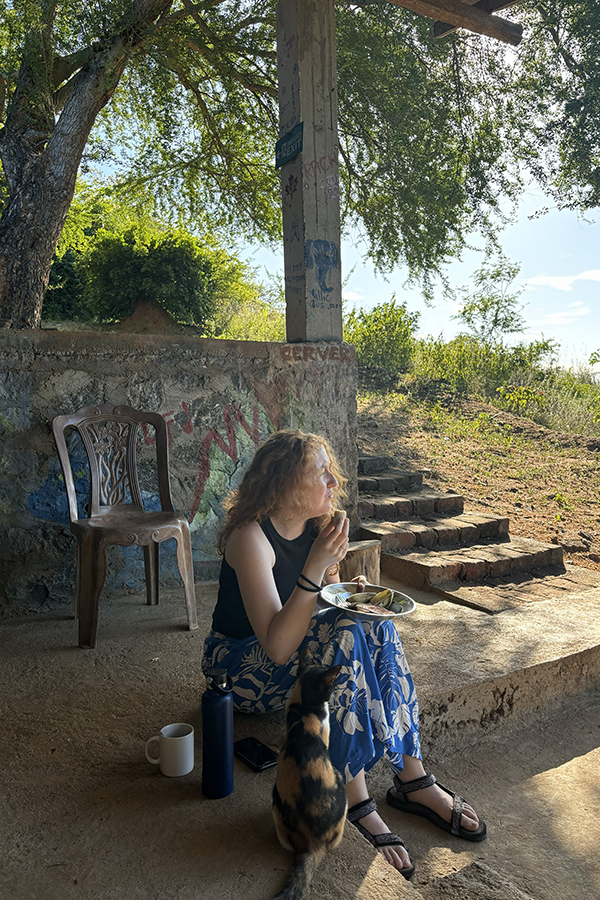
As a young woman from northern Nevada, I had never experienced an environment that interacted so closely with elephants. As soon as I heard Jason Ludden, Ph.D., now former director of the Office of Undergraduate Fellowships (OUF), present on this small country, Sri Lanka, at HonorsFIT, I knew I had to do everything I could to be a part of that project. Little did I know that the following summer would be one of the most influential experiences of my life. From staying in the Sri Lanka Wildlife Conservation Society’s (SLWCS) field house, to interviewing farmers, each moment was unique unto itself.
In summer 2024, I was a part of a research cohort of seven Honors College students in the Young Explorers Program. This project centered around the imminent problem of Human-Elephant Conflict (HEC), specifically in Sri Lanka, one of the world’s central hotspots for wildlife conflict. Wildlife conflict comes in all shapes and sizes, many of which I had no idea existed. One such example occurred from an interview with a farmer who owned a banana tree arguing with a young male elephant. Every day the same elephant would come and steal the farmer’s bananas from his tree. The man became fed up with his crops being stolen. Finally, one day, the farmer decided to confront the issue and talked to the young elephant, explaining that this tree was his and his family’s livelihood and the elephant needed to stop eating the fruit. In my American upbringing, I could go to the store and buy more bananas, but this man and his life relied on his trees. After telling this to the elephant, the young male elephant turned around and walked away from the farmer. Instances like this, when there was a perceived ‘discussion’ between an elephant and a person, was a foreign concept to me. I had never experienced a culture that valued a connection between the environment and its people as strongly as Sri Lanka’s.
"I’ve always had a sense of right and wrong paralleled with a moral code of “black-and-white.” This is not a realistic perspective; asking questions or talking with people about their views is vital. Life is in the grey."
My research project was “Understanding Local Perspectives and Education on Conservation Efforts in Sri Lanka.” Before embarking on this journey, I did extensive literature reviews and research on the Sri Lankan historical context and existing research on this topic. I later learned that many gaps exist in current conversations about HEC. Most research focused on either the anthropological side (humans) or the ecological side (elephants). This led me to do my research on how both sides interacted with each other and how new coexistent solutions could be created that could benefit both sides to this discourse.
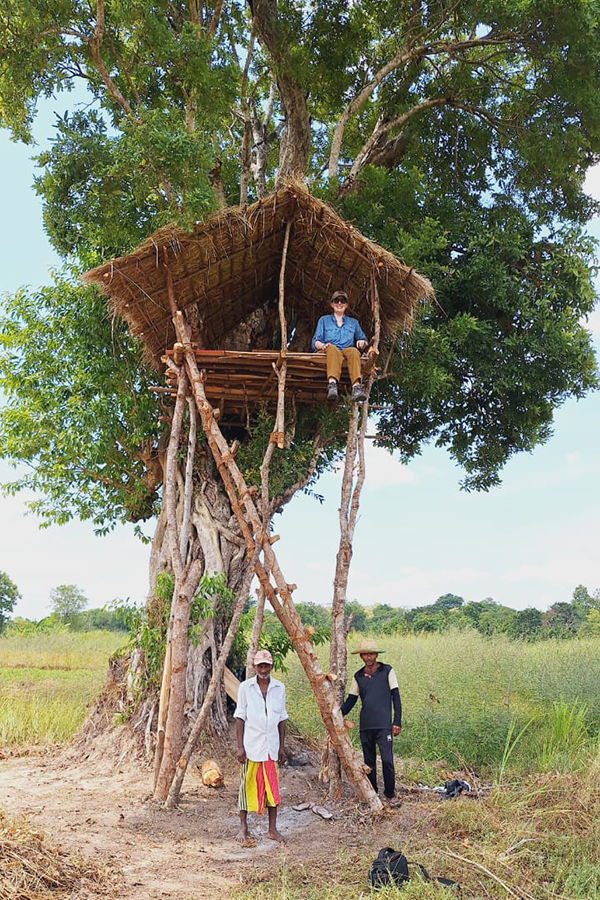
In the field, my research consisted of interviews from a survey that I had developed the semester before. As I was unable to fluently speak the languages spoken in Sri Lanka, Sinhala or Tamil, I worked with the SLWCS staff, who translated and provided me with transport in the surrounding communities. This provided me with insights into how to create a research project and how anthropological research is done in different cultural contexts. I learned how to roll with the punches, whether it was leeches falling from trees, pushing our Jeep to get a rolling start or taking notes on my interview recordings. My research project constantly changed as I re-formatted my survey questions or continually edited my research notes. Once I had collected my data and returned to the United States, I began formatting the final draft of my manuscript. The editing process of this project took months and many attempts before I landed on what I have now published with the Nevada State Undergraduate Research Journal (NSURJ).
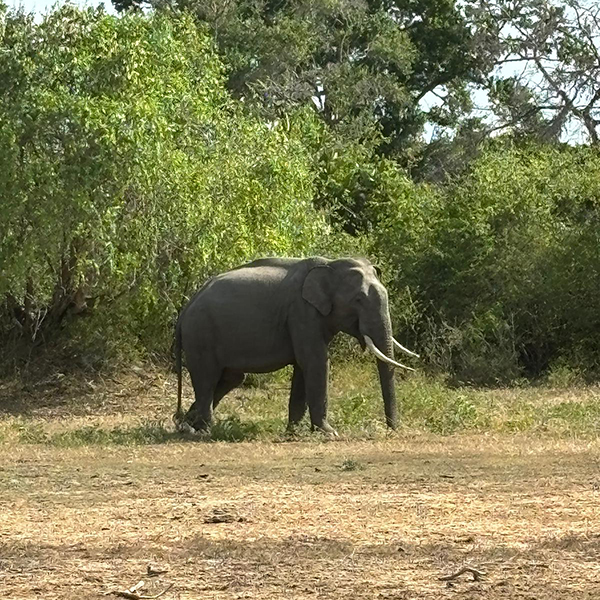
This entire experience, whether in the field during an interview while watching an elephant walk back into the forest or re-editing my publishing draft for NSURJ for the third or fourth time, was incredibly rewarding. I learned that understanding how someone defines a problem is a giant step in recognizing how to create new relationships and solutions for unexplained or ongoing problems.
During my experience, I truly learned the value in the phrase, “walking in someone else’s shoes.” I’ve always had a sense of right and wrong paralleled with a moral code of “black-and-white.” This is not a realistic perspective; asking questions or talking with people about their views is vital. Life is in the grey. A takeaway experience that I had in Sri Lanka was when I met a man who made his living through poaching. A younger version of me would have completely written him off as a “bad” person, when “bad” is not defined the same by everyone. This person, who had, from my previous assumptions, an unsavory livelihood, was another person simply trying to survive. He had a family he cared about, a rescued puppy named Suda, and I would have never known any of this had I not sat on his porch and drank a cup of tea with him.
I learned the lesson of genuinely asking with the intent of learning and knowing that compromises are a valid and usually unexpected result. With that lesson, I hope that my research creates new conversations in the broader context of Human-Elephant Conflict and highlights the truth in both perspectives, human and elephant.
If I were to give any advice to other undergraduate students who are thinking of doing research, it would be to be a beginner. I would have had a much different experience had I not been open and present. Many things did not go how I initially thought they would, but I was able to have the mindset that my experience, the good and the bad times, were temporary, so soak it up. Experience all the things, and if they’re bad, you’ll have a great story to tell later.

About the author
Avery Nicholas is a third-year Honors College student scheduled to graduate in Spring 2027 with degrees in anthropology and biology. After graduation, Nicholas hopes to attend graduate school for musculoskeletal sciences and eventually medical school. The story was written by Avery and edited by Undergraduate Research student worker Zoie Alstad.


