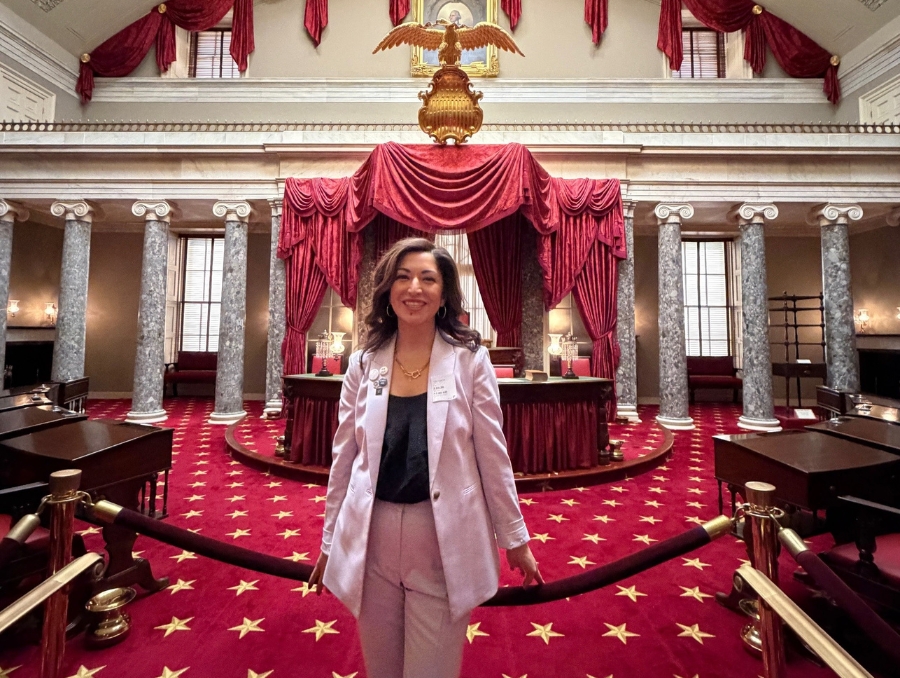
In this first-person narrative, Orvis School of Nursing Professor Vania Carter-Strauss, MSN, APRN, FNP-BC, reflects on her experience attending the State of the Union
When I received the call inviting me to attend the State of the Union address as a guest of U.S. Senator Jacky Rosen, my first reaction was simple: Why me?
I was being invited to sit in the chamber of the United States Congress as a representative of Nevada at one of the most visible civic moments in the country.
It felt accidental.
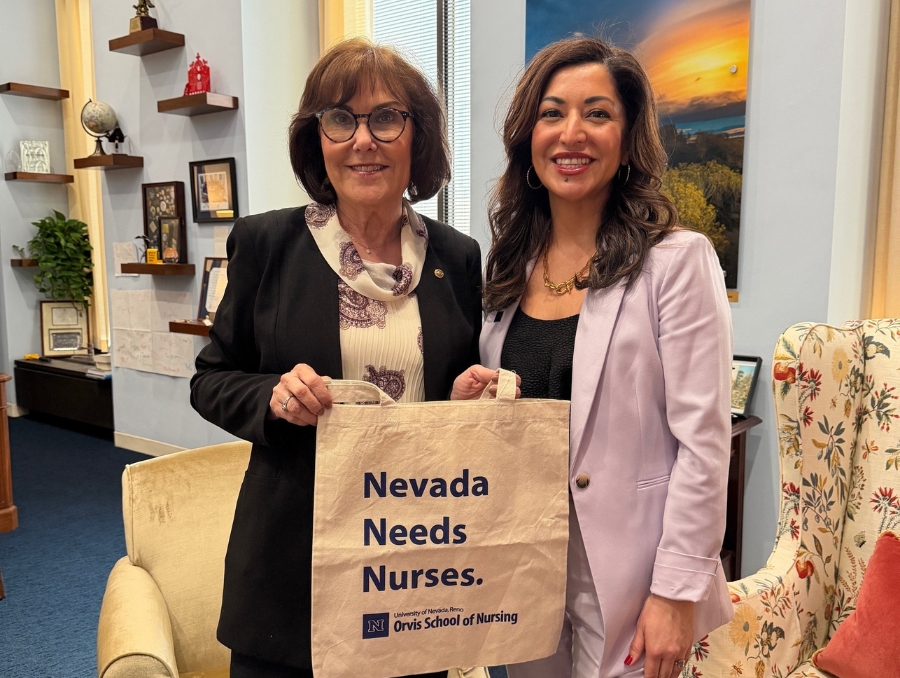
Vania Carter-Strauss in Senator Jacky Rosen's office meeting about the importance of nurses in the workforce.
I am a nurse practitioner. An educator. A small business owner. A daughter of immigrants. A mother. A faculty member and alumna of the University of Nevada, Reno. I have spent my career in exam rooms, classrooms and community spaces, not political stages. So when the invitation to attend the State of the Union came, it felt surreal yet strangely familiar. Much of my life has required stepping into spaces where I was not always expected, pushing through discomfort to claim access in rooms that were not designed with people who look like me in mind.
But as the day full of events, media and one-on-one conversations with our lawmakers evolved, I sat in that chamber, listening as national priorities were outlined and policies debated. Something shifted in me.
This wasn’t an accident.
It was the cumulative result of years of advocacy. Years of knowing that I did not have the privilege of staying quiet when others are hurting.
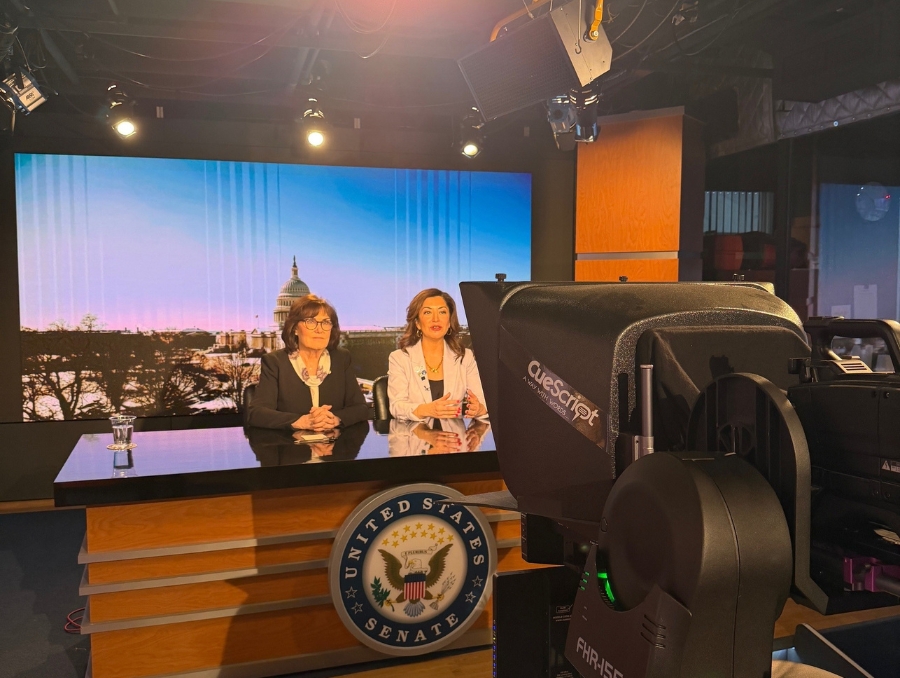
Nevada media press conference, which included taking live calls and an interview in Spanish with Telemundo.
For nearly 20 years, my work has focused on expanding access. Starting as a trauma nurse in a local ICU and now as director of Latinx Nursing Advocacy & Advancement and faculty at the Orvis School of Nursing, my role has focused on supporting undocumented and DACA nursing students navigating uncertainty, building trauma-informed and bilingual care models, mentoring first-generation professionals, strengthening workforce diversity in healthcare and celebrating Latinx heritage and culture. Much of this work is quiet. It happens in advising meetings, in community partnerships, in curriculum redesign, in community-facing events and in late-night conversations with students who are unsure whether they belong.
In higher education, equity-centered work can sometimes be viewed as peripheral. Important, but not central. Yet the policies debated in rooms like the State of the Union directly affect who can enter the workforce, who can access healthcare, who can build a dream of a small business, who can afford education and who feels safe enough to participate fully in civic life.
Sitting in that chamber, I was deeply aware that I was not there for myself.
I was thinking about the students who wonder if their immigration status will limit their future. I was thinking about patients whose health outcomes are shaped by access barriers that have little to do with clinical skill and everything to do with policy. I was thinking about rural communities across Nevada, about small businesses working to stay afloat and about the nurses and providers who serve as the backbone of our healthcare system.
And I was thinking about first-generation students like me who are raised by families who sacrificed everything, growing up with the constant feeling of belonging to two worlds, yet never fully certain you belong to either.
Representation in policy spaces matters.
Who is in the room influences which stories are told, which problems are prioritized and which solutions gain traction. When nurses are present in those spaces, conversations about healthcare and safety shift. When educators are present, workforce development becomes personal. When small business owners are present, economic policy is grounded in the realities of payroll, working capital, and the responsibility to sustain jobs in our communities. When individuals who understand immigrant families, first-generation students, and underserved communities are present, policy debates are grounded in lived experiences, strengthening how we understand and serve our communities.
That evening in Washington, D.C., I felt the weight and privilege of representing Nevada. But I also felt something else: a renewed sense of responsibility and, believe it or not, joy.
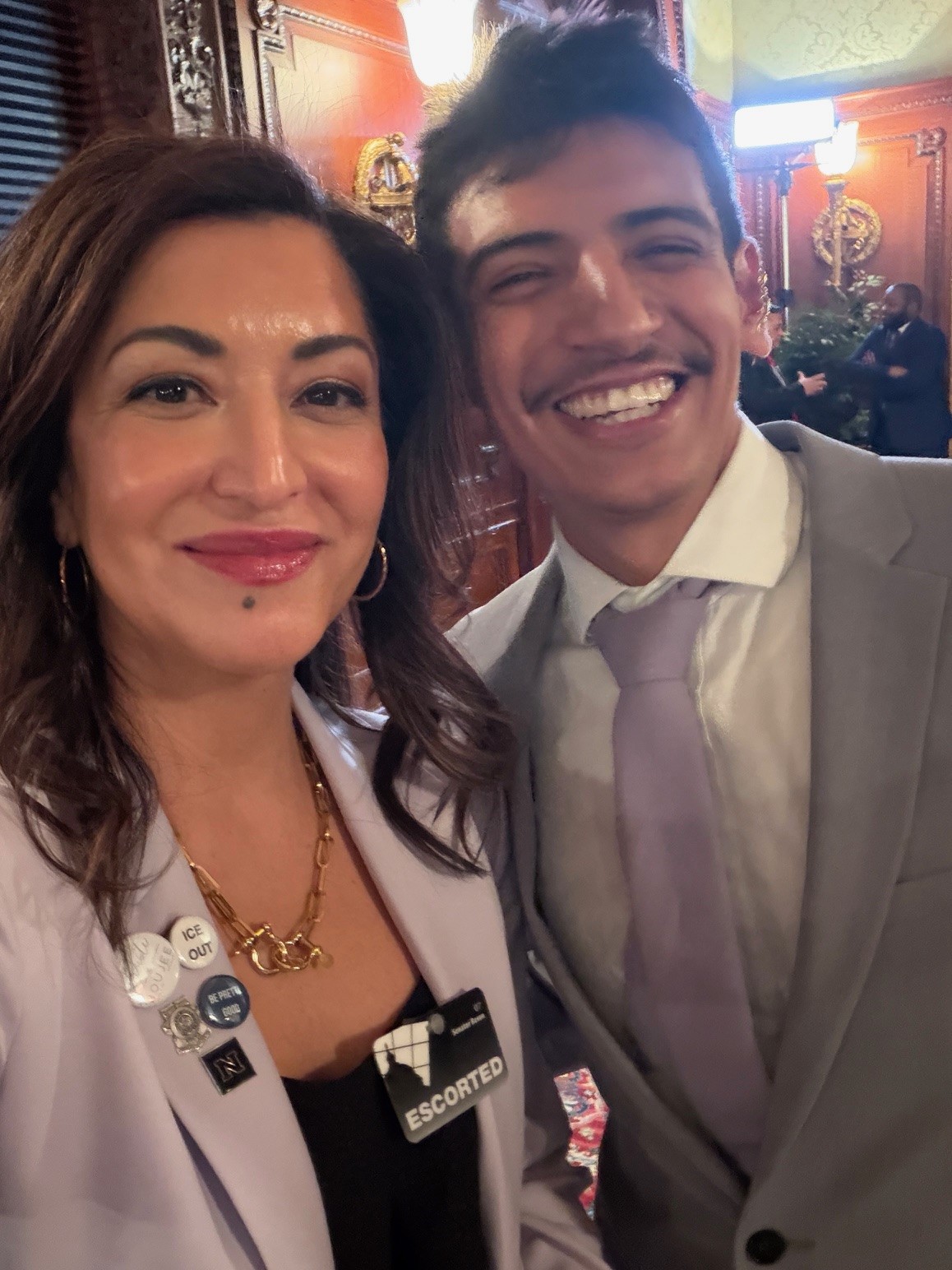
Vania Carter-Strauss with George Retes, Jr.
One notable moment for me was getting to connect with other State of the Union guests, including George Retes, Jr., a disabled U.S. veteran who had been wrongfully detained by ICE. We met by happenstance at a social event held before the State of the Union, and we immediately knew we were there for similar communities. We did not need to exchange long explanations. We did not recount the pain or grief our communities have carried. That was understood without words.
Instead, we shared joy.
We smiled at each other with tears nearly forming. We celebrated being present, fully and unapologetically, in a room that has not always reflected the communities we come from. We both knew we were deserving to be there, and for a moment we allowed ourselves to simply take in the pride, gratitude and possibility of that space.
In the midst of that sense of purpose, I also allowed myself to experience something I had not anticipated: joy in the small, unexpected moments of the day. After the Senate Dinner, I found myself talking about Korean beauty products and skincare routines with Senators Jacky Rosen (NV), Amy Klobuchar (MN) and Jeanne Shaheen (NJ), a conversation that felt delightfully ordinary in such an extraordinary setting. I rode the underground United States Capitol Subway System, quietly marveling at the idea that this hidden network moves lawmakers beneath the Capitol and isn’t open to the public. I walked through the magnificent halls of the Library of Congress during a private tour long after the building had closed to the public, the marble floors echoing softly as we moved through rooms filled with documents that shaped our country.
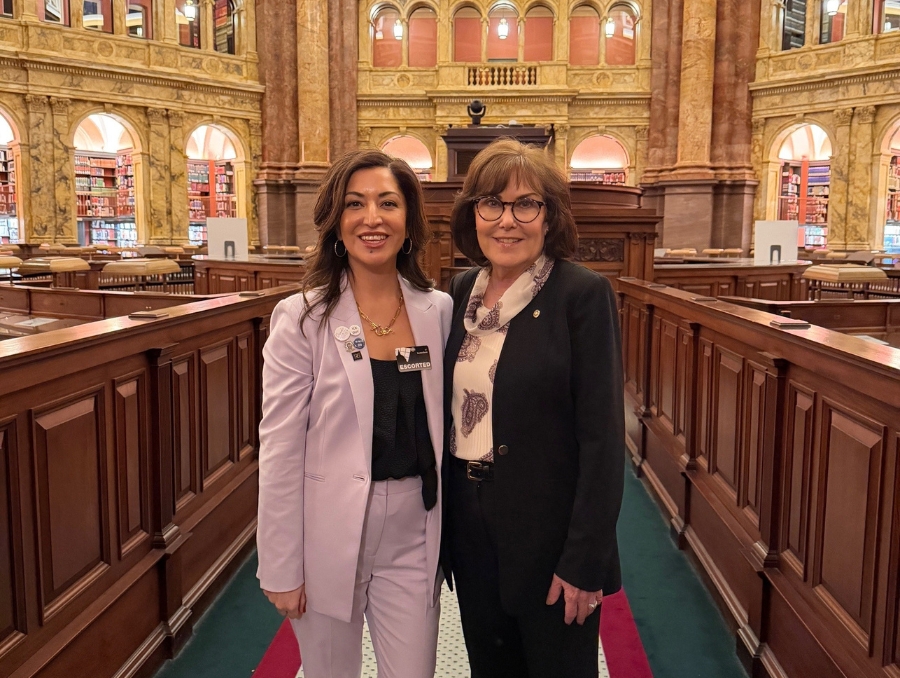
Vania Carter-Strauss and Senator Jackie Rosen inside the Library of Congress.
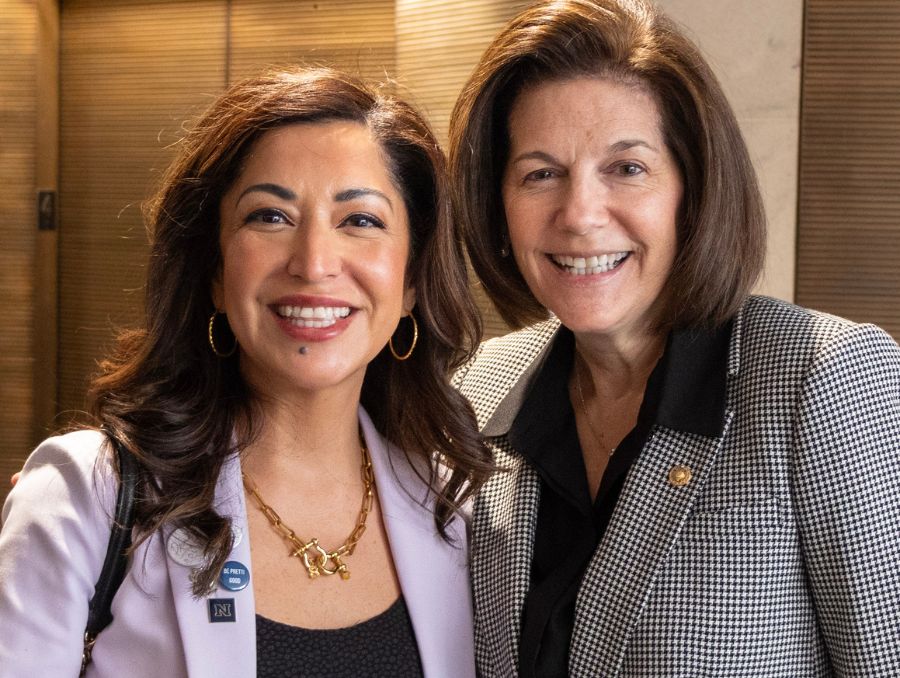
I caught up with Senator Cortez-Masto on my way to lunch, and it was not lost on me that I stood beside the first Latina Senator of Nevada. Even the media interviews and press opportunities felt less intimidating than energizing. I realized I was not simply observing these once-in-a-lifetime experiences - I was allowed to enjoy them.
Advocacy is not separate from professional practice. It is part of it.
As faculty, we do more than prepare students to pass exams. We prepare them to enter systems and ideally to improve them. As clinicians, we do more than treat symptoms. We see firsthand how structural barriers shape health and opportunity. As community members, we understand that workforce participation, educational access and health equity are interconnected.
The invitation to the State of the Union may have felt unexpected, but the pathway to that room was built over years of community-engaged scholarship and service. Advocacy, relationship-building and equity-centered leadership create credibility. And credibility creates access. For me, this access was beyond my wildest dreams and those of my ancestors.
My hope for our students, community and colleagues at the University of Nevada, Reno is this: do not underestimate the impact of your work and your voice, even when it feels invisible. The mentoring you provide, the community partnerships you build, the research you conduct and the policies you question: these efforts matter.
Sometimes they matter quietly.
And sometimes they take you into rooms you never imagined entering.
I did not “accidentally” attend the State of the Union. I was there because Nevada nurses show up for their patients regardless of where they are, because small businesses unconditionally give back to their communities, because educators are mentors for their students well beyond graduation, because I am a daughter of sacrifice and because I am a mother of two children hoping to give them a better future.
Because our University invests in service and scholarship that extends beyond campus.
Because advocacy, when sustained and grounded in care, opens doors.
And because diverse voices shaped by lived experience belong in the rooms where decisions are made.


