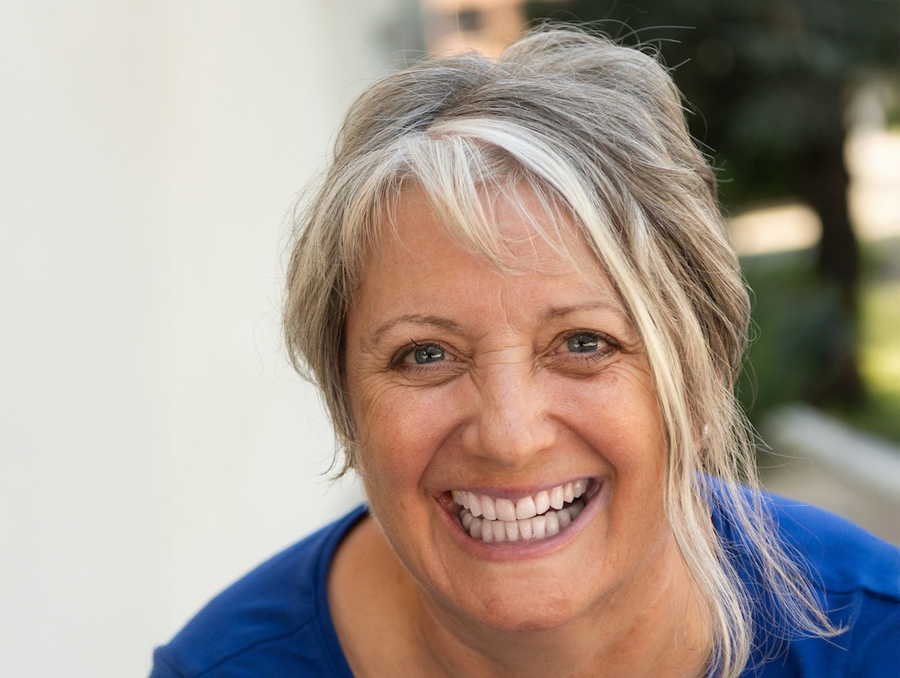
Being a strong public relations practitioner requires more than technical skill — it demands a steadfast commitment to ethical standards. But how do students learn to put ethics into practice, especially in an era defined by misinformation? Principal Lecturer of Public Relations and Advertising Alison Gaulden, APR, Fellow PRSA, tackles these questions head-on in her Media Ethics course, required for all students at the Reynolds School of Journalism.
How should PR professionals use their influence responsibly?
I believe the biggest responsibilities we have are transparency and confidentiality. I think we need to be, whether as students or professionals, transparent in how we're using information and where we got our sources. With the rise of AI, and with data mining, there's so much information available. We need to be clear about how we got it and we need to ensure we safeguard confidences and sensitive information that does not need to be shared with any groups.
How does PR influence democracy and public trust?
I think the public relations industry has a real obligation to share the truth. And, the way that public relations can influence democracy is predominantly through sharing real information — not fake information, not manipulated information — and prioritizing the interest of the public, even if it's at the expense of a company or agency or a government that will not.
Additionally, journalists have a responsibility to share information with context. And I think the PR industry, professionals and students alike, need to not manipulate that context in any way. We can't leave that context out, and it’s something that’s done all the time in political ads from both sides. PR professionals need to continue to carry forth that context so people can make informed decisions in a democracy.
How can students prepare for ethical dilemmas or conflicts in their future careers?
The dilemma that often comes into play is when you have “two good ethics.” So, students will need to know, what is their individual line? What are they willing to do? Right now, many students are struggling with using AI as a tool while knowing it is having an impact on the environment. They're going to have to reckon with that because some organizations they go work for are going to use AI and expect they know how to use the tool.
The thing is, a lot of ethical decision making is going to be based on experience. So, until students have gone through the experience, all they can do is rely on codes of ethics, whether they're studying PR, advertising, journalism or any related emphasis, to guide their behaviors. They can always reach out to a trusted mentor, either within or outside of their organization so long as they're not sharing inappropriate confidences. Students can also ask themselves how they are applying their balance, whose voice is being listened to, and whether or not they can overcome that individualism-versus-loyalty question in industry. Other than that, it's learning from the mistakes, because one way or another, you're going to make them.
How do you correct misinformation without amplifying it?
First of all, students should understand the difference between misinformation, disinformation and malinformation. Second, don't share things randomly. Even on social media, you need verifiable sources. In the early days of social media, I found myself sharing unproven posts until friends gently called me on it and said, have you checked this? At the time, I learned to check Snopes and other fact-checking resources and highly recommend students do that. For students starting their career, I encourage them to just take a minute and ensure they are sharing facts, not just doomscrolling and mindlessly sharing. I think that would help eradicate a lot of misinformation online.
For students, sometimes it’s easy to get overly clever. You just think it's kind of a funny campaign or you have a really strong message you’re trying to share. Without checking that campaign against members of the public who don't look like everyone in the room is a missed opportunity to see if you're saying things that are hurtful, or that perpetuate old stereotypes. I think it's important to focus group-check your work, recognizing it can be done nowadays in many more and much quicker ways.
How can students continue to uphold the ethical standards in their careers, especially as the world changes so rapidly?
A lot of practitioners have been out in the field, and the world has changed literally before our eyes in the last five years, if not the last ten. So, if it's been a while since people had been in school, taking the online Master’s in Strategic PR and Advertising would be a great way to refresh and better understand those new nuances in ethics for technology that has so overwhelmed us and, really, changed the way we do business. I highly recommend it.


