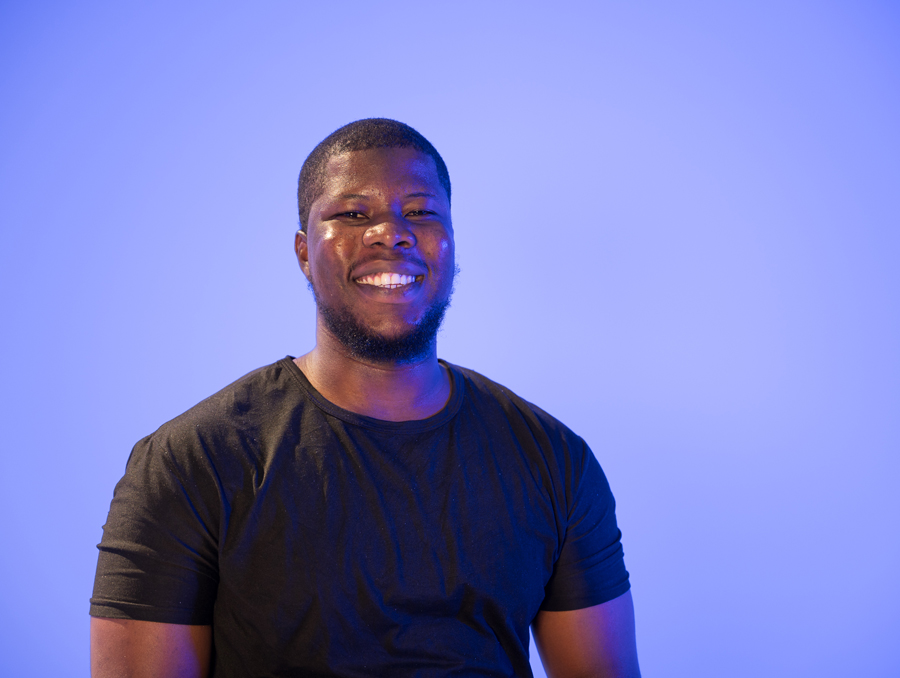
An outstanding researcher and health and science communicator, Reynolds School of Journalism graduate student Abdulmalik Lawal was recently accepted into Cornell University’s Ph.D. program after leaving Nigeria to pursue his education in the United States.
Lawal grew up in southwest Nigeria and earned a bachelor’s degree in science from Kwara State University, a prominent, state-owned institution. After graduating, he said he wanted to use his education for community development, so he began exploring master’s degree opportunities in the United States.
“I wanted to immerse myself and learn more about the future of media,” he said.
Lawal was accepted into three universities, but it was only after speaking with faculty at the Reynolds School of Journalism that he knew the University of Nevada, Reno was where he wanted to be. He specifically recalled conversations with professors Patrick File and Zeynep Altinay, who provided extensive information about the journalism program at the University.
“There were so many courses that I felt were going to give me what I needed toward my professional goals. That is what led me here,” he said.
Getting acclimated to a new environment can be a major adjustment for any student, and Lawal was no exception. Lawal said that when he first arrived in Reno, he was not in his best mental state due to the challenges and changes. Factors such as weather, culture and food can take time to get used to.
“The culture here is way different from Nigeria. I don’t think people really eat breakfast here, they just drink coffee and go. I went to conferences and there was salami and just leaves and fruit. I was like I’m gonna starve,” Lawal said, laughing. “Now, I have adjusted to that.”
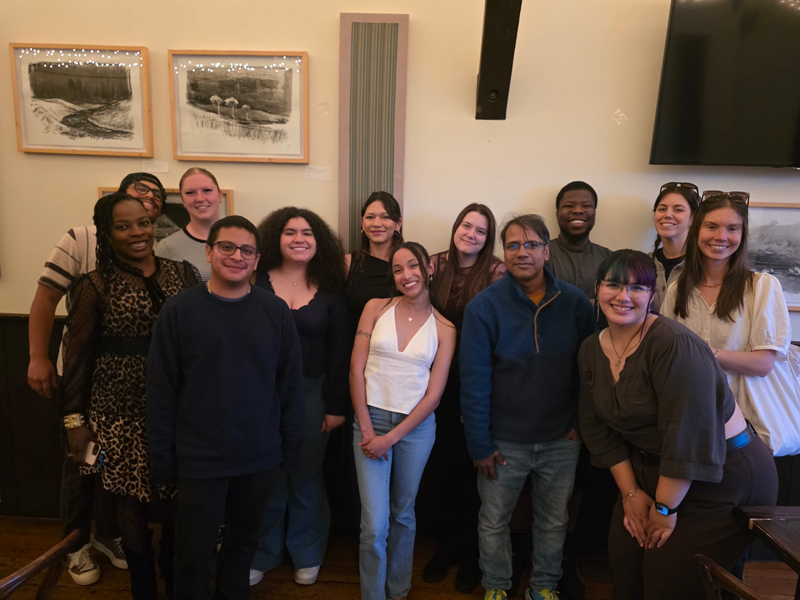
Lawal credits part of his adjustment to being able to build a strong community of friends and supporters in Reno. He believes the environment as a whole changed the way he thinks about community, science and media.
“Initially I was a major media person, and I love research also. Then I started working with researchers like Kelsey Fitzgerald in the Hitchcock project and said, ‘Okay, I think I want to switch to health science communications,’” Lawal said.
The Hitchcock Project for Visualizing Science, an initiative within the Reynolds School, aims to prepare students, professionals and scientists to present science in visual and creative forms. Through this program, Lawal had the opportunity to help design a campaign aimed at combating the opioid crisis through the Nevada State Opioid Response Program. His work on projects like these has earned him numerous awards, fellowships and grants.
Lawal said that by utilizing the resources the graduate program had to offer, he strengthened his research skills, which played a major role in motivating him to apply to various Ph.D. programs. He said he began testing the strength of his applications over a year ago by applying to numerous schools across the country.
“I started looking at Ph.D. programs and realized I now have everything that it takes to apply to these schools, so I said, why wouldn’t I? I’m going to just do it,” Lawal said.
While he was applying to various schools, he received mixed responses: sometimes he was accepted, sometimes rejected and sometimes waitlisted.
During his application process, Lawal said he was following the work of a social psychologist at Cornell University, a private Ivy League research university in Ithaca, New York.
“I’ve known this person for a very long time on paper, and I love what he is doing,” he said. “In my head, I was thinking to myself, ‘I’d love to work with this person.’ Then I laughed and said, ‘You won’t get in.’”
He then decided to apply anyway, and after some time, Lawal was invited to an interview at Cornell University. Lawal said the interview went extremely well, and two weeks later he received an email saying he was waitlisted. The program had received more than 240 applicants for just five seats.
Four weeks later, Lawal learned he had been granted one of those seats.
“If anyone would have ever told me that I was going to be accepted into an Ivy League school, I would have just looked at the person and smiled, ‘It’s good to hope and dream,’” he said, laughing.
Lawal credits his growth and success to God, himself, his family in Nigeria and the support and relationships he has built at the Reynolds School of Journalism.
“I used to tell people that 'home is not where you grew up or where you were born, home is where you feel comfortable, where you feel peace, where you are happy.' I would say Reno is home, and that home is relative.”
Lawal said his journey ultimately came down to overcoming self-doubt and learning not to define himself by others’ opinions.
“The hardest challenge was not believing that I can do what I am doing right now. I looked down on myself a lot because of the internal noises, there are always external noises. I almost allowed people’s opinions to be my reality. The hardest thing to overcome was to know that someone’s opinion does not have to be my reality,” Lawal said.

Graduate studies at the Reynolds School of Journalism
The Reynolds School offers an in-person graduate degree in media innovation for students who have a journalism, writing, communication or digital media background looking to hone their skills to become the next generation's communicators.


