Program at a glance
How much does it cost?
Learn more about how to afford a degree from the University of Nevada, Reno.
How long does it take?
This 120 credit program is designed to be completed in four years.
Learn more about how to afford a degree from the University of Nevada, Reno.
This 120 credit program is designed to be completed in four years.
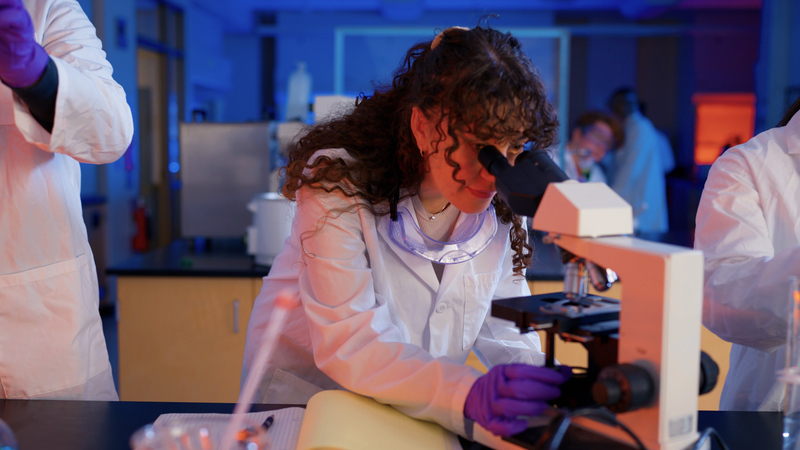
The bachelor’s degree in biology at the University of Nevada, Reno provides a strong foundation in the natural sciences while allowing students to specialize in specific areas of biology and participate in faculty-guided research. The program prepares graduates to compete nationally for admission to graduate programs in the life and health sciences, including medical and dental school, and for careers in civil service and industry. The major is designed to meet the requirements for most medical schools without additional coursework. You can also participate in undergraduate teaching opportunities through the Biology Peer Instruction Program, Human Anatomy Dissection Team or Undergraduate Teaching Assistantships.
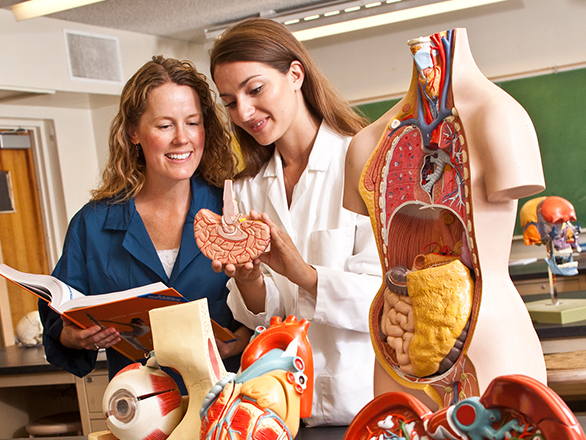
The Department of Biology at the University of Nevada, Reno offers a research-driven education that builds a strong foundation in the life sciences and prepares students for careers in health care, environmental science, conservation and biotechnology. Undergraduates work alongside faculty on hands-on research, gaining practical experience that supports career readiness and graduate study.
The College of Science offers educational opportunities in pure and applied physical sciences, earth sciences, life sciences, and mathematics. Professors in the College frequently earn statewide teaching excellence awards and are pioneers in their respective fields, with access to high-powered scientific facilities and resources to perform research on all seven continents. The College also encompasses three public museums that offer research and community engagement opportunities: the iconic Fleischmann Planetarium and Science Center, the Museum of Natural History and the W. M. Keck Earth Science and Mineral Engineering Museum.
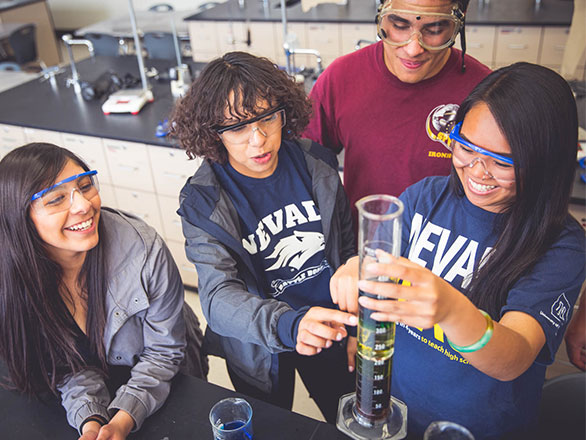
The NevadaTeach program at the University of Nevada, Reno provides you with all of the coursework to pursue a teaching license at the middle or high school level, while earning a comprehensive and marketable degree in your STEM discipline. Open the door to a world of career options while helping to improve education in Nevada.
You can customize your courseload to focus on one of three main topics of concentration in biology.
How do genes, proteins and cells function? From understanding the genetic basis of human traits and genetic diseases to untangling complex epigenetic influences on development, students fascinated by the building blocks of life have a wide variety of courses to choose from. Courses include Genetics, Human Genetics, Molecular Genetics, Developmental Biology, Cell Biology, Epigenetics, Cell Biology of Disease, Regenerative Medicine/Stem Cells, Genomics/Bioinformatics, Genes/Brains/Behavior and Neuroscience. Students interested in hands-on experiences might explore opportunities like serving as a peer discussion leader for genetics or volunteering at the Biology Help Center.
How do animals work? Knowledge of the physiological systems that allow us to acquire and distribute nutrients, maintain energy balance, defend against pathogens and reproduce is fundamental to human health and key to appreciating how animals across the tree of life have arrived at amazing solutions to survive in challenging environments. Courses such as Human Anatomy and Physiology (Lecture and Lab), Behavioral Endocrinology, Comparative Animal Physiology (Lecture and Lab), Endocrinology, Immunology, Parasitology, Sex and Reproductive Biology, Neuroanatomy, Sensory Systems and Comparative Biomechanics (among many others) explore these topics. Hands-on highlights include our cadaver dissection lab and the opportunity to join the Dissection Team which helps run the Anatomy and Physiology labs.
What are the “rules of life”… and how can we best preserve the dazzling spectacle of life as we know it? Students who are fascinated by the deep history of life on our planet, or the intricate relationships between plants and pollinators, microbes and humans, predators and prey, viruses and their hosts will appreciate the exceptionally wide array of biology courses to choose from. If you have a favorite group of animals, one of our “-ologies” courses offers the chance to gain deep expertise in its biology and natural history—for example, Mammalogy (mammals), Herpetology (reptiles and amphibians), Ichthyology (fish), Ornithology (birds) and Entomology (insects) are popular lab options, alongside plant biology and biological diversity. Hands-on highlights include volunteering at the University of Nevada, Reno Natural History Museum, participating in the Young Explorers Program to conduct research at international field sites, or learning how to carry out ecological research in the Sierras through Experimental Field Ecology.
Biology is at the heart of many of the biggest challenges facing humanity and our planet. From improving human health to tackling climate change, enhancing agriculture to conserving the environment, future biologists have a key role in society. With growing interest in interdisciplinary fields such as synthetic biology and advanced biomanufacturing, AI and machine learning, personalized medicine and genomics, a bachelor’s degree in biology is a great starting point for many careers, including:
76% of students receive financial aid
Almost everyone is eligible to receive some kind of aid. We offer need-based and merit-based forms of financial aid to help you afford college.
54% of all students graduate with no debt
That's right. More than half of our students leave the University of Nevada, Reno with no student debt.
At the College of Science, our accomplished faculty, inventive students, leading researchers and scientific pioneers take on complex challenges and unearth groundbreaking solutions for problems we all care about.
Learn more about the College of Science