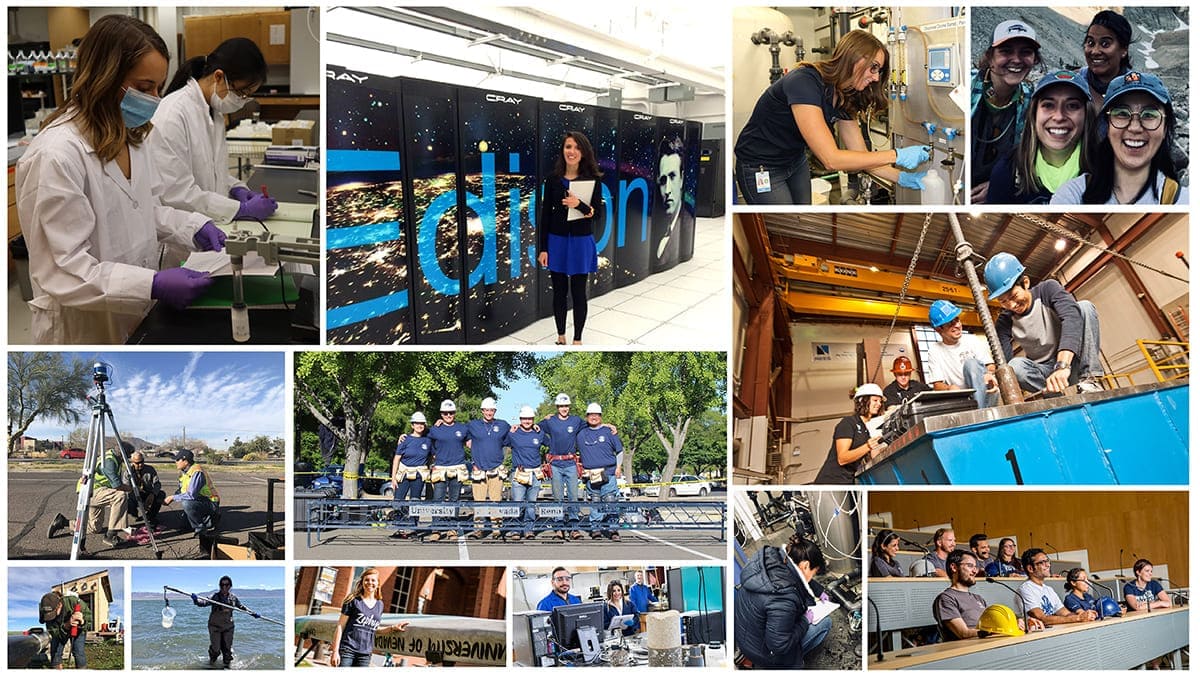
Building Nevada's infrastructure
For over 120 years, we've been helping Nevada design safe and sustainable communities.
For over 120 years, we've been helping Nevada design safe and sustainable communities.
Bachelor's degree in civil & environmental engineering
If you want to apply your scientific and mathematical expertise to important problems like clean drinking water, safe and sustainable buildings, and modern infrastructure, then civil and environmental engineering is the career for you.
M.S. and Ph.D. in civil & environmental engineering
Our graduate programs in civil & environmental engineering can help you take the next step in your career, whether you are looking for an industry-ready M.S. or want to conduct research as part of your Ph.D.
Our faculty
Our growing department has more than 20 academic faculty as well as professional and research support staff. Recent hires have expanded our department expertise in areas such as advanced manufacturing and simulation and modeling.
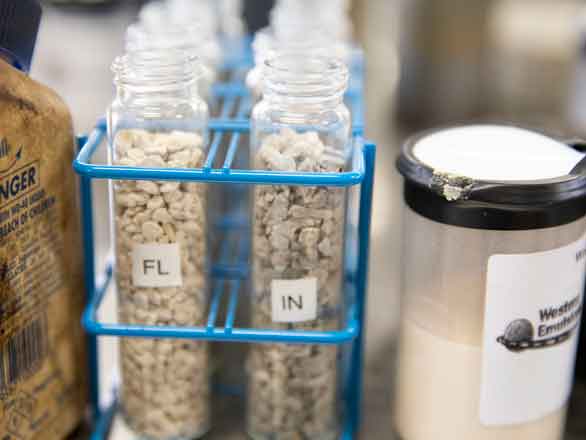
Our research tackles critical problems, from earthquake engineering to providing quality drinking water to safe and sustainable roadways.

Civil Engineering faculty member recognized with NSF CAREER grant
Elnaz Seylabi’s CAREER project aims to advance earthquake engineering practice

What’s shaking in the Earthquake Lab?
Professor Ramin Motamed utilizes the Laminar Soil Box for U.S. Department of Energy supported research

Grads of the Pack: Alyssa Radakovich
Researcher working with Environmental Engineering Professor Yu Yang accepted into prestigious program at Pacific Northwest National Lab
Join the College of Engineering students, faculty and alumni who are developing the ideas, techniques and technologies that change the world.