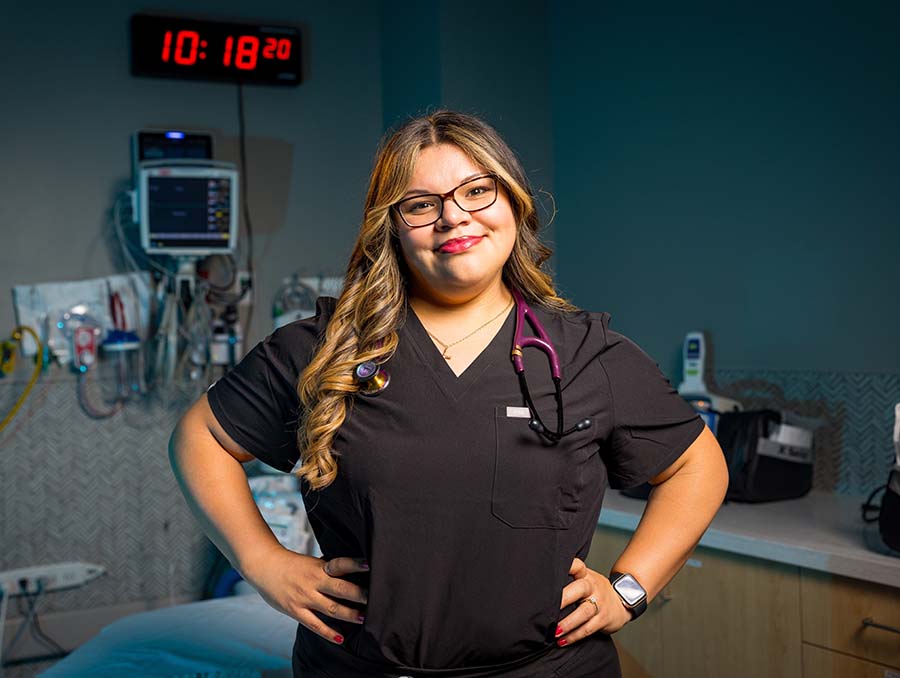
University of Nevada, Reno School of Medicine (UNR Med) graduate, Zoee Castro has built her medical journey on resilience, compassion and connection. Raised in Elko, she witnessed firsthand the limited health care access in rural communities, which inspired her to pursue medicine and shaped her commitment to serving others. Throughout medical school, Castro navigated profound personal loss with the passing of her mother, an experience that deepened her empathy and strengthened her understanding of what it means to care for patients from both sides of medicine. Supported by her family and the UNR Med community, she returned to training and now looks toward a future in emergency medicine, where she hopes to combine fast-paced clinical care with human connection.
Why did you become a physician?
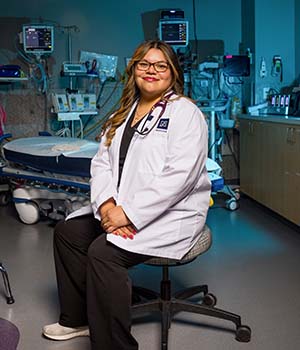
“I’ve been asked this question many times, and over time, I’ve come to understand that my motivation for becoming a physician is rooted in connection. I was raised in Elko, a small mining town where community isn’t just a value but a necessity. Growing up there taught me early on how deeply people rely on one another, especially in moments of uncertainty or hardship. At the same time, I witnessed firsthand the challenges of accessing health care in a resource-limited setting. It was not uncommon for families, including my own, to drive over four hours for specialty care or wait months just to be seen for primary care needs. These experiences showed me how gaps in access can shape not only health outcomes, but also the sense of security people feel within their own communities.
“Despite these barriers, what always stood out to me were the physicians who bridged that gap through genuine human connection. I often think about my family medicine physician, Felix DeGuzman, who practiced medicine in a way that went beyond diagnosis and treatment. He took the time to know his patients, to listen and to create an environment where people felt seen, safe and cared for. That left a lasting impression on me.
“Those early experiences shaped my understanding of what it means to be a physician. To me, medicine is not just about treating disease but also being invited into moments in people’s lives and building trust through connection. I chose this path because I want to be that source of stability and compassion for others, especially for those in communities where access is limited and trust in the system can be fragile.”
What specialty or area of medicine are you almost passionate about pursuing and what draws you to this field?
“I am most passionate about pursuing emergency medicine! While some may see the environment as chaotic, I am genuinely drawn to the unpredictability and energy of the emergency department. I thrive in fast-paced settings where no two days are the same, and where I’m constantly challenged to think critically, adapt quickly and act decisively.
“I’m also someone who values practicing hands-on medicine, and emergency medicine offers a unique balance of procedures and meaningful patient interactions. Whether it’s performing a life-saving intervention or simply taking a moment to reassure a patient, I appreciate the variety and immediacy of care that the field provides.
“What draws me most, however, is the role of the emergency department as a safety net. For many patients, it is the only place they can turn to in times of crisis. I don’t take that responsibility lightly and I am motivated by the opportunity to be there for patients in their most vulnerable moments. Emergency medicine, at its core, is about presence, trust and empathy during those moments. I aim to be the type of EM physician that helps patients feel safe, heard and transform these moments of crisis into moments of community!”
What is the biggest challenge you have faced in your medical education and how did you overcome it?
“The biggest challenge I have faced in my medical education was the loss of my mother, Celina Castro, to cancer. She was one of my greatest supporters throughout my journey to medical school, and it was unfathomable to imagine continuing this path without her.
“I remember someone once telling me, ‘Even in medical school, life keeps moving forward,’ and that sentiment became very real during this time. I was navigating the immense weight of grief while also feeling the pressure to continue performing academically. Balancing those two realities was one of the most difficult things I have ever experienced.
“What helped me through was the support system I had both within my family and UNR Med. With their encouragement, I made the decision to delay my graduation by one year. It was not easy, but ultimately necessary. That decision taught me one of the most important lessons of my medical training: while medicine will always demand a great deal from us, we must also learn to set boundaries and care for ourselves, both emotionally and physically.
“In the years since her passing, I have come to reflect on this experience not only as a profound loss, but also as a source of growth. It has shaped the way I connect with patients and deepened my empathy for those navigating illness and grief. I carry a piece of my mother with me in every patient interaction, striving to show the same compassion and presence that I once needed myself.
“Losing her will always be one of the greatest heartbreaks of my life, but it has also made me a more compassionate, grounded and understanding future physician. It has also made me a physician that knows what it feels like to be on the other side of care.”
Can you share a memorable experience during your medical training that has significantly impacted your journey as a future physician?
“One of the most memorable experiences during my medical training was my involvement with the Emergency Medicine Residents' Association (EMRA) over the past three years. Through this organization, I held several leadership roles, including serving as Medical Student Council Chair and as a member of the Board of Directors. These experiences profoundly shaped my growth as a leader and deepened my understanding of the broader impact emergency medicine physicians can have beyond the bedside.
“A defining moment within that journey was attending the ACEP Leadership & Advocacy Conference (LAC) 2025 for the first time in Washington, D.C. The conference was both inspiring and eye-opening, as it brought together emergency physicians and trainees to advocate for both their specialty and the patients they serve.
“One of the most powerful aspects of the experience was visiting Capitol Hill. I had the opportunity to meet with staff from several Nevada congressional and Senate offices, where we discussed the importance of Medicare and Medicaid, which are programs that serve as lifelines for many patients who rely on emergency care. Despite being early in my medical career, these conversations reinforced the value of sharing personal experiences, showing up, and finding common ground in advocacy work.
“This experience also expanded my understanding of what it means to be a physician. It showed me that the role extends beyond diagnosing and treating patients but also advocating for them at a systems level. Reflecting, this conference marked the beginning of my own commitment to leadership and patient-centered advocacy!”
How did taking a break from med school to heal from loss help you succeed and move forward?
"Taking a break from medical school ultimately gave me the space I needed to heal in a way that allowed me to return stronger, more grounded and more self-aware. During that time, I learned the importance of slowing down, especially in a season of life where my personal and family responsibilities felt overwhelming as I navigated the loss of my mother. In medicine, there is often an unspoken pressure to keep moving forward and push through difficult moments but stepping away helped me realize that asking for help is not a weakness. It reinforced that each of us is on our own path, and it’s okay for that path to look different than expected.
“Looking back, that time away became one of the most transformative periods of my life. It was the first time I truly prioritized my own needs over external expectations, and through that, I experienced a level of personal growth that I might not have otherwise reached. I came to understand that while we cannot control what happens to us, we do have a choice in how we allow those experiences to shape us. There were moments when I felt completely broken, but that space to heal allowed me to rebuild into a version of myself that is more resilient, reflective and intentional.
“Returning to medical school, I found that I was not only more capable academically, but also more present and connected in my patient care. Having experienced loss so personally, I now carry a deeper understanding of what it feels like to receive difficult news and to navigate the complexities of the health care system from the patient and family perspective. That insight has strengthened my ability to empathize and connect with patients in a meaningful way.
“Ultimately, the break did not set me back, but it moved me forward in ways that extended far beyond academics. It taught me that success in medicine is not just about perseverance, but also about self-awareness, compassion and the courage to honor your own story.”
What advice do you have for future students interested in becoming a doctor?
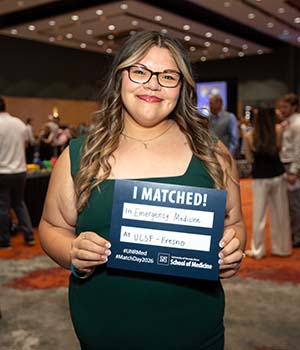
“The journey to becoming a physician is long, so I’ve learned it’s important to enjoy it rather than constantly waiting for the ‘next milestone.’ In medicine, there’s often a mindset of ‘I’ll be happy when…’ — when I get into medical school, when I match, when residency is over — but I’ve found real meaning comes from learning to be present in each stage. The days can feel long, but the years pass quickly, and if you can find purpose and even joy in the process itself, that becomes one of the most rewarding parts of the journey.
“I also think it’s important not to view this path as a competition. There is space for everyone in medicine, and we are at our best when we support one another. As a first-generation medical student, I definitely faced challenges and made mistakes along the way. Because of that, I’ve tried to be intentional about mentoring those coming behind me and creating the kind of support I once needed. I truly believe one of the best ways to move medicine forward is to reach back and lift others as we climb.
“And no matter how hard the journey gets, just know that your future patients are waiting for you. They need the next generation of physicians who will be kind, compassionate and ready to listen. Continue to follow your path and stay true to who you are.”


