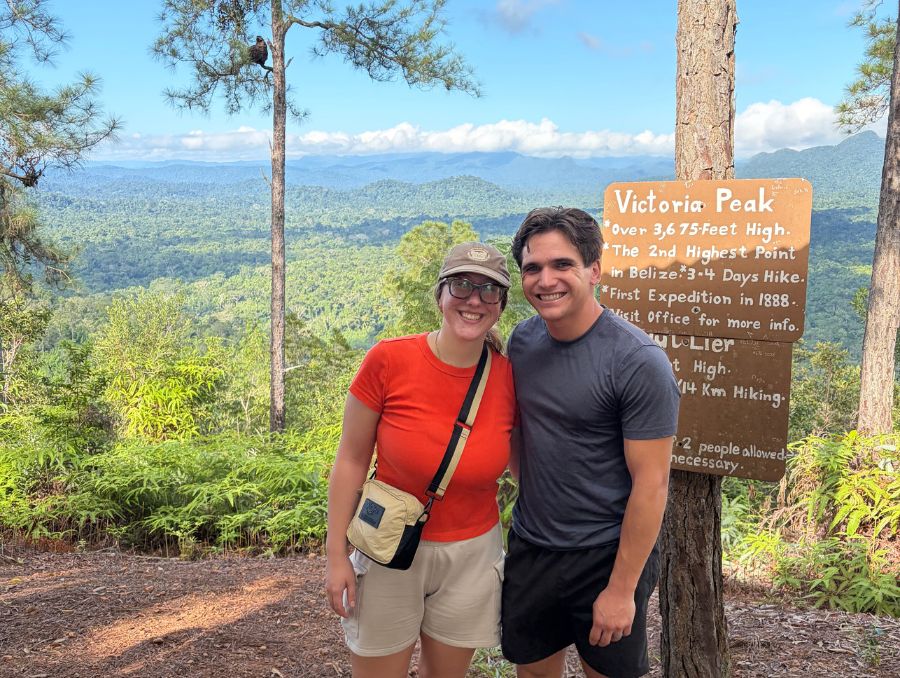
For Lizzy Riley and Kye Nolan, nursing is more than a shared academic path. It is part of a life they have built together.
The two met in middle school in Reno, began dating at 15 and have now been married for over two years. Today, Riley is a level 4 nursing student, and Nolan is a level 1 student, each at different stages of the same journey but moving forward side by side.
Their shared commitment to nursing recently took them beyond the classroom and across borders to Belize, where they joined a faculty-led global experience focused on community health and clinical care.
Riley’s path into nursing was shaped by personal experience.
“I gained a passion for high-quality, compassionate patient care after experiencing health problems in the past,” she said. “I wanted to be part of that kind of care for others.”
Nolan’s journey looked different at first. He began at the University as a civil engineering major but realized he wanted a career with more variety and human connection.
“I had always found the work Lizzy was doing interesting,” he said. “After an internship, I knew I wanted something more dynamic day to day, and nursing felt like the right fit.”
Being in the same program has brought a unique dynamic to their relationship. For Nolan, it means having built-in support. For Riley, it is an opportunity to reinforce her own learning while mentoring someone she cares about deeply.
“It’s really nice having someone who understands what you’re going through,” Riley said. “We get to talk about what we’re learning and growing through, while still having our own individual paths.”
Riley had long hoped to study abroad and work with diverse communities. When the opportunity to travel to Belize was announced, she knew she wanted to be part of it. Initially, Nolan was not yet in the nursing program, but when an additional spot opened, he was able to join.
The trip marked Riley’s first international travel experience beyond a cruise stop, while Nolan had previously traveled to countries including Japan and Germany. Together, they stepped into a new kind of learning environment.
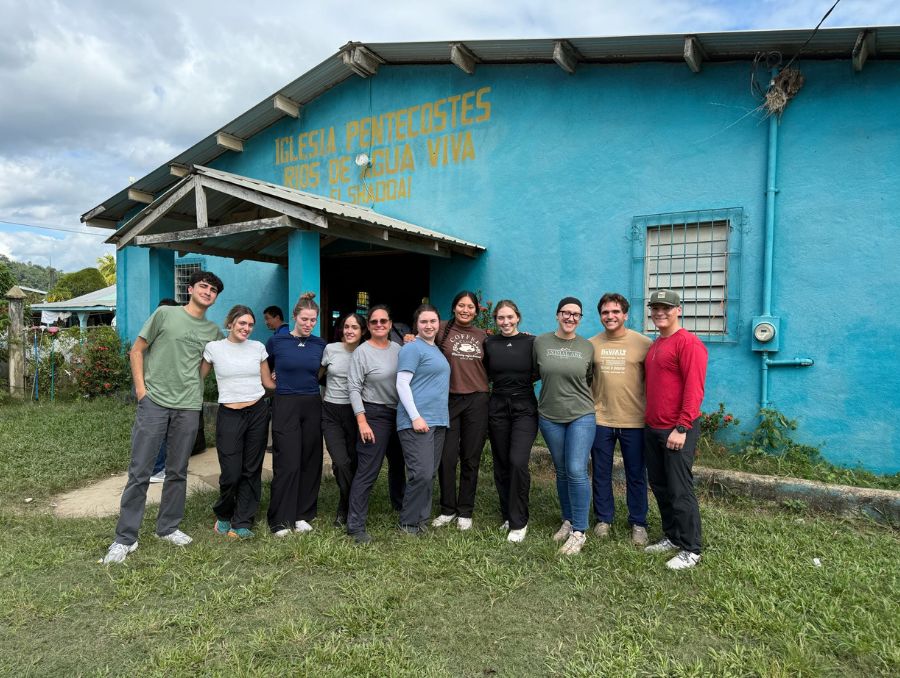
Led by Shannon Richard, Ph.D., R.N., CEN, CNE, CHSE, associate dean of undergraduate programs and associate professor, the program partners with Global Brigades’ Kambia initiative to support healthcare access in underserved communities.
Each day began early, with the group traveling to rural communities to set up temporary clinics in local spaces such as churches. There, students worked alongside medical professionals to support patient care.
“We helped triage patients, take vitals, assist with exams and help distribute medications,” Nolan said. “It was hands-on in a way that really pushed us to learn quickly.”
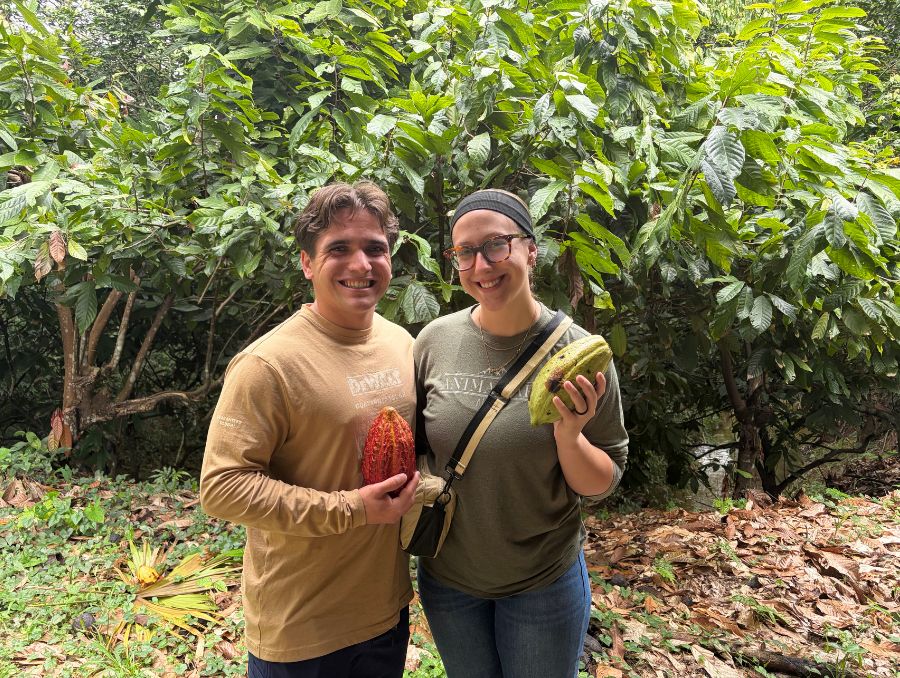
Beyond clinical work, students also engaged with the community, learning about local practices such as herbal medicine and traditional chocolate making, deepening their understanding of culture and daily life.
One of the most impactful moments for both students came through a simple but meaningful intervention such as providing oral hygiene education and supplies.
“The community had very limited access to oral care,” Riley said. “People were so excited to receive toothbrushes and learn how to take care of their teeth. It really stayed with us.”
The experience also brought into focus the broader social and environmental factors that shape health. Through conversations with patients, they learned about limited access to clean water, sanitation and waste systems.
“It made us realize how much the environment impacts health,” Nolan said. “People want to be healthy, but their circumstances can make that really difficult.”
For both students, the experience shifted their perspective on care and reinforced the importance of empathy.
“It helped us understand how much of a gift it is to both receive and provide healthcare,” Riley said.
Experiencing Belize as a couple added another layer of meaning to the trip. They were able to support one another while also witnessing each other’s growth.
“Lizzy got to see me learn skills on the spot, like taking vitals and talking with patients,” Nolan said. “That was really special.”
For Riley, watching Nolan step into the role of a future nurse was equally impactful.
“It was amazing to see him come into his own,” she said.
The experience has shaped how both students see their future in nursing. They hope to continue seeking opportunities that allow them to work in diverse settings and learn from communities around the world. They also encourage other students to take part in similar experiences.
“If you have the opportunity, take it,” Riley said. “You learn so much and gain a level of independence and perspective that’s hard to find elsewhere.”
For Professor Richard, that kind of transformation is exactly the goal for creating the Belize global experience.
“As a college student, I had the opportunity to travel abroad, and it was a transformative experience,” Richard said. “I wanted to create something similar for our students, one that expands their understanding of health while fostering cultural humility and professional growth.”
Richard emphasized that the experience is not about changing communities, but about learning from them and supporting sustainable, respectful care.
“I was incredibly impressed by the compassion and dedication our students demonstrated while caring for residents in the Mayan communities we served,” she said. “Their efforts contributed to a record-breaking number of community members receiving care, an achievement that reflects the dedication and promise of our nursing students.”
Through programs like this, Orvis School of Nursing students are not only building clinical skills, they are gaining the perspective needed to lead in a complex, interconnected world.
And for Riley and Nolan, it is a journey they are proud to take together. Together, they reflect The Wolf Pack Way in action, supporting one another, embracing new experiences and using their skills to make a meaningful difference.


