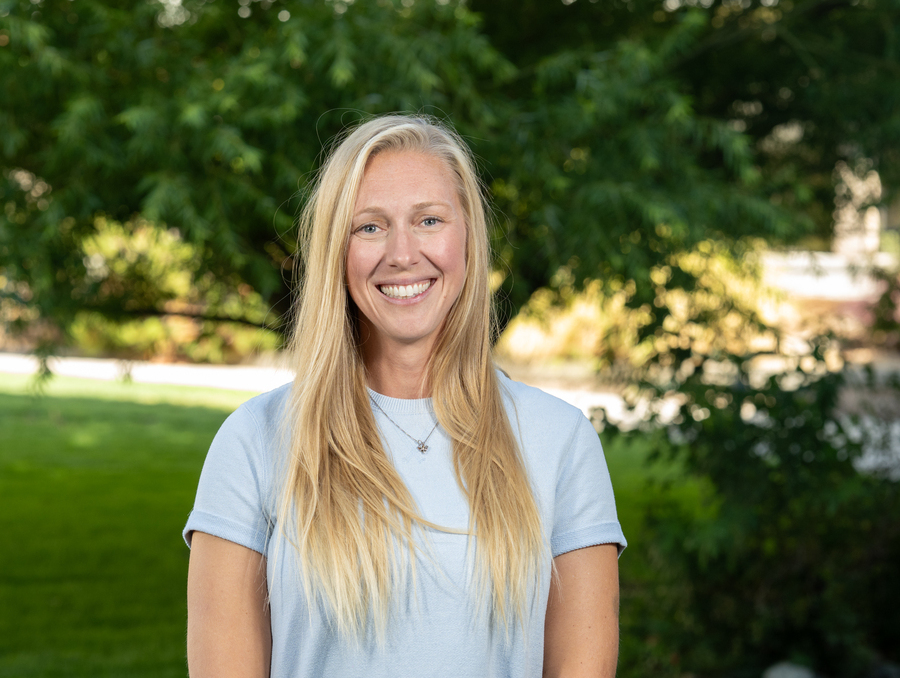
“Energetic,” “passionate,” “inspires transformation,” are just some of the ways students describe Lyndsay Munro, professor of biochemistry, molecular biology & biotechnology. Munro’s enthusiasm for chemistry is always felt by her students, whether it’s in a large lecture hall or small group discussion.
“She has a gift for making difficult concepts approachable,” wrote one student of Munro. “Topics that once felt overwhelming became manageable because of the way she breaks them down step by step.”
Munro has been awarded the 2026 Paul and Judy Bible University Teaching Excellence Award; it is one of many awards she has received during her career at the University as part of the College of Agriculture, Biotechnology & Natural Resources. Munro is known for designing courses that prioritize understanding over memorization, while incorporating interactive learning strategies.
“Dr. Munro brings a rare combination of dynamism, thoughtfulness and action to everything she does," said University Executive Vice President and Provost Jeff Thompson. "Having worked with her across multiple initiatives, I’ve seen firsthand how she raises the bar, not only in her own classroom but across the institution.”
"Dr. Munro brings a rare combination of dynamism, thoughtfulness and action to everything she does."
Nominations for the Paul and Judy Bible University Excellence Teaching Award come from students; below are a few sentiments shared in their nominations.
“What stands out most is Dr. Munro’s ability to change how students see themselves. I have watched her take students who were hesitant to speak up and give them the confidence to contribute and lead. That confidence carries far beyond her classroom.”
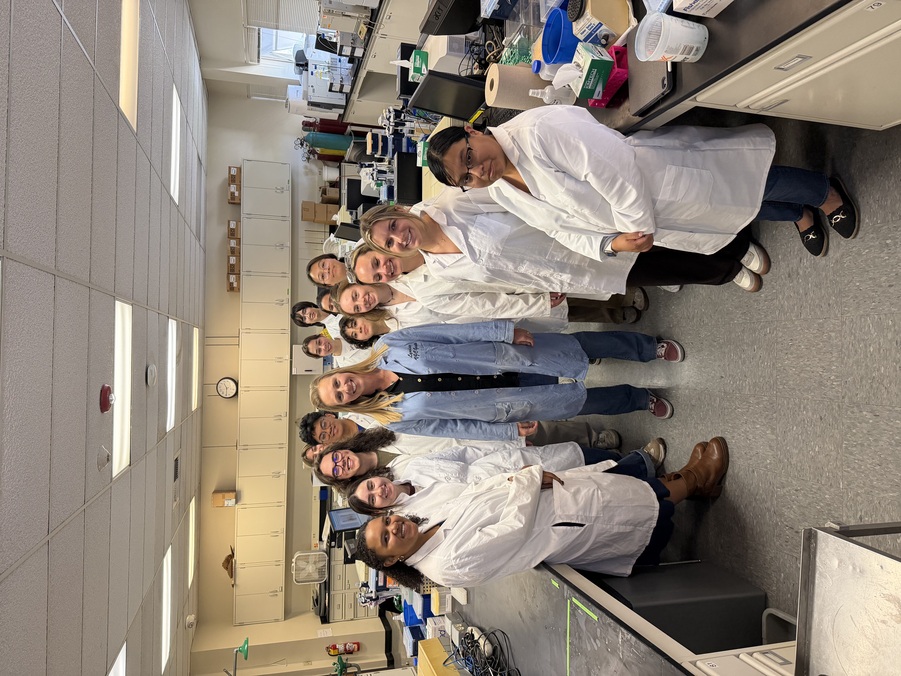
“Dr. Munro is one of the most passionate educators I have ever seen. She pushes students beyond just passing a class, helping them build deep understanding and lasting confidence. Her energy is constant, even in large lectures, and she makes sure every student feels seen and supported.”
“Whether it is offering extra office hours or adjusting materials based on feedback, Dr. Munro shows that student success genuinely matters to her.”
“Her enthusiasm for chemistry is contagious. She is constantly improving her courses and bringing in new ideas from research and pedagogy.”
“Whether it is offering extra office hours or adjusting materials based on feedback, Dr. Munro shows that student success genuinely matters to her.”
It is not just the ways students learn that motivates Munro, but also how faculty teach. Munro currently serves as the Faculty Liaison for Academic Standards and has spent the 2025-2026 school year leading various Pack AI initiatives, including the Symposium Series “AI in the Classroom,” which brings faculty together for collaborative conversations. Munro also teaches "AI in the Wild," a one-credit weekend course taught on the University's Lake Tahoe campus. Over the course of three days, students engage in discussions and hands-on projects on how AI can complement natural inquiry.
Here, Munro answers a few questions about herself: her career, her approach to teaching and who she is outside of the classroom.
Q&A with Lyndsay Munro
Q: What’s something your students have taught you?
A: My students have taught me that they are all doing their best in the moment, even if their best is 80% or 50%. They have also taught me that they are each facing their own challenges, and that to help them succeed, I need to recognize those realities and meet them where they are.
Q: What’s a risk you’ve taken in your teaching, and what did you learn?
A: I am constantly experimenting with new teaching techniques, whether that is using generative AI, creating alternative assessments or changing my classroom approach. At first, it was intimidating to try something new, but I have learned that even when something does not work as planned, it still provides valuable insight that makes me a better instructor.
Q: How has your teaching style evolved over your career?
A: Early on, I focused heavily on covering all the material and following traditional grading practices. Over time, I have stepped back and focused more on the bigger picture, shifting away from grades and toward what I truly want students to understand and be able to do.
Q: If you hadn’t gone into academia, what would you have pursued?
A: I likely would have pursued coaching women’s basketball, possibly at the university level. Basketball was a major part of my life, and coaching would have been a natural continuation of that path.
Q: When you’re not in the classroom, what do you enjoy doing?
A: I love being outdoors with my family. In the summer, we enjoy camping, hiking, paddle boarding and traveling, especially to places like Kauai and Canada. In the winter, we spend our time skiing and snowboarding.


