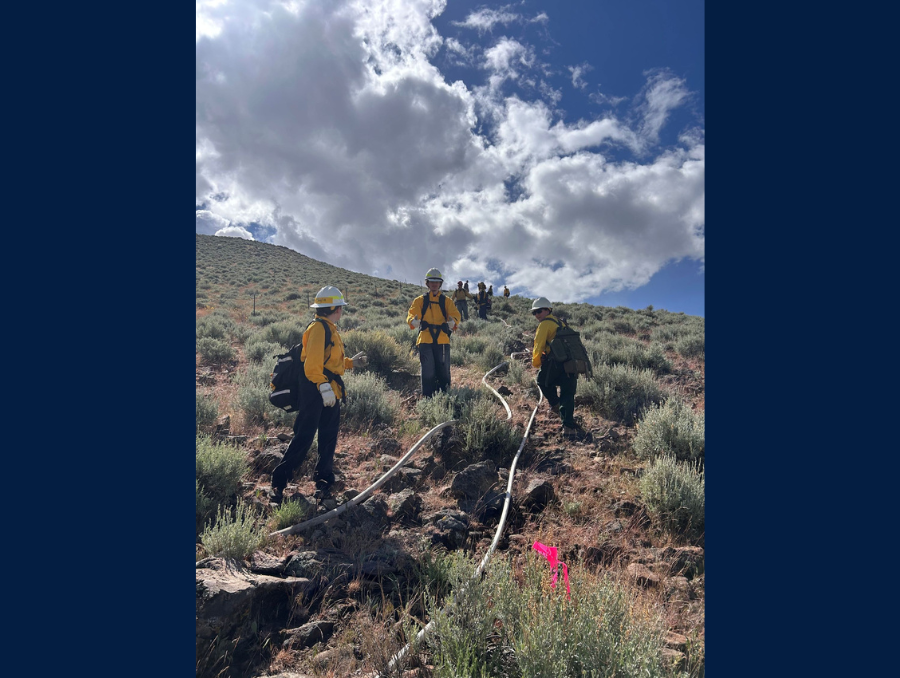
While some students may be attending summer camps with campfires and marshmallows, others, such as Kai Hueber, will be at “fire camps,” helping firefighters as they battle to extinguish wildfires across the West.
Hueber is just finishing his sophomore year of high school at the Academy of Arts, Careers and Technology in Reno, a school in the Washoe County School District. As a freshman, he chose to enroll in the school’s Fire Science Academy at the beginning of the school year, a program that University of Nevada, Reno Extension’s Living With Fire team developed three years ago, in collaboration with Truckee Meadows Fire & Rescue, the U.S. Bureau of Land Management and other partners, to help address the increasing need for wildland firefighters.
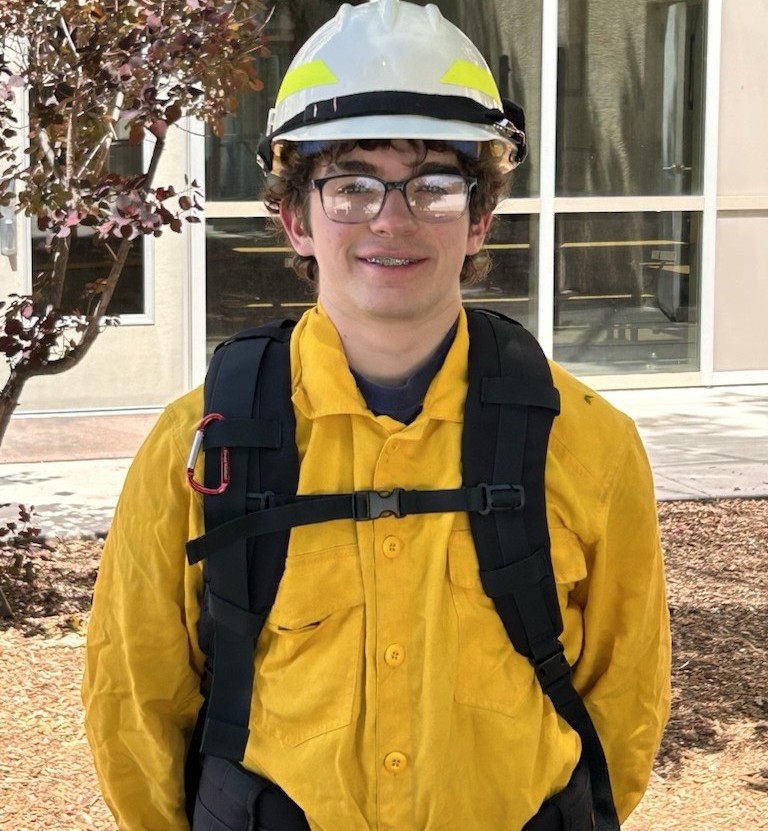
“I’ve always looked up to firefighters,” Hueber said. “I really like helping people, and I like the idea of it.”
Having completed the second year of the program, Hueber has now been accepted by the U.S. Bureau of Land Management to be part of fire camp crews this summer, assisting firefighters sent out to battle blazes. He’ll help with maintaining equipment and supplies, rolling the fire hoses, meal prep and anything else he can do to assist. It’s a paid position, and he expects to be sent out to a few fires, working at each camp for up to a couple of weeks.
“I’m super excited, and it seems pretty organized,” he said. “It was quite a rigorous process to get in, and I had to complete some additional online courses.”
After completing two more years of the Fire Science Academy in high school and working at the fire camps during the summers, Hueber plans to go on to higher education and major in fire science, and perhaps work as a firefighter during college. After college, he’s thinking about joining the military and flying cargo planes, so that one day, he can fly the airtankers that spray fire retardant to support firefighting efforts.
He said he’s really enjoyed the first part of his journey in the Fire Science Academy so far.
“I really like how we actually do stuff,” he said. “We get in our gear and go do drills. It really gives me an idea of what it’s like to be a firefighter – learning all what goes into a simple, routine assignment, the chain of command and things like that. The instructors know a lot about it, and we get great guest speakers. It’s pretty cool.”
Extension’s Spencer Eusden is part of the Living With Fire team that put together the curriculum for the Academy three years ago and still supports the program, revising lessons, getting guest speakers, supporting instructors and overseeing equipment needs. He’s excited that their first cohort that entered the program is graduating this year, and that they’re expanding the program to a four-year curriculum. He says each year up to 20 new freshmen will be enrolled. This fall, there will be 60 students across all four grades.
“It’s also really great that the Washoe County School District has invested in the program by funding a full-time instructor in the 2025-2026 academic year,” he said. “During the first two years of the program, Truckee Meadows Fire & Rescue and U.S. Bureau of Land Management firefighters were the primary instructors to get the program started. A full-time school district instructor is a really important step to sustaining the program for years to come.”
Eusden is also working with George Whittell and Galena High Schools to support their efforts to develop and offer fire science career and technical education programs or courses.
A few weeks ago, he also worked with U.S. Wildland Fire Service staff to arrange for students in the Fire Science Academy to participate in a drill with area firefighters conducting a mock firefighting scenario at Hidden Valley in southeast Reno. Hueber said it was a great eye-opening experience.
“That was pretty physically demanding,” Hueber said. “I was like, ‘Wow, this is what they do days on end.’”
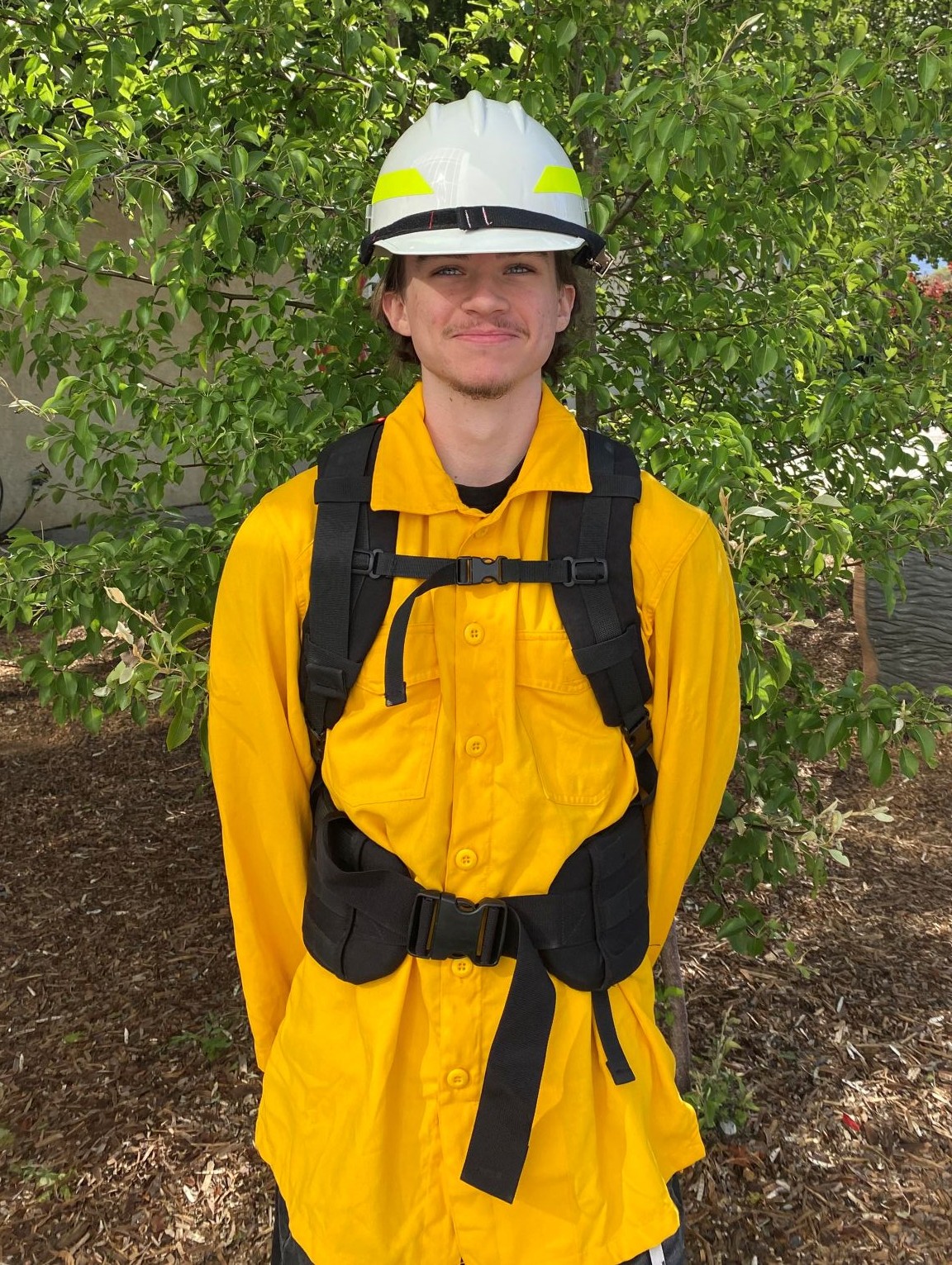
Another student who participated in the exercise is Matthew Hart, who is graduating from the program this year. He passed all the knowledge-based tests to be a seasonal wildland firefighter, and now plans to spend the next year preparing to pass the “Pack Test.” The Pack Test is a fitness test developed by the National Wildfire Coordinating Group to ensure that firefighters can meet the extreme physical demands of their assigned duties. Passing the test requires carrying a 45-pound pack for 3 miles in 45 minutes or less.
“I took the test, and it showed me where I was physically, and what I need to work on to pass it,” Hart said. “I’m going to spend the next year focusing on my physical abilities and seeing where I want to work in the fire industry.”
Hart said he wasn’t really sure what to expect when he first joined the program, but that it really gave him a direction.
“After a couple of classes, I realized how much I would like it, what we would be doing, where it could bring us in life,” he said. “I’m really glad I joined it and really excited for my future. I got great hands-on experience and a lot of good advice from people in the fire world.”


