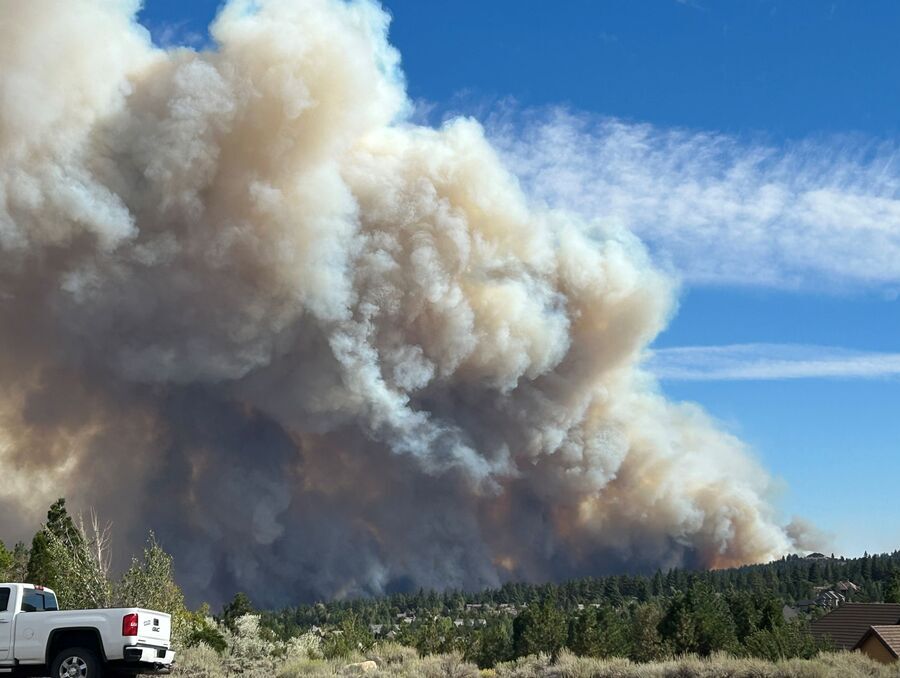
Living in the West today means living with the threat of wildfire. To manage that threat successfully takes forward-thinking, education and training. The University of Nevada, Reno is providing education and training needed to help ensure we have a trained firefighting workforce and volunteers. Programs also educate professionals and homeowners on actions they can take to increase the chances that homes and communities survive when a wildfire does hit. Here are just a handful of ways the University’s College of Agriculture, Biotechnology & Natural Resources is providing vital educational programs that help make our state safer from the risk of wildfire.
Training volunteer firefighters
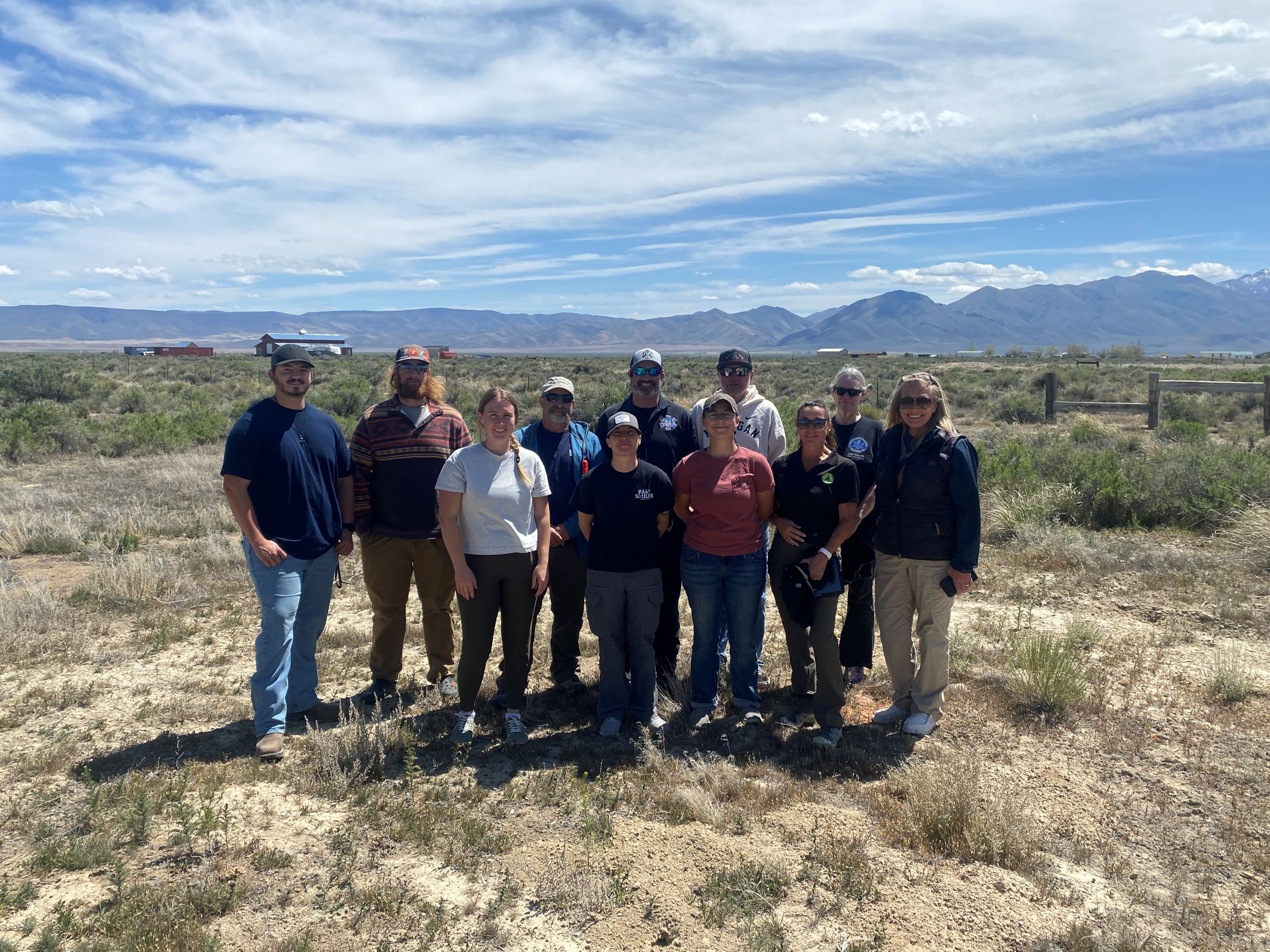
Living With Fire, a program of the University’s Extension unit, trained these volunteers in Battle Mountain this spring on how to conduct defensible space inspections for homes, so that they can advise homeowners on actions they can take to make their homes safer from the threat of wildfire. The program regularly provides such trainings, and has also trained volunteer firefighters in Mount Charleston in southern Nevada and in Pershing County, on defensible space, home hardening (construction-related actions to make homes safer from wildfire) and fire behavior. The program has also worked with our Tribal communities to help them take actions to protect their communities.
Training professionals on defensible space landscaping and home hardening construction
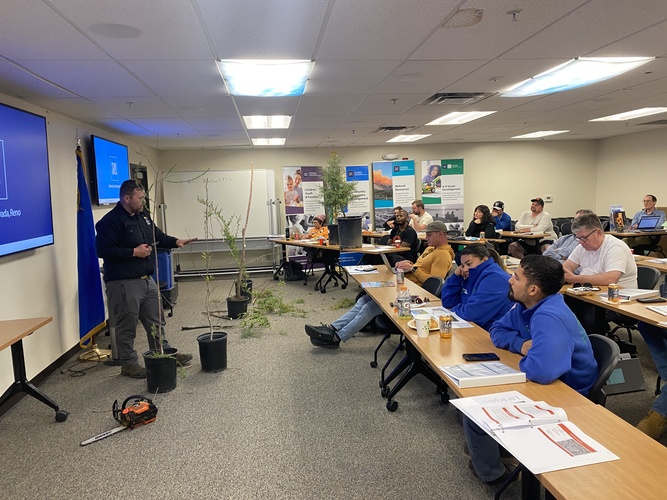
The Living With Fire Program trains landscapers and green-industry professionals on practices to better protect homes from the threat of wildfire. Here, Matt Basile, urban forester for the City of Reno, teaches pruning techniques to enhance defensible space at a Living With Fire workshop. A similar workshop was held for construction contractors and wildfire mitigation specialists, on construction-related ways to make a home safer from wildfire. Over the last four years, these programs for professionals have trained about 250 landscapers and contractors.
Training firefighters on ecology and land management
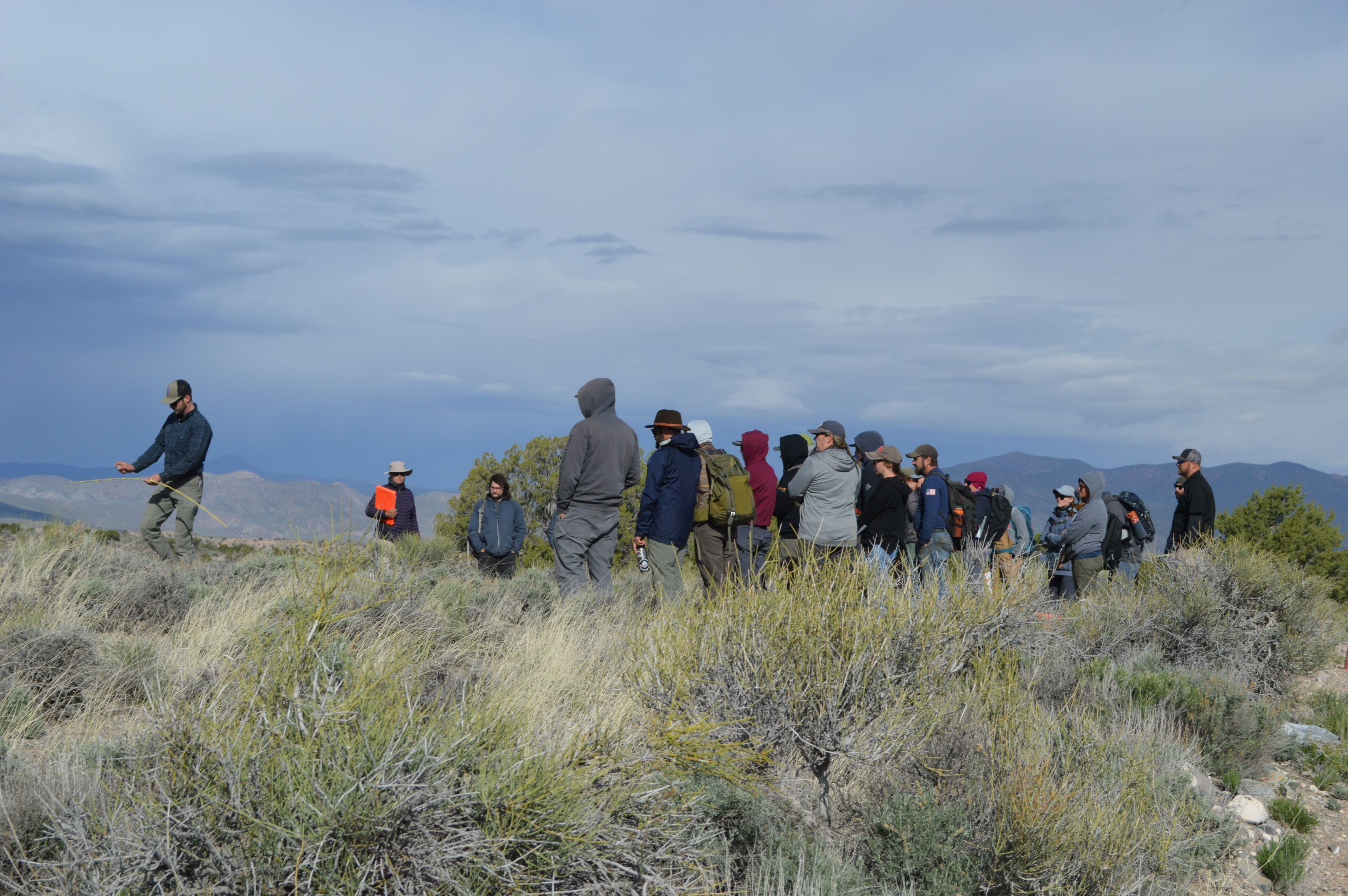
Especially for advanced wildland firefighting positions, firefighters need in-depth knowledge and training on land management to help protect our natural resources and rangelands. The Bureau of Land Management Nevada asked the University for help, resulting in a two-year program especially designed to accommodate firefighters’ schedules and needs. Eight years later, about 150 advanced firefighters have completed the Rangeland & Fire Ecology Program, taught by faculty in the Department of Agriculture, Veterinary & Rangeland Sciences and administered by Extended Studies. Here, Assistant Professor Lucas Phipps teaches a vegetation measurement technique called line point intercept to firefighters in the Pine Nut Mountains in northwestern Nevada, known for their pinyon pine forests, recreational trails and historical significance. Phipps also conducts research on management and restoration of rangelands as part of the University’s Experiment Station unit.
Introducing high school students to wildfire-related issues while teaching science concepts
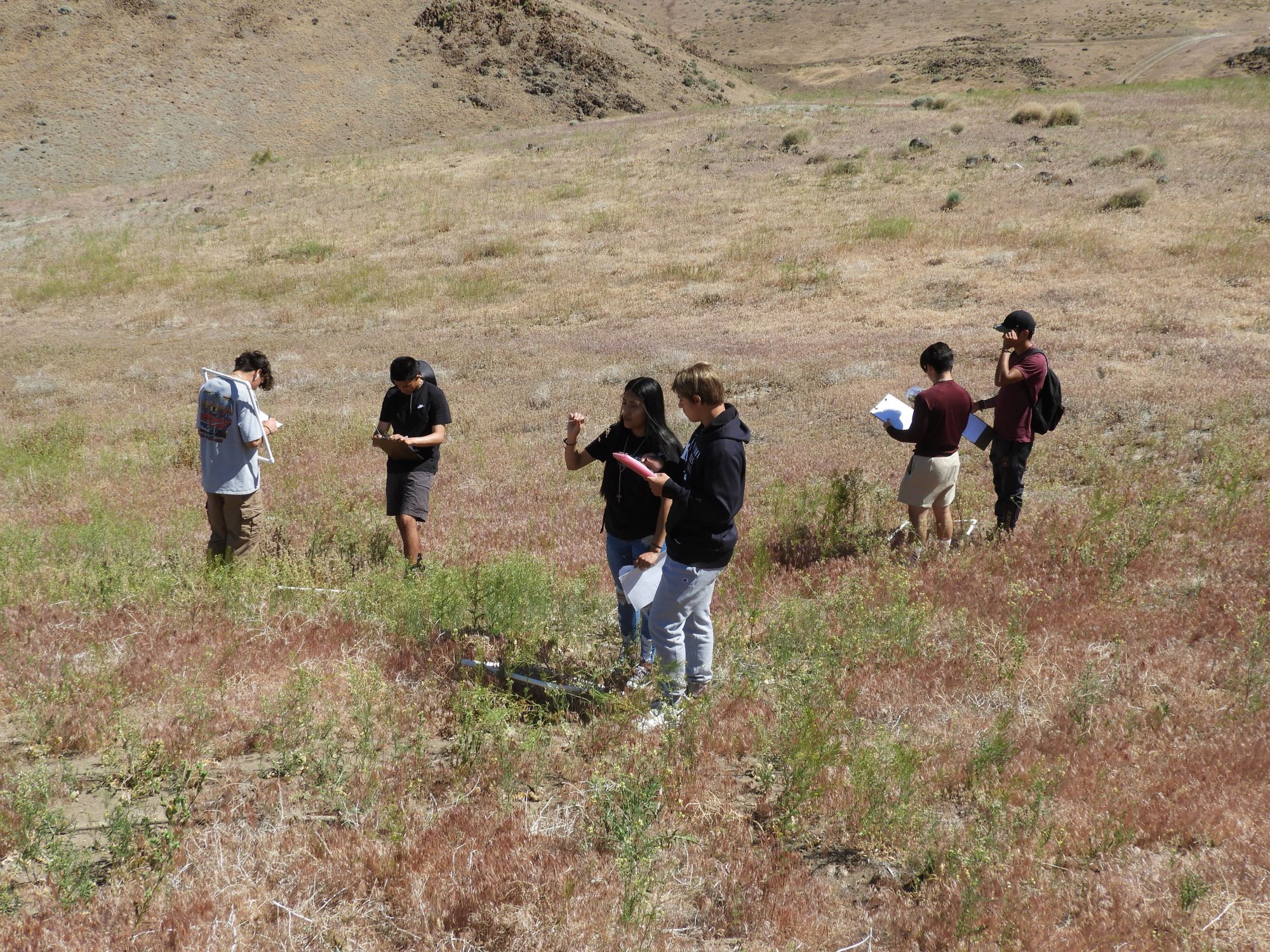
The Living With Fire High School Science Curriculum was created in 2023 as a tool for high school teachers to teach science-related concepts to high school students, while connecting the science to real-world applications related to wildfire issues. The four units teach biology, earth science, environmental science and agricultural science, while also introducing students to wildfire-related career paths. Over 2,000 students from a variety of high schools and youth in Extension’s 4-H Youth Development Programs have benefitted from the curriculum. Here, students from a Sparks High School AP Environmental Science class study vegetation on a hillside east of Sparks that burned in 2017 and 2021 as part of a curriculum lesson.
Providing a firefighting career path for high school students
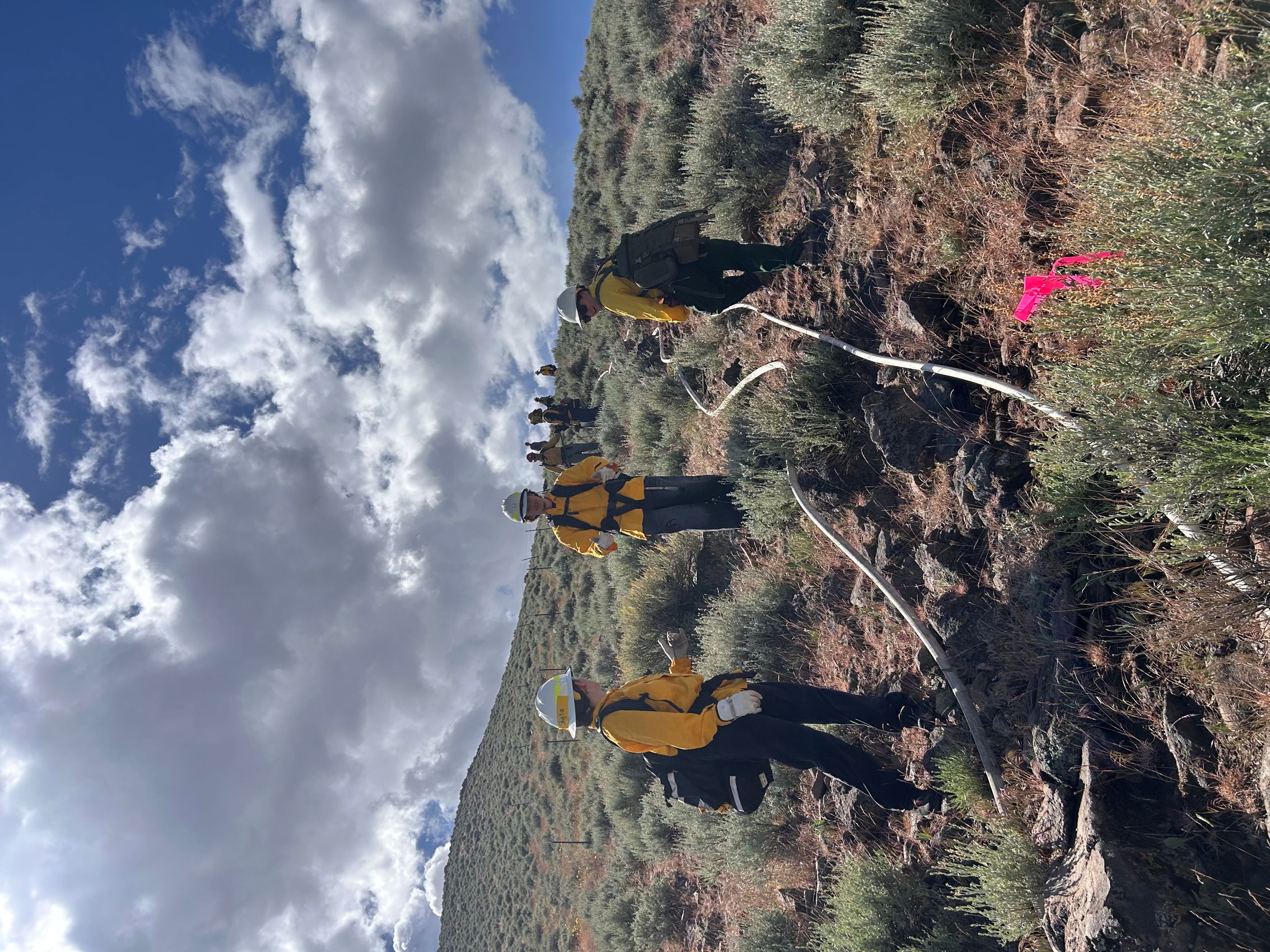
The Living With Fire Program led a collaborative effort to develop the Fire Science Academy at the Academy of Arts, Careers and Technology in Reno, part of the Washoe County School District. The first cohort, who enrolled in the program three years ago, just graduated with training and education needed to apply for seasonal firefighting employment. The University, along with partners such as the Truckee Meadows Fire & Rescue and the U.S. Bureau of Land Management, continues to support the program, which is helping to address the increasing need for wildland firefighters. Here, students in the program participate in a drill this spring with area firefighters conducting a mock firefighting scenario at Hidden Valley in southeast Reno.
Connecting homeowners and neighborhoods, and providing education and resources
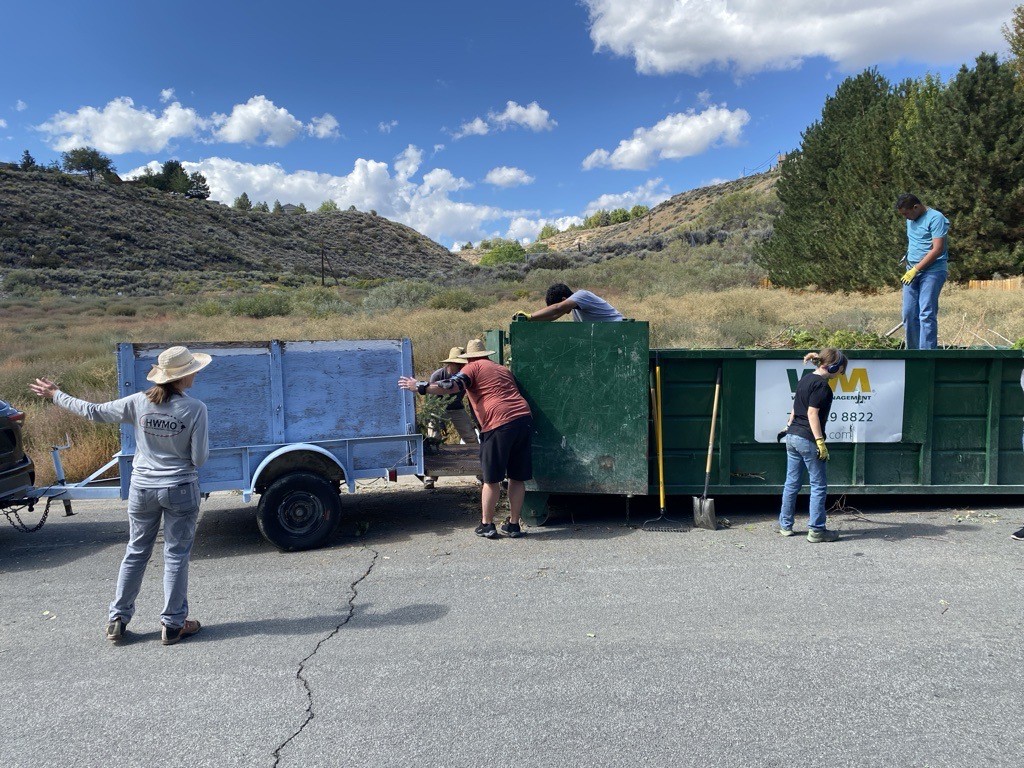
The Living With Fire Program continues to produce educational publications, podcasts and videos available on the Living With Fire website, as well as conducts a number of workshops, to help homeowners and Nevada communities work together to address wildfire-related issues. The program leads the collaborative Fire Adapted Nevada Summit held annually on campus where neighbors band together to discover ways to work together to develop actionable plans and obtain resources to make their neighborhoods better prepared to survive a wildfire. The program also supports Fire Adapted Nevada Neighborhood Ambassadors with guidance and resources needed to help these volunteer neighborhood leaders plan and implement community-level work. Here, neighbors in Mogul are shown taking action to make their community more fire adapted. They shared their experiences at this year’s Summit in February.
Many University faculty are engaged in research and other work related to monitoring effects of wildfire; ways to mitigate its detrimental effects on our natural resources, environment and wildlife; and more. Read about the Fire Science Academy on Nevada Today for more information on wildfire-related work, and check out the University’s Wildfire Experts Guide, which provides a list of faculty with a range of expertise related to wildfire science and wildfires' impacts on communities, ecosystems and watersheds around the world.


