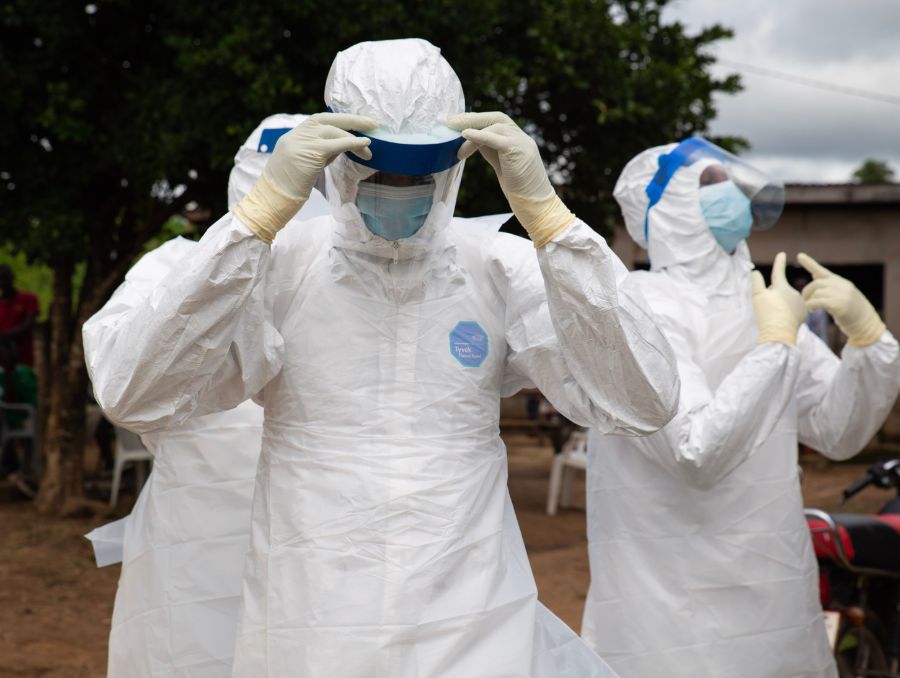
The quick answer to this question is that for the average person living in the United States, no, you should not be overly concerned about Ebola. I am currently on a Fulbright award in a portion of Uganda, which borders the Democratic Republic of Congo (where the outbreak is centered), and while we have heightened precautions, the overall risk of infection here is still very low.
The situation would be different if I were working directly in an outbreak area or caring for someone who is ill and had been in an outbreak area, but we have precautions for those situations, so the risk here is very low and is much, much lower for those in the United States.
 Find more answers here!
After the Covid pandemic in 2020, many people may fear that Ebola will become the next epidemic, but that concern is misplaced because the two viruses act very differently. Where Covid is a respiratory droplet and can be transmitted before the person has symptoms, Ebola is spread through direct contact with tissues and/or bodily fluids and is only spread once they have had symptoms of the disease. This means that if the person was well when you encountered them, they would not spread the virus to you.
Knowing a little more about Ebola can help understand how the outbreak occurred and what the actual risks are. Ebola is a virus, which means it must move inside your cells to replicate itself. Outbreaks typically start when a person comes into contact with an infected animal, usually a bat or a small primate like a monkey, that they find dead in the forest or while hunting. When that person is exposed to the animal’s bodily fluids or eats it, they can become infected with the virus, which then replicates inside their body. A week or two later, the newly infected person may develop a high fever, malaise, muscle pain, headaches, diarrhea and vomiting. But because it has been so long after encountering the animal, nobody connects the two events.
Once the person is ill, those caring for the individual (usually family members and healthcare workers) are at risk of contracting the virus if precautions such as wearing gloves and gowns are not taken. It may also be spread to others if the person dies and the body is cleaned or prepared for burial by people not wearing protective items, as is common here in rural Africa. In the absence of these specific exposures, the risk of spreading Ebola is low.
Because the symptoms of Ebola are very similar to those of many other viruses, it is likely that the current outbreak was quite extensive before the first case was formally identified. When we see the number of infected persons or deaths doubling overnight, it can be very scary, especially after how fast Covid spread.
It is, however, important to remember that early in an outbreak, this can happen because the deaths that occurred prior to recognizing that there was an outbreak were not initially attributed to Ebola, but in retrospect, are attributed to the virus. Once those previous deaths are all accounted for, we should see the number of cases stabilize and eventually decrease as enhanced screening, testing and protective measures are being performed.
About the professor
As an associate professor at the Orvis School of Nursing, community health nurse and family nurse practitioner, Dr. Deborah Shindell’s entire career has been focused on underserved populations. She is currently serving in the Bwindi Forest area of southwestern Uganda as a Fulbright Scholar.


