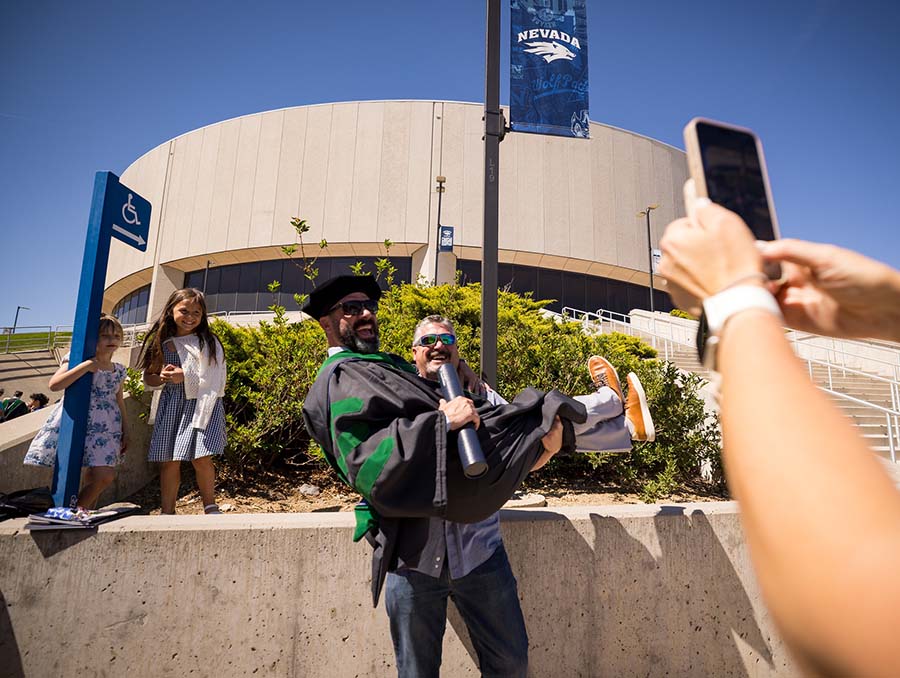
For David Tingle, M.D., medicine is more than a career, it is a calling shaped by years of service and a deep commitment to caring for others. Before entering medical school, Tingle worked as a wildland firefighter, EMT and nursing assistant. These experiences taught him the value of teamwork, resilience and compassion during life's most challenging moments. As a first-generation student, husband and father, he balanced the demands of medical school with family responsibilities while remaining dedicated to his goal of becoming an internal medicine physician. This June, Tingle will begin his internal medicine residency at the University of Nevada, Reno School of Medicine (UNR Med) and Renown Health, continuing a journey rooted in service and inspired by the people who have shaped his path.
Why did you decide to become a physician?
“My decision to pursue a career in medicine is rooted in a series of formative experiences that shaped both my professional goals and personal values. I was first introduced to the medical field at age 16 while working as a records clerk for a primary care internist. During that time, I was struck by the genuine empathy he demonstrated toward his patients and the meaningful rapport he built with them. I found myself wanting to emulate that same compassionate approach to care.
“At 18, I joined a Wildland Firefighter Hotshot Crew. Prior to my second season, a volunteer was requested to serve as the crew’s EMT, and I stepped forward. During my time in EMT school, I developed a deep sense of purpose in direct patient care. During each offseason from firefighting, I continued to pursue this interest by working in a hospital, eventually transitioning to a full-time role after earning certification as a nursing assistant. My experiences at the hospital strengthened my clinical foundation and expanded my understanding of empathy in practice. I chose to pursue medical school with persistent encouragement by my colleagues in the hospital as well as by a physician mentor who played a pivotal role in guiding my path.
“The most defining moment that motivated my decision for medical school came when I cared for my grandmother during her final days at that same hospital. To me, my grandmother deserved no less than every ounce of my heart, the most profound compassion and empathy, and that is what she got. When my grandma passed away, I became dedicated to a mission to treat every patient with the same compassion, dignity and respect that I would offer my own family. As a physician guided by my mission, I hope to positively impact my patient's health care experience and inspire the colleagues around me.”
What unique strengths and perspectives does your background as a previous firefighter, nursing assistant and an EMT bring to medicine?
“The first thing that comes to mind is that I already feel fluent in the language of medicine, but that only scratches the surface of what these experiences have taught me. Working as a firefighter, nursing assistant and EMT gave me the opportunity to care for people in a wide range of settings, often during some of the most stressful and vulnerable moments of their lives.
“Those experiences taught me how to stay calm under pressure, adapt quickly, and work closely within a team to support both patients and their families. More importantly, they showed me that medicine is about far more than diagnosis and treatment. It is about building trust, showing compassion and simply being present for people when they need it most.
“I also think those experiences gave me a real appreciation for how much health care depends on teamwork. Each role matters, and I’ve seen firsthand how good communication and trust between providers can make a huge difference for patients. That perspective is something I’ll carry with me throughout my career in medicine.”
What specialty or area of medicine are you most passionate about pursuing, and what draws you to this field?
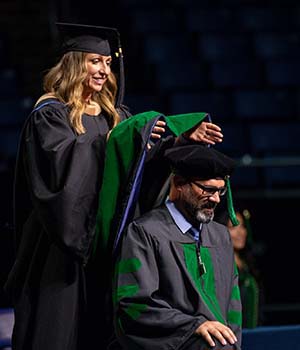
“I have always pictured myself as the doctor going from room to room sitting with patients at their bedside, validating fears, addressing questions, and building an atmosphere of comfort and safety. I'm fortunate and blessed to pursue this vision because I start my residency in internal medicine with UNR Med in June of this year. Additionally, knowing that I have dedicated myself to a career of lifelong learning, I'm motivated and eager to explore the numerous fellowship opportunities that follow an internal medicine residency. Presently, I'm most curious about critical care and cardiology.
“There is a saying in medical school that the amount of information we are expected to learn and memorize is like trying to drink from a firehose. Yup! This statement is absolutely accurate. Every medical student understands the challenge, but it still hits hard. We learn immediately that time cannot be wasted. Each student has to make sacrifices to optimize their study time. The most common and painful sacrifices are social time, vacations, holidays, and, worst of all, family.”
Can you share a memorable experience during your medical training that has significantly impacted your journey as a future physician?
“Every aspect of third year clerkship rotations was incredibly memorable for me and certainly reinforced my decision to pursue this career. I can't point to a specific moment; rather, the entire experience of patient interaction was memorable. We have been buried in the books for two years and becoming increasingly eager to start seeing patients. I was so happy when that time finally arrive and completely immersed myself in the experience.”
As a first-generation student, father and husband who went into medical school, what was it like going back to school to pursue medicine?
“Like many students returning to school, I approached my medical education with both excitement and uncertainty. As a father and husband, I felt a strong responsibility to set a positive example for my children while balancing the demands of family life and academics. At the same time, I recognized that every student faces exceptional challenges shaped by their personal circumstances. My decision to pursue medicine came at a cost of lost time with my family; however, I made the most of every opportunity I had to spend time with them. Although isolating and a difficult sacrifice, my pursuit of a medical career was deeply meaningful and worth my best effort.”
Were there some unique challenges you faced because of your background?
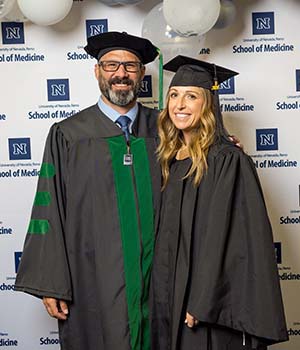
“I do not think my challenges are necessarily more exceptional than those faced by others. Everyone’s background and obstacles they encounter shape the way they learn to navigate future challenges. In my experience, success often comes from adapting your approach, remaining persistent, and being willing to put in the extra work when needed. Those experiences have taught me resilience, flexibility and the importance of finding a path that works for you individually.”
What is the biggest challenge you have faced in your medical education so far and how did you overcome it?
“The biggest challenge I faced throughout medical school was most certainly time management. For me, it was either time for study or time for my family. My priority was family first. The consequence of my choice was very late study nights resulting in sacrificed sleep time. Some days I managed well and others I cannot even recall. Eventually, adherence to a strict schedule ensured both, effective study sessions and quality time with my family.”
What advice do you have for future students interested in becoming a doctor?
“My advice to future potential medical students be proud of your decision to accept this challenge. Don't let others talk you out of it. Let your reasons be noble and selfless. Be ready to work hard, be comfortable with failure, but have a relentless drive for success. Most importantly, take time for yourself often. Keep that mental health cup full of fun activities, hobbies, or relaxing events.”


