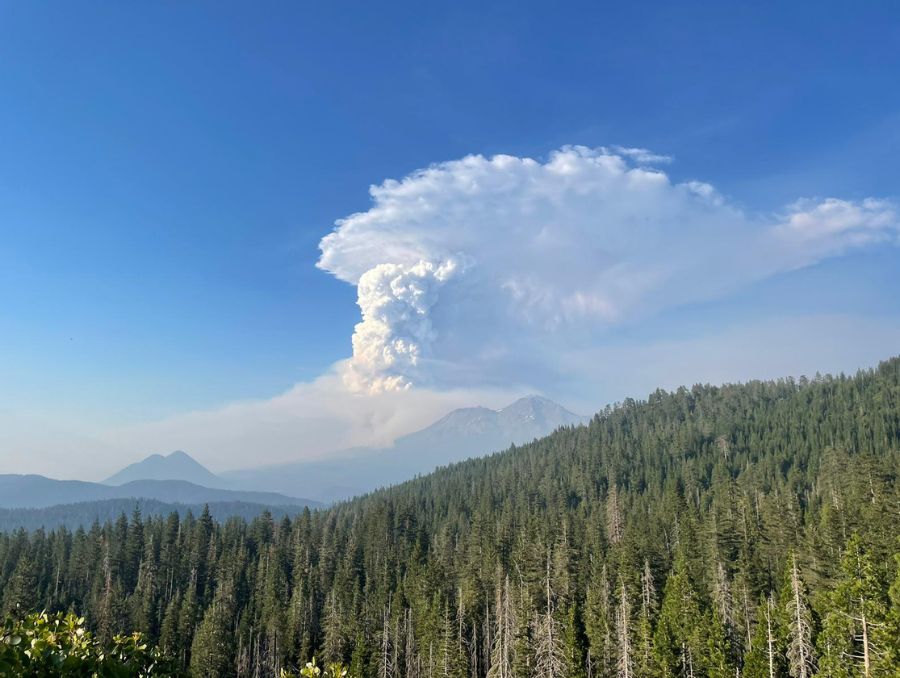
The 2026 wildfire season is already making history, with fires burning from coast to coast across the United States, and the rest of the year is projected to be one of the most severe on record. But can the effects of these wildfires be felt far beyond the active burned landscapes?
Groundbreaking research from the University of Nevada, Reno and Utah State University, published in Communications Earth & the Environment, a journal from Nature Portfolio, is helping global wildfire scientists predict downstream impacts from wildfire. The research, together with a highly anticipated National Science Foundation FIRE NET workshop this week, promises to reshape how we understand and combat wildfires.
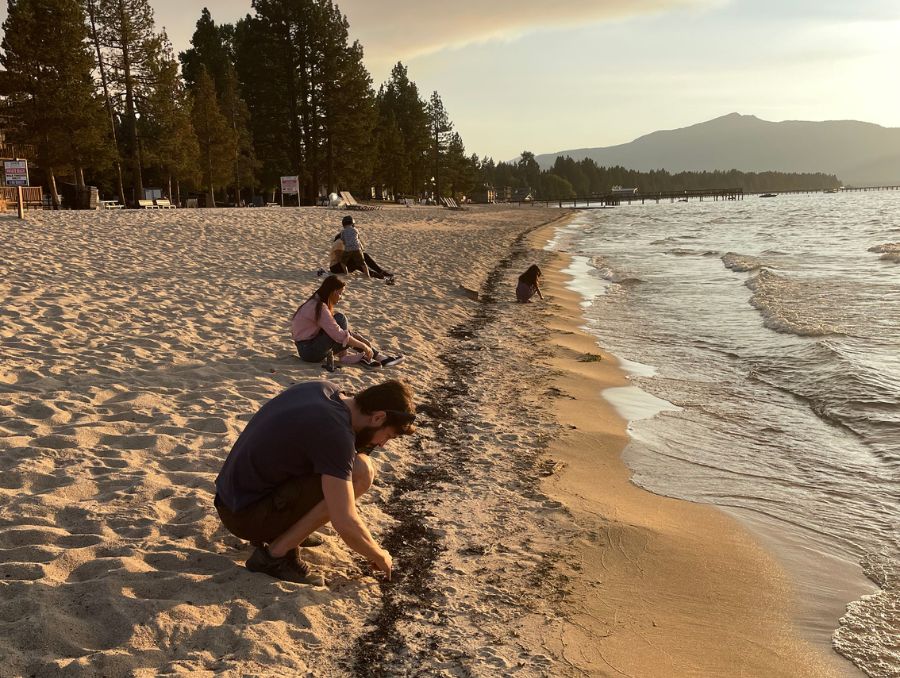
The publication comes from the work of Facundo Scordo, Ph.D., research assistant professor in the Tahoe Institute for Global Sustainability and the Department of Biology at the University of Nevada, Reno. In the work, Scordo and team created innovative models based on research from the Caldor fire in 2021 that impacted Lake Tahoe. The models will help predict how future wildfire smoke plumes may travel downstream and impact surrounding ecosystems and watershed health.
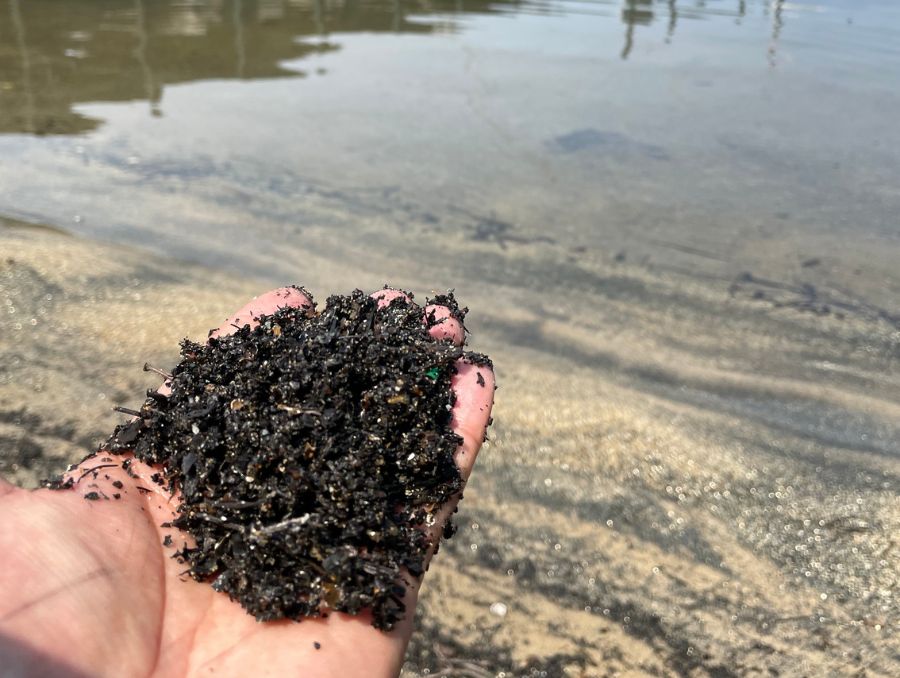
“Our work is the first to present a methodology that calculates and predicts where wildfire-emitted particles land once they are produced from fires like the Caldor Fire,” said Scordo. “We are concerned about the plumes of ash and smoke from wildfires because they carry nutrients and contaminants that can impact freshwater ecosystems close to and away from the origin of the wildfire.”
Scordo, alongside coauthors from the Wildfire Science and Engineering Lab, Dani Or, Ph.D., Nevada Engineering Distinguished Professor, and Hamed Ebrahimian, Ph.D., director of the lab, will share their findings as part of a meeting on June 11-12.
“I have particularly enjoyed the synergy between Majid Bavandpour, Ph.D. student in Civil and Environmental Engineering, and Facundo Scordo, and how they jointly addressed this challenging topic,” said Or. “Their work has helped us understand wildfire plumes in extraordinary ways. For example, they have found that fire-emitted depositions within ten kilometers from the Caldor fire are comparable to ashfall from a moderate volcanic eruption.”
The workshop – called FIRE-NET: Wildfire Airborne Particles and their Influence on Lake Ecosystems – is part of a new initiative between the University and partners and is supported by the National Science Foundation. The kickoff meeting will be held at the University of Nevada, Reno at Lake Tahoe and brings together an interdisciplinary group of scholars to examine the emissions, transport, deposition and ecological impacts of wildfire airborne particles. Participants will share expertise, identify key knowledge gaps and explore opportunities to improve monitoring strategies and modeling frameworks. A key outcome of the workshop will be the identification of priority wildfire research directions and collaborative opportunities, aimed at advancing our collective ability to understand and predict the environmental impacts of wildfire in an increasingly fire-prone world.
“Wildfire is an increasingly significant force shaping ecosystems and society, with impacts that extend far beyond burned landscapes,” said Sudeep Chandra, Ph.D., coauthor of the study and the director of the Tahoe Institute for Global Sustainability. “Our institute is delighted to support scientific breakthroughs and support meetings of the greatest minds on our planet. We are aiming to tackle important sustainability issues and to conserve unique places like Lake Tahoe. The goal of this wildfire research and FIRE-NET initiative is to advance our collective ability to understand and predict the environmental impacts of wildfire in an increasingly fire-prone world.”
The FIRE-NET meeting will host experts from the United States and Canada who specialize in atmospheric modeling and pollution, wildfire science, limnology, chemistry and biology. The network of collaborators and partners who are involved in FIRE-NET is highly interdisciplinary and was chosen in recognition that creating solutions to downstream impacts from wildfire requires expertise and perspectives from multiple disciplines. This work is supported by the League to Save Lake Tahoe and the Tahoe Science Advisory Council. It is also supported by the U.S. National Science Foundation (NSF), the U.S. Army Engineer Research and Development Center (ERDC), and the conference – FIRE-NET: Wildfire Airborne Particles and their Influence on Lake Ecosystems – is funded through the Division of Research, Innovation, Synergies, and Education (RISE) under the Fire Science Innovations through Research and Education program (PD 25-345Y).


