Program at a glance
How much does it cost?
Learn more about how to afford a degree from the University of Nevada, Reno.
How long does it take?
This minor is designed to be completed with any major in four years.
Learn more about how to afford a degree from the University of Nevada, Reno.
This minor is designed to be completed with any major in four years.
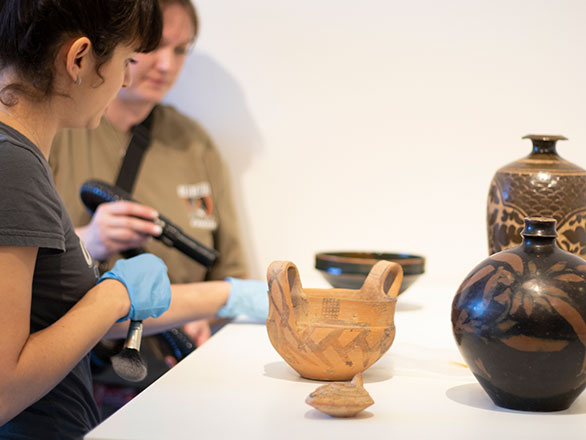
The interdisciplinary program in museum studies offers students an opportunity to explore the expanding field of museum work and museum research. The museum studies minor is designed to provide an introduction to the field, exposure to some of the skills and techniques required of a career museologist, and an initial apprenticeship experience in a museum setting.
The course work for the minor includes a required course in museum studies, including the history and philosophy or museums and an introduction to museum management and planning. The minor offers specialized museum courses for anthropologistis and historians, and well as a wide range of electives, ranging from art to biology to geology, to provide expertise and exposure to different kinds of museums. You may also choose to concentrate your elecetives in one of three emphases: history, science or art.
The museum studies minor culminates in an apprenticeship specialized for anthropologists, historians or artists. Depending on the type of internships, you may work on curating exhibits, managing physical or digital archives, or day-to-day operations of a museum or art studio. You'll have a chance to apply the knowledge you gain in the museum studies minor to the business and management issues museums employees deal with in a professional setting.
Students contemplating a career in the museum field, or in a discipline such as anthropology, art, biology, geology, history, historic preservation, textiles and clothing, or in federal or state agency service, will find the minor particularly useful.
The Bureau of Labor Statistics projects much faster than average job growth between 2020 and 2030 for museum professions including archivists, curators and museum employees. The growth is expected to be driven largely by public interest in art, culture and history, as well as growing amounts of public records requiring organization and archiving. However, the field of museums is a relatively small employer, and so the total number of job openings may still be limited.
Positions such as curator or archivist often require a master's degree, but a museum technician—a position that involves the hands-on care and maintenance of items in a museum's collection—can often find empoyement with a bachelor's degree.
According to the BLS, museum professionals had a median annual salary of $50,120 in 2021.
76% of students receive financial aid
Almost everyone is eligible to receive some kind of aid. We offer need-based and merit-based forms of financial aid to help you afford college.
54% of all students graduate with no debt
That's right. More than half of our students leave the University of Nevada, Reno with no student debt.
At the University of Nevada, Reno Honors College, our students maximize their unique gifts and passions through a series of personalized experiences that deepen their capacity for transformative societal impact.
Visit the Honors College