What will I learn in a geological engineering degree program?
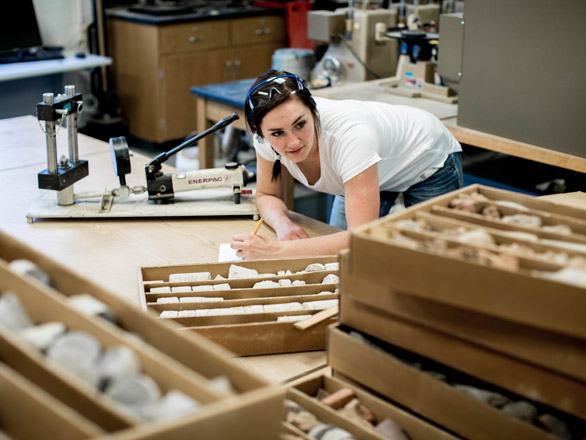
The bachelor’s degree in geological engineering at the University of Nevada, Reno combines environmental, civil and geotechnical engineering with the geological sciences to address complex societal challenges. You learn to apply principles of engineering, science and mathematics to identify and solve engineering problems; design solutions that consider public health, safety and environmental and economic factors; and communicate effectively with a range of audiences. The program emphasizes teamwork, ethical and professional responsibility and the ability to conduct experiments, analyze data and draw informed conclusions. You also develop proficiency in geological sciences, including rock and mineral identification and field methods applied to engineering practice, preparing you for professional practice or advanced study. View accreditation information for the geological engineering degree.
The Department of Geological Sciences and Engineering
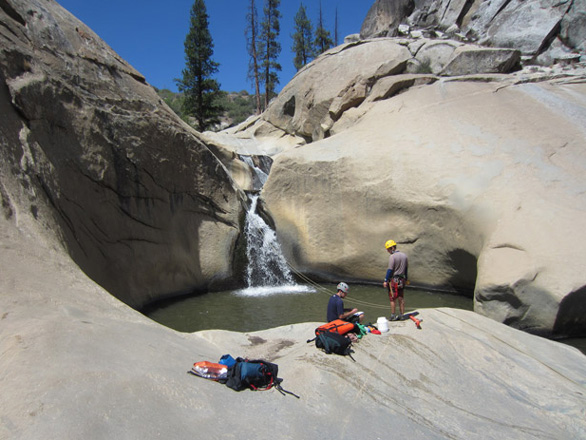
The Department of Geological Sciences and Engineering at the University of Nevada, Reno prepares students to understand Earth systems through fieldwork, laboratory research and interdisciplinary coursework. Graduates are well positioned for careers in natural resources, environmental consulting and hazard mitigation, supported by strong industry connections and immersive field experiences. The department is also home to the Nevada Bureau of Mines and Geology and the Nevada Seismological Laboratory.
Why choose the College of Science?
The College of Science offers educational opportunities in pure and applied physical sciences, earth sciences, life sciences, and mathematics. Professors in the College frequently earn statewide teaching excellence awards and are pioneers in their respective fields, with access to high-powered scientific facilities and resources to perform research on all seven continents. The College also encompasses three public museums that offer research and community engagement opportunities: the iconic Fleischmann Planetarium and Science Center, the Museum of Natural History and the W. M. Keck Earth Science and Mineral Engineering Museum.