What will I learn in a metallurgical engineering degree program?
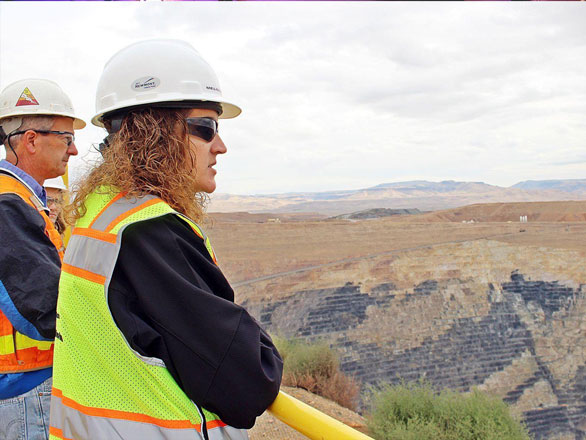
The bachelor’s degree in metallurgical engineering at the University of Nevada, Reno prepares you to convert natural mineral resources into useful products through study in mineral processing, extractive metallurgy and physical metallurgy. You complete coursework in advanced chemistry, metallurgical processes, modeling and control, pyrometallurgy and hydrometallurgy, and learn to design and manage processes in an ethically and environmentally responsible manner. The program emphasizes problem-solving, technical proficiency and effective communication with industry representatives, regulators and the public. Graduates are prepared for entry-level positions in industry and management or for graduate study in engineering.
Find Your Pack in Nevada
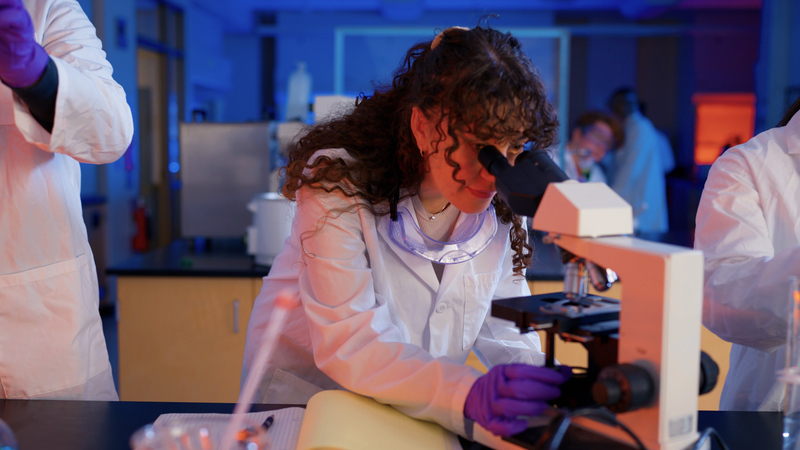
Alexia came to the University of Nevada, Reno, with the intention of getting a degree in medicine. But once she began her undergraduate research, she was introduced to the world of metallurgical engineering. That discovery sparked something new. An unexpected passion for metallurgy and the way it connects with so many other fields, from finance to geology to chemistry. At Nevada, Alexia found more than a degree; she found her purpose.
Department of Mining and Metallurgical Engineering
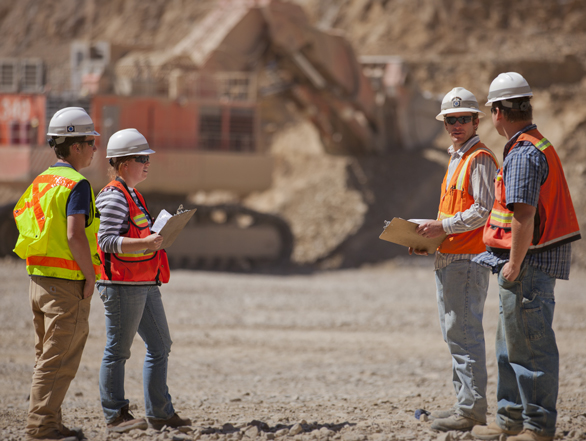
The Department of Mining and Metallurgical Engineering at the University of Nevada, Reno offers hands-on training in extracting and processing the natural resources that power modern society. Through internships, industry partnerships and applied coursework, students graduate prepared for high-impact careers in mining, metallurgy and materials engineering.
Why choose the College of Science?
The College of Science offers educational opportunities in pure and applied physical sciences, earth sciences, life sciences, and mathematics. Professors in the College frequently earn statewide teaching excellence awards and are pioneers in their respective fields, with access to high-powered scientific facilities and resources to perform research on all seven continents. The College also encompasses three public museums that offer research and community engagement opportunities: the iconic Fleischmann Planetarium and Science Center, the Museum of Natural History and the W. M. Keck Earth Science and Mineral Engineering Museum.