Why pursue a bachelor's degree in nursing?
Nurses with a bachelor's degree are prepared with the skills and knowledge to assist doctors, physician assistants, and other health care experts in the care of sick or injured people. Bachelor's degree nurses have added training in leadership, nursing research, management and have more options when choosing where to focus their learning and career in health care. Today, more hospitals and employers prefer to hire a nurse with a bachelor's degree over an associate's degree.
Learning outcomes
Upon completion of your bachelor of nursing degree, you’ll have the skills and the knowledge to:
- Integrate concepts from the arts and sciences in promoting health and managing complex nursing care situations.
- Apply leadership concepts, skills and decision making in the provision, and oversight of nursing practice in a variety of settings.
- Translate principles of patient safety and quality improvement into the delivery of high quality of care.
- Appraise, critically summarize and translate current evidence into nursing practice.
- Integrate knowledge, processes and skills from nursing science; information and patient care technologies; and communication tools to facilitate clinical decision-making, and the delivery of safe and effective nursing care.
- Describe the effects of health policy, economic, legal, political and socio-cultural factors on the delivery of and advocacy for equitable health care.
- Demonstrate effective professional communication and collaboration to optimize health outcomes.
- Deliver and advocate for health promotion and disease prevention strategies at the individual, family, community and population levels.
- Demonstrate value-based, professional behaviors that integrate altruism, autonomy, integrity, social justice, and respect for diversity and human dignity.
- Demonstrate critical thinking, clinical decision making, and psychomotor skills necessary for the delivery of competent, evidence-based, holistic and compassionate care to patients across the life span
Clinical experience
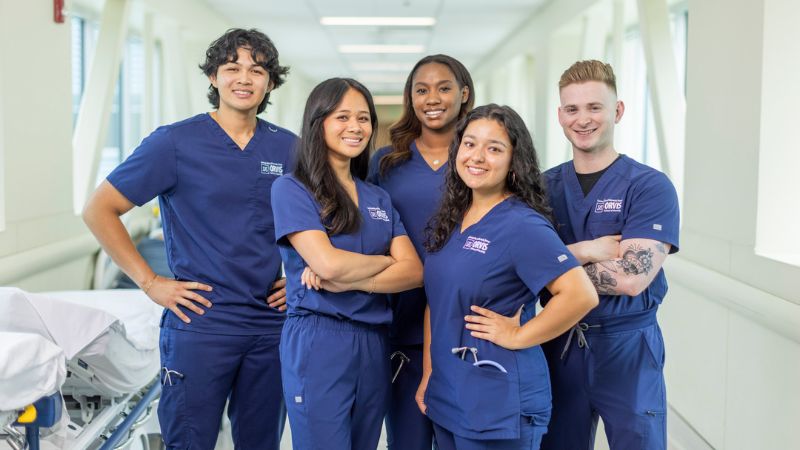
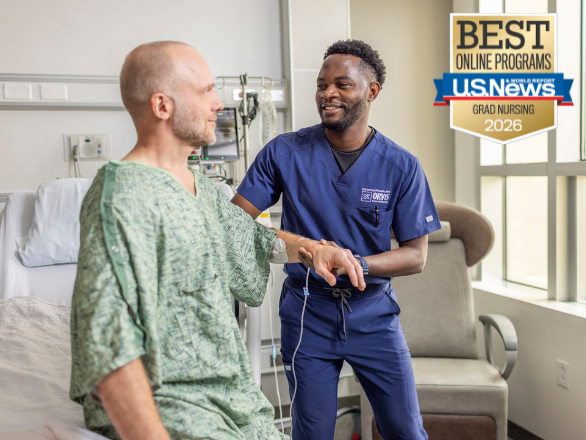
Nursing is a practice profession, and in both the traditional BSN and the ASBSN, students jump into clinical settings where you apply what you are learning in class to direct patient care, beginning your first semester. You'll learn with nurses and faculty at the bedside of all the hospitals in Northern Nevada.
Acute care clinical sites range from medical and surgical units to critical care and the emergency department. One entire semester is devoted to a wide variety of community-based sites. The OSN has a state-of-the-art, high-fidelity simulation center where you can practice in a controlled, realistic setting.
Learn more about the Orvis School of Nursing
The Orvis School of Nursing trains the next generation of nurse leaders to promote the health and wellbeing of diverse populations in Nevada, the nation, and the world through excellence in nursing education, discovery, and engagement.