Program at a glance
How much does it cost?
Learn more about how to afford a degree from the University of Nevada, Reno.
How long does it take?
This minor is designed to be completed with any major in four years.
Learn more about how to afford a degree from the University of Nevada, Reno.
This minor is designed to be completed with any major in four years.
The interdisciplinary minor in historic preservation focuses on studying, recording, preserving, restoring, and adaptively reusing significant objects, buildings, sites, neighborhoods, districts or engineering works that reflect a portion of the nation’s historic and prehistoric cultural heritage. The minor particularly emphasizes the heritage of Nevada and the American West.
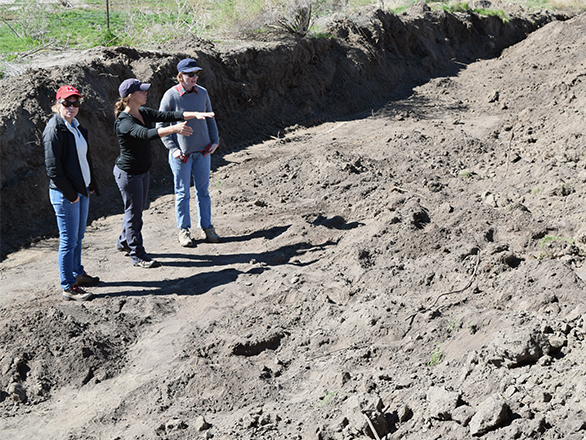
Courses include the principles of historic preservation, an introduction to public administration, as well as a class in historic preservation laws. In the program, you will participate in field research projects and internships with local, state and federal historic preservation agencies. Additional coursework covers world architecture and methods in field research.

Preservationists are most often employed in government, at levels ranging from federal to state and local, or for non-profit organizations. Preservationists working in government may be focused on ensuring that projects comply with relevant laws on historic preservation, maintaining digital or physical archives, or managing a locality's historic resources to promote education, tourism or economic development.
Preservationists may also engage in advocacy work, particularly if working outside of government, to promote the preservation of various historical or cultural resources. As in many kinds of non-profit work, these kinds of jobs can incorporate a wide range of duties, including communications, event planning and working with politicians.
The Bureau of Labor Statistics projects 19 percent employment growth for the overlapping category of archivists, curators and museum workers from 2020 to 2030. This growth is expected to be driven by an increasing demand to digitze and archive public records as well as by increasing public interest in museums and other cultural sites.
While a master's degree in history, anthropology or archeology, or urban planning may be necessary for some positions, an undergraduate education combined with internship or other work experience, can help you get started in the field.
76% of students receive financial aid
Almost everyone is eligible to receive some kind of aid. We offer need-based and merit-based forms of financial aid to help you afford college.
54% of all students graduate with no debt
That's right. More than half of our students leave the University of Nevada, Reno with no student debt.
At the University of Nevada, Reno Honors College, our students maximize their unique gifts and passions through a series of personalized experiences that deepen their capacity for transformative societal impact.
Visit the Honors College