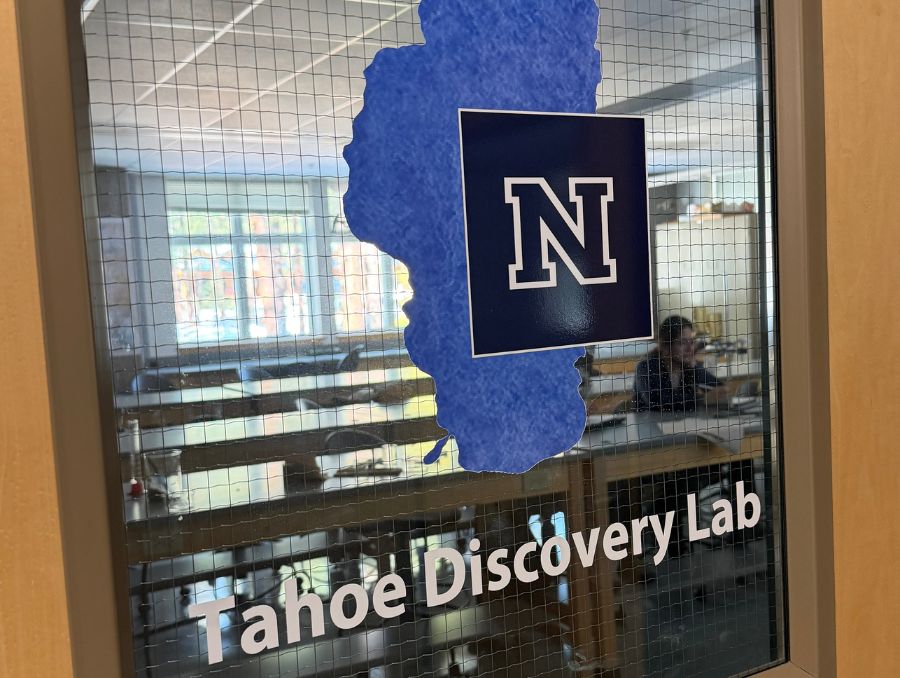
'Here, place, people and connection drive discovery'
The Tahoe Discovery Lab is reshaping how ideas are born. Housed on the University of Nevada, Reno at Lake Tahoe campus, The Tahoe Discovery Lab is not a single facility, but a hub that connects the region’s scientific strengths with national and international collaborators to accelerate discovery, innovation and workforce training within Tahoe’s uniquely cooperative and environmentally focused setting.
“I keep coming back to the idea of discovery not just as a concept, but as a place,” said Christopher S. Jeffrey, Ph.D., a professor in the Department of Chemistry and director of the Hitchcock Center for Chemical Ecology. “The Tahoe Discovery Lab isn’t just a facility. It’s a way of working.”
"... through coffee shop conversations, ideas sketched on paper, notes scribbled on napkins, and concepts tested and reworked ..."
For Jeffrey, the concept has taken years to take shape: through coffee shop conversations, ideas sketched on paper, notes scribbled on napkins, and concepts tested and reworked. That trajectory was formally recognized earlier this year, when Jeffrey was named the Harold Walter Siebens Endowed Chair in Entrepreneurship at the University of Nevada, Reno at Lake Tahoe, a role honoring excellence in interdisciplinary scholarship, innovation, and community engagement.
Continuing a Tahoe legacy of innovation
Entrepreneurship has been part of the Lake Tahoe campus story for more than two decades. In the early 2000s, Sierra Nevada University introduced an entrepreneurship course that later expanded into a broader program, supported by community leaders and philanthropic partners.
Now, that legacy enters a new era with the appointment of Jeffrey. The endowed chair supports faculty work that advances entrepreneurial, scholarly, creative and community engaged efforts across the University, with particular emphasis on fostering interdisciplinary learning and discovery.
“The endowed chair strengthens graduate and undergraduate education across the University, with a focus on sustainability, the environment, the arts and interdisciplinary studies,” said Doug Boyle, interim vice provost and dean of the University of Nevada, Reno at Lake Tahoe. “As the University of Nevada, Reno at Lake Tahoe’s inaugural appointee, Dr. Jeffrey will play a leading role in shaping and launching an Innovation Certificate program at the Lake Tahoe campus.”
A sense of place
The University’s Lake Tahoe campus is the ideal setting for the Tahoe Discovery Lab, as the 18-acre campus increasingly emerges as a site of creative energy, one that fosters deep engagement rather than transactional interaction.
Over multiple days, professors and students from around the world engage in conversation and collaboration. That extended interaction reflects the multidisciplinary environment this program is designed to foster.
“The Tahoe Discovery Lab represents the kind of integrated, place-based learning that defines our future as a university,” said Executive Vice President and Provost Jeff Thompson. “It strengthens the connection between research, teaching and community engagement while expanding access for students across disciplines. What is happening at Lake Tahoe is not separate from the University’s mission. It is central to it.”
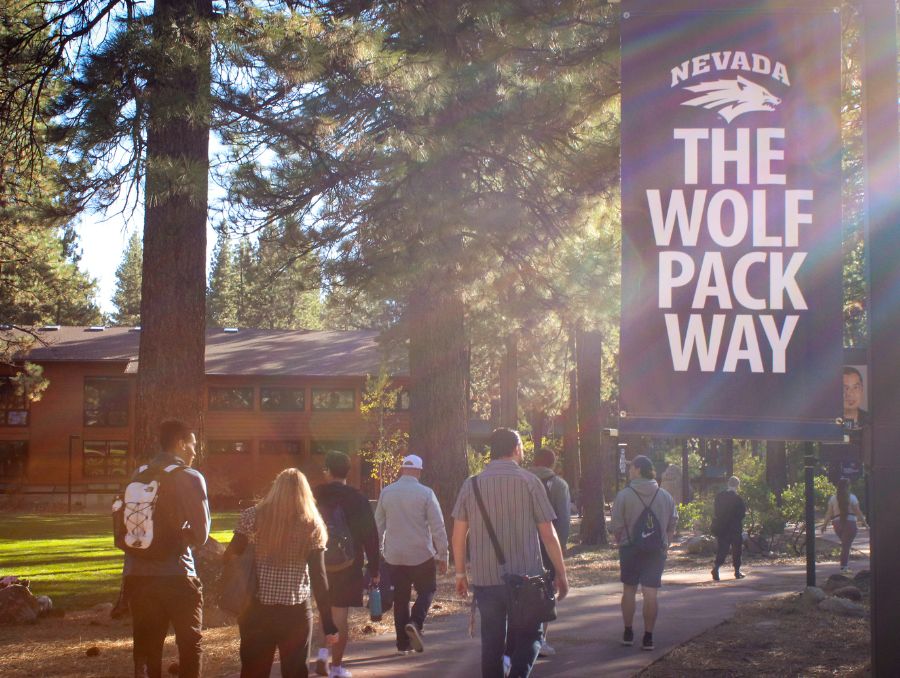
The Tahoe Discovery Lab will also be a hub for industry leaders to connect with faculty and with the local community. The setting Tahoe offers, Jeffrey iterated, creates something not every location can.
“When you spend multiple days together in a tight-knit environment, the experience is completely different. It’s not like a massive conference where you hear a famous speaker, disappear back to your hotel room, and never really connect,” Jeffrey said. “Here, we’re eating together, talking together, spending real time together. That creates value, especially for students.”
“Here, we’re eating together, talking together, spending real time together. That creates value, especially for students.”
One early expression of this model is the Bioinspired Innovation Course, a one-credit immersive weekend experience that brought together students from science, liberal arts, business, and biotechnology. For three days, students worked alongside innovators from the biomedical industry, gaining firsthand insight into how research moves from the lab into real-world applications. By engaging directly with leaders who have transformed early ideas into commercial and clinical breakthroughs, students were introduced not only to moments of discovery but to the industrial mindset that turns ideas into impact.
“Chatting with professionals gave me an insight into the broad scale and interdisciplinary aspect of the work,” said Morgan Yeager, a graduate student in the chemistry department and participant in the one-credit weekend course. “There really are limitless possibilities.”
This exposure to the non-academic side is crucial, Jeffrey says.
“While innovation often begins in academic environments, exposure to industry typically comes much later, often in a first entry level job,” Jeffrey said. “Here, we are intentionally introducing students to that mindset earlier, through experiences that connect education, research, and application.”
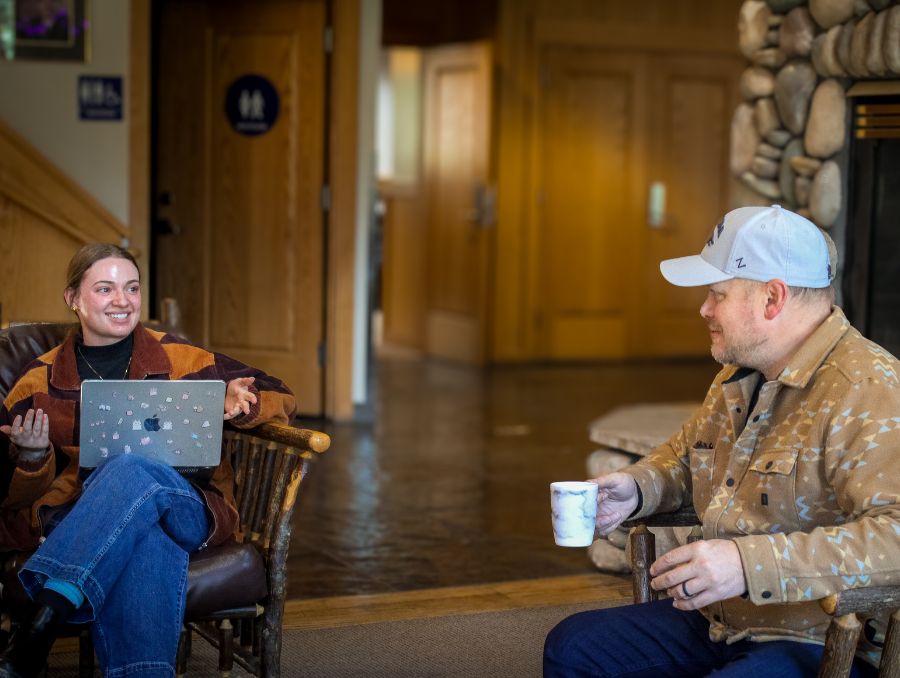
Jeffrey said the approach is designed to better prepare students for careers beyond the University, while also strengthening faculty capacity to translate research into meaningful outcomes.
“One of the most powerful moments of the weekend came when students heard from three industry leaders about the setbacks and unexpected turns involved in bringing a drug to market. Conversations like that give students an advantage when it comes to interviewing and securing their first job after college.”
That one-credit weekend course, and the forthcoming courses organized by Jeffrey this spring on the Lake Tahoe campus, are examples of the kind of transformations that take place in this unique, intimate setting. And, rather than adopting a traditional approach to classes, the Tahoe campus is building a set of deeply immersive academic offerings that prioritize connection, experimentation, and direct access to innovators and entrepreneurs who call Tahoe home or frequent the region.
“I always believe that science is done by people and in fact often by multiple people working on different parts of the same problem,” said Michael “Mick” Hitchcock, interim CEO of Biomea Fusion and speaker during one of the courses. “This can only happen when people get together and have conversations, build ideas and trust, and imagine possibilities.”
Rooted in experience
For Jeffrey, working across disciplines is only part of the equation. Equally important is engaging people from a wide range of backgrounds.
“My lab is made up of first-generation students, both undergraduate and graduate,” he said. As a first-generation college graduate himself, Jeffrey said that experience shapes how he teaches, mentors and thinks about access. “Here at the University, where more than 30 percent of the student population is first generation, we have to look beyond credentials. Someone did that for me, and it made all the difference.”
That philosophy carries into the Tahoe model. By designing immersive experiences as academic courses rather than competitive programs, the campus lowers barriers to entry and creates space for students who may not see themselves as entrepreneurs or innovators. Access is built into the structure. Any student can enroll. The invitation is open.
That emphasis on access and interdisciplinarity is what gives the Lake Tahoe campus its distinct character, Jeffrey said. Ideas flow freely and are interconnected. They emerge at the intersections of science, journalism, media, and entrepreneurship. At the Tahoe campus, collaboration is intentional.
“Innovation doesn’t happen in isolation,” Jeffrey said. “The boundaries between disciplines just kind of melt away at that campus, when you bring a diverse group of people from the main campus together on a critical topic, collaborations naturally form.”
Currently, the Tahoe Discovery Lab serves as the laboratory base for a growing Chemical–Ecology Field Station, which supports University researchers and collaborators from the Max Planck Institutes, Penn State, Cornell University and other institutions. The Tahoe Discovery Lab also anchors the University’s Innovation Program, which hosts one-credit weekend courses, entrepreneurship challenges like the Preger Prize, prototype development, and industry-aligned training modules. Its mission is to advance innovation by connecting research, education and hands-on exploration. Through the Tahoe Discovery Lab, faculty, students and industry partners gain access to the tools, mentorship and collaborative space needed to design and apply solutions to today’s regional and global challenges.


