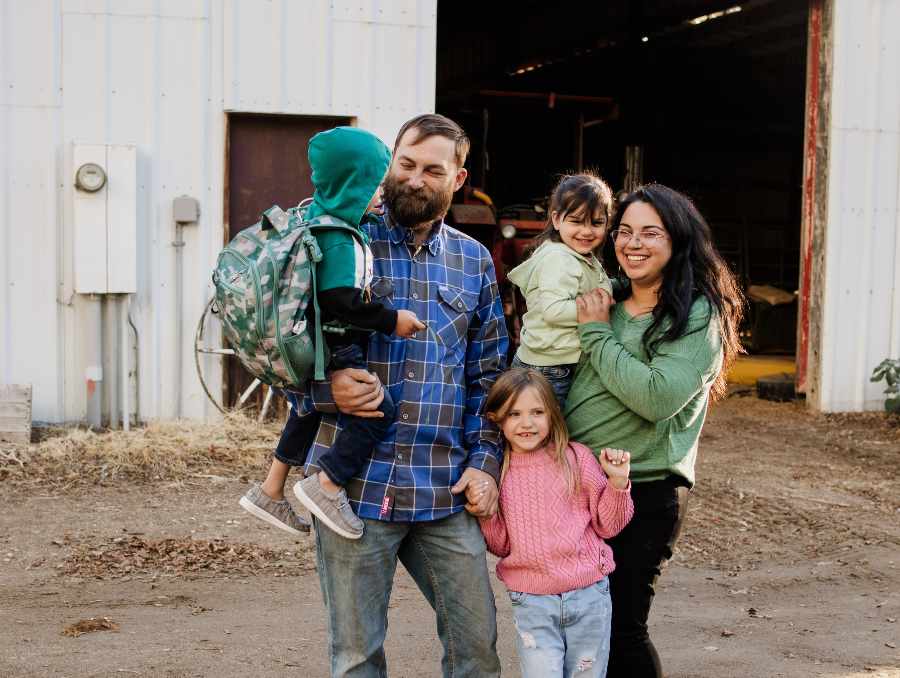
When local agencies considered where to open new family resource centers, data from the Nevada Essentials for Childhood project pointed them in the right direction.
“Nevada is one of the few states that has statewide middle school data and this allows us to identify concerns earlier and strengthen resilience when it can still make a difference," said Kristen Clements-Nolle, Ph.D., MPH, professor of epidemiology.
Researchers at the University of Nevada, Reno and the University of Nevada, Las Vegas turned to data to offer guidance on where new centers could make the greatest impact. By mapping childhood experiences and deprivation scores across ZIP codes, the team identified neighborhoods with higher levels of adversity and fewer protective supports. Those findings helped local leaders put services exactly where families needed them most.
That partnership is just one example of how Nevada Essentials for Childhood is turning research into real-world solutions that help children and families thrive.
Led by Kristen Clements-Nolle, Ph.D., MPH, Foundation Professor and professor of epidemiology at the University of Nevada, Reno School of Public Health, and Amanda Haboush-Deloye, Ph.D., executive director of the Nevada Institute for Children’s Research and Policy and associate professor at the School of Public Health at UNLV, the project is part of a Centers for Disease Control and Prevention initiative that funds only 11 programs nationwide.
“This collaboration between UNR and UNLV shows the strength of Nevada’s public health community,” said Muge Akpinar-Elci, M.D., MPH, dean of the School of Public Health. “The foundation of public health is prevention, and this project demonstrates how positive experiences and community connection can drive that prevention. Together, we are turning data into action to support children and families in every corner of the state.”
The project collects and analyzes statewide data on adverse childhood experiences (ACEs) such as abuse, neglect or exposure to violence, and positive childhood experiences (PCEs), including supportive adult relationships, safe neighborhoods and opportunities for connection. These insights are shared publicly through the Nevada Essentials for Childhood Data Center at nvefc.org, which allows agencies, educators and advocates to access and apply the information to improve child and family well-being.

A dynamic online dashboard makes this data accessible to everyone — from policymakers to parents. Interactive visuals highlight differences by region, age, and demographic group, providing communities with practical insights to guide prevention efforts and targeted outreach.
In addition, the project’s Reach Out Campaign Toolkit offers ready-to-use materials that promote positive experiences and connection as well as reducing parent and caregiver stigma around help seeking behaviors. The toolkit provides social media posts, flyers and messaging guides that help families and organizations share consistent, strength-based messages about support and resilience.
“Positive experiences are just as powerful as adverse ones,” Haboush-Deloye said. “When kids feel supported and connected, it can buffer the effects of trauma and change long-term health outcomes. It is about building up strengths, not only addressing harm.”
One of the most significant findings from recent surveys is that positive experiences — such as youth who feel they belong at school or who have trusted adults they can turn to — are linked with lower rates of depression, substance use and violence. Those connections are especially critical in middle school, where early intervention can have lasting impact.
“High schools and middle schools can provide an important opportunity for primary prevention,” Clements-Nolle said. “Nevada is one of the few states that has statewide middle school data and this allows us to identify concerns earlier and strengthen resilience when it can still make a difference.”
The project’s focus on prevention and positive experiences has also received statewide recognition. Nevada Essentials for Childhood was honored by Truckee Meadows Tomorrow as the 2025 Data Champion at the Accentuate the Positive Awards for its leadership in transparent, community-centered data. The team also presented findings at the Children’s Cabinet’s annual Washoe Youth Mental Health Summit, the 2025 Southern Nevada Substance Misuse and Overdose Prevention Summit, the Washoe County Children’s Mental Health Consortium Meeting, the Nevada Statewide Coalition Partnership Meeting and Nevada Family Wellness Summit.
The collaboration continues to expand through more than 30 statewide partners — from health departments and nonprofits to tribal governments and rural coalitions — ensuring the data reflects the diversity of Nevada families.
“There is no reason Nevada should rank among the lowest in youth mental health,” Clements-Nolle said. “By focusing upstream on prevention and positive experiences, we can invest in solutions that make lasting change."
To explore the data dashboard and infographics, download the Reach Out campaign toolkit, or learn more and support ongoing prevention efforts, visit Nevada Essentials for Childhood.


