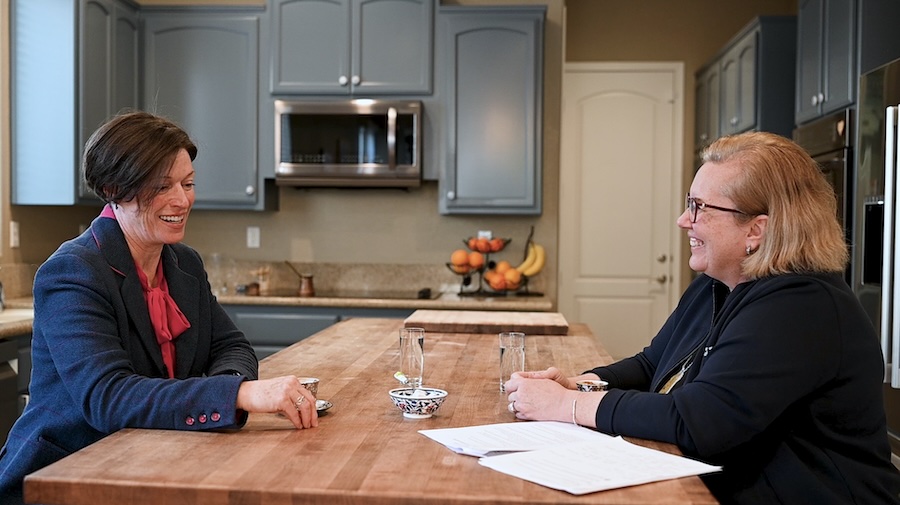
In the tradition of Turkish coffee, conversation is meant to flow and create space for connection. In Episode 3 of School of Public Health’s Brewing Better Health conversation series, Karla D. Wagner, Ph.D., sits down with Dean Muge Akpinar-Elci, M.D., MPH, for a thoughtful discussion about harm reduction, trust and how respect shapes public health practice from the classroom to the field.
Wagner is a foundation professor in the Department of Health Behavior, Policy and Administration Sciences at the University of Nevada, Reno School of Public Health and serves as associate dean for faculty affairs for the School. She also is associate director of the Center for Drug Use, Equity, and Policy Research. She grounds her work in a simple principle: “We don’t do research to people or on people. We do research with people.” That approach means centering the voices of individuals who use drugs and building solutions alongside them.
As we learn, her path into this work began with a book she read as an undergraduate anthropology student. "In Search of Respect: Selling Crack in El Barrio" by Philippe Bourgois shifted her perspective from studying physical anthropology to understanding the social and structural forces shaping drug use in real time. The book’s focus on respect and social context continues to shape the way she listens, studies and responds to community needs.
Over the past two decades, Wagner’s research has evolved from HIV prevention to opioid overdose response and, more recently, to methamphetamine use in Nevada. Each shift, she explains, came from listening. When she arrived at the University in 2014 focused on expanding naloxone access, she repeatedly heard the same question from community members: “But what about meth?” That question prompted a new direction in her work, reflecting public health’s responsibility to respond to changing needs.
Wagner also reflects on the emotional weight of the work. Each time someone she knows dies of an overdose, she questions whether more could have been done. But sitting with participants at field sites, sharing conversation and listening to their experiences, reminds her that many lives have been saved and many people are living better because of these efforts. Respect, connection and dignity are practical strategies that help save lives.
Throughout the episode, Wagner emphasizes that drug use is not a moral issue but a public health issue shaped by trauma, economic conditions, mental health and access to care. Understanding those upstream factors allows researchers and practitioners to design interventions that reduce harm rather than deepen stigma. Public health, she notes, is about lowering barriers and strengthening community connections.
As the conversation closes, Wagner emphasizes that this work is never done alone. She works alongside a team of eight community outreach and research staff members, as well as students and partners across Nevada. That collaborative approach reflects the core of public health practice. She also points to students as one of her greatest sources of hope. Their energy and commitment to improving the lives of others, she says, will help shape a healthier and more compassionate future.
Brewing Better Health features faculty and public health leaders from the University of Nevada, Reno School of Public Health and beyond. Each episode pairs thoughtful conversation with the tradition of Turkish coffee, emphasizing connection, listening and shared understanding. Episode 3 of Brewing Better Health is available on the School of Public Health's YouTube channel.


