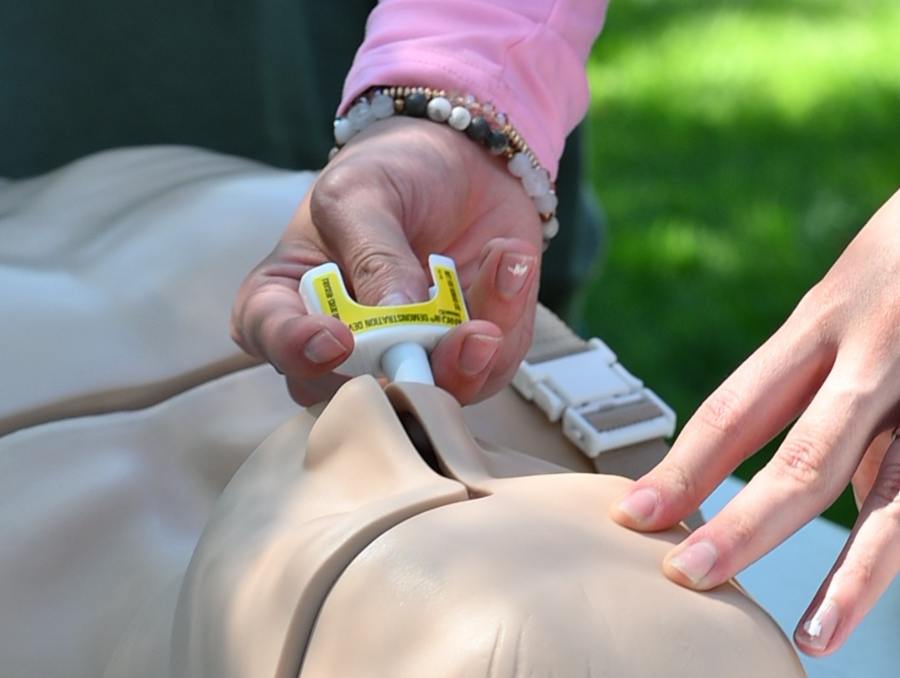
As communities mark National Fentanyl Awareness Day today, April 29, experts from the School of Public Health and the Center for the Application of Substance Abuse Technologies (CASAT) are raising awareness about how fentanyl is reshaping the drug supply in Nevada and what can be done to prevent overdose.
Helping lead that effort is Karla Wagner, Ph.D., foundation professor in the Department of Health Behavior, Policy and Administration and associate dean for faculty affairs, a nationally recognized researcher who has testified before federal committees and collaborates with peers across the country.
“Because the illicit drug supply is unregulated, people who use illicit drugs are often unaware of the exact composition of the substances they’re using,” Wagner said.
In a recent national study, Wagner and her colleagues found fentanyl in approximately 12.5% of powder methamphetamine samples and 14.8% of powder cocaine samples tested across 31 states. The findings highlight a growing risk for people who may not be intentionally using opioids.
Changing risk in the drug supply
Fentanyl is a synthetic opioid that is significantly more potent than drugs like heroin. Because it takes a much smaller amount to produce an effect, even a small, unknown presence in another substance can increase the risk of overdose.
“Sometimes people consume fentanyl without knowing it,” Wagner said. “Other times, it is used intentionally or combined with other drugs. Either way, the risk of overdose has increased.”
That shift has changed how public health professionals approach prevention, expanding awareness beyond opioid use alone.
Wagner recently joined Dean Muge Akpinar-Elci, M.D., MPH, for an episode of Brewing Better Health, where they discussed how fentanyl is reshaping Nevada’s drug supply and what that means for communities across the state. The full conversation is available on YouTube.
Addressing misinformation
Misinformation about fentanyl remains widespread.
“One of the most common misconceptions is that you can overdose by touching fentanyl,” Wagner said. “According to medical experts, that is not how exposure works."
“Some people think naloxone does not work for fentanyl overdoses, and that is not true. It may take more than one dose, but it is still effective,” said Wagner.
Fentanyl in pill or powder form is not absorbed through the skin and must be inhaled, injected or ingested to enter the bloodstream. Prescription fentanyl patches are designed to deliver medication through the skin over time, but that is a controlled medical use and does not reflect how illicit fentanyl exposure occurs.
Another common myth involves naloxone, also known as Narcan.
“Some people think naloxone does not work for fentanyl overdoses, and that is not true,” Wagner said. “It may take more than one dose, but it is still effective.”
A growing presence in everyday settings
For CASAT, National Fentanyl Awareness Day is an opportunity to highlight how widespread fentanyl has become.
“Fentanyl has found its way into so many areas where people may not expect it,” said Morgan Green, program manager with CASAT. “People may think they are using one substance, when in reality it could contain something else entirely.”
Green said that shift has led to a concerning normalization. “It used to be the exception where you were exposed to fentanyl, and now it’s the norm,” she said. “That’s a reality we should not just accept.”
Expanding access to life-saving tools
Prevention efforts in Nevada focus on ensuring people have access to naloxone and know how to use it. CASAT distributes thousands of doses of naloxone each month across the state, reaching law enforcement, emergency responders, hospitals and community organizations.
“On average, we distribute about 4,000 to 5,000 units every month,” Green said.
Naloxone plays a critical role in overdose response. “You cannot change once your life is over,” she said. “We are trying to give people that opportunity.”
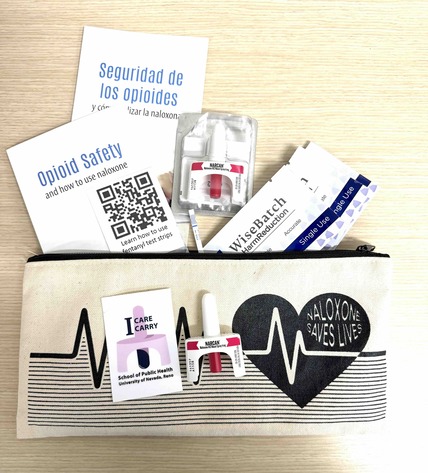
Training the community to respond
CASAT’s work also focuses on preparing everyday people, not just health professionals, to respond to an overdose.
“The people who are most likely to intervene are the people on the street,” Green said, referring to the average community member. “We want to make sure they have the tools and the knowledge to step up.”
Training is offered in person, virtually and through community partnerships across Nevada, with a focus on recognizing overdose signs, administering naloxone and reducing stigma.
“Making sure people know what to look for and how to respond is critical,” Green said.
Recognizing and responding to overdose
Opioid overdoses affect breathing and can cause it to slow or stop. Warning signs include slow or no breathing, blue or gray lips and fingernails, and a lack of responsiveness. Restoring breathing is the most important goal in an overdose response.
Immediate action can save a life:
- Try to wake the person by calling their name, shouting or gently shaking them
- Call 911 if it is safe to do so
- Provide rescue breathing
- Administer naloxone and repeat if needed
Naloxone can take 2 to 5 minutes to take effect, so it is important to continue rescue breathing and stay with the person until help arrives. People may be confused or disoriented when they regain consciousness, which is a normal response.
“All people who use drugs and people who care about them should know how to prevent, recognize and respond to an overdose,” Wagner said.


