
The start of a new semester often brings a familiar mix of motivation and pressure. Classes move quickly. Deadlines stack up. Many students juggle coursework, jobs and personal responsibilities before they have had a chance to catch their breath.
On a January afternoon, the Mathewson-IGT Knowledge Center Rotunda will offer something different. Yoga mats will be spread across the floor. Hot cocoa will steam from paper cups. And for a brief pause between classes, students will be invited to slow down.
That pause is intentional. Cozy Yoga, hosted by CASAT and the Community Behavioral Health Collaborative, is part of the School of Public Health’s broader effort to support student well-being, particularly for students whose academic work often centers on illness, inequity and loss.
“Having wellness resources within the School of Public Health sends a clear message that well-being matters alongside academic achievement,” Ross said. “That aligns with public health’s core values of prevention and caring for the whole person.”
That need for support is something Jennifer Calloway Ross, Ph.D., director of the Community Behavioral Health Collaborative, knows well. For many students, college stress is not just about exams and deadlines. It is also about the emotional weight of what they are learning. Public health students engage early and often with complex and emotionally demanding material, from health disparities and disease patterns to mortality data and systemic inequities. While that work is essential, it can also take a toll.
“Public health students are exposed to challenging subject matter very early in their education,” said Jennifer Ross, who helps lead the SPH Student Wellness Support Center team. “That constant engagement with inequity and suffering can create emotional and mental health needs that aren’t always visible.”
Cozy Yoga is designed to acknowledge those pressures without adding more expectations. The event will feature short, guided restorative yoga sessions throughout the afternoon, along with space to connect with peers and members of the wellness team in a relaxed, informal setting. Students can attend one session, stay for several or simply stop by.
“Self-care is not something to fit in after the work is done,” Ross said. “It’s foundational to learning, teaching and leading in public health.”
Cozy Yoga also serves as an introduction to the SPH Student Wellness Support Center, part of the school’s broader wellness initiative developed by the Community Behavioral Health Collaborative. By meeting the wellness team in a relaxed, low-pressure setting, students can learn what support is available and where to find it, without needing to be in crisis or already know where to start.
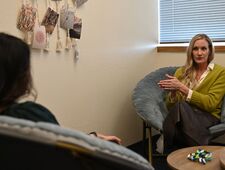
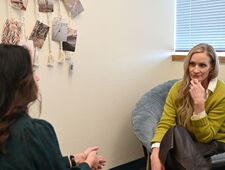

“Having wellness resources within the School of Public Health sends a clear message that well-being matters alongside academic achievement,” Ross said. “That aligns with public health’s core values of prevention and caring for the whole person.”
For Ross, creating space for students to care for themselves and each other is about sustainability, not indulgence. The Student Wellness Support Center and events like Cozy Yoga also help build community and normalize help-seeking, which Ross says is especially important in helping professions.
“You don’t need to be in crisis to reach out,” she said. “Noticing that something feels off is reason enough to start the conversation.”

The Student Wellness Support Center team is available to support School of Public Health students through drop-in hours on Mondays and Wednesdays from 2 to 4 p.m. in LRC 215, as well as by appointment. The team provides one-on-one support and helps connect students with relevant campus and community resources. Faculty can also reach out to learn how the wellness team can help connect students with the right support during the busy semester.
“Our goal is not to add one more thing to students’ to-do lists,” Ross said. “It’s to remind them that taking care of themselves is part of their education, not separate from it.”