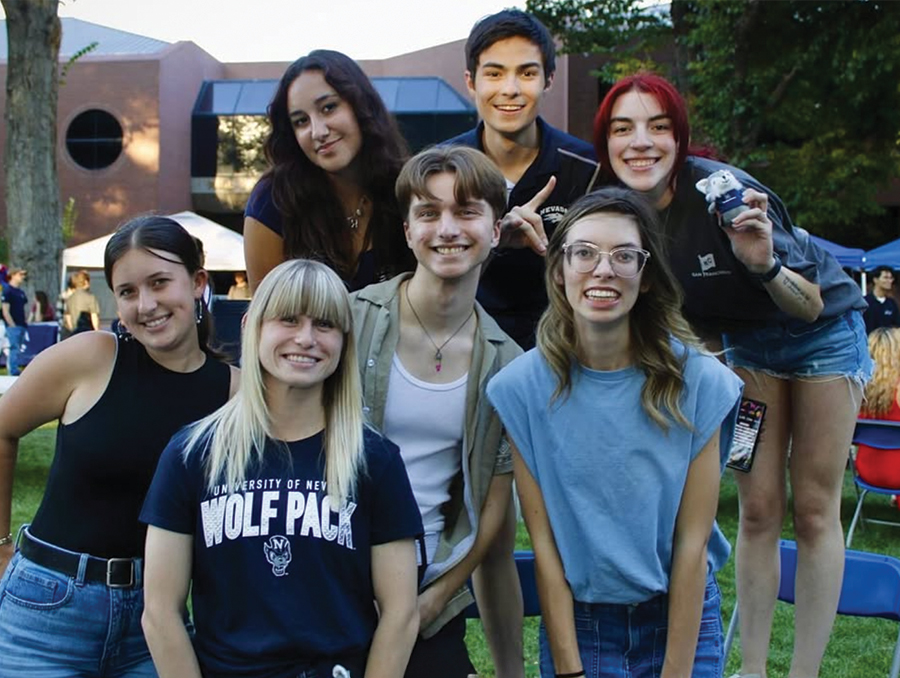
Students in the University of Nevada, Reno’s College of Business are putting their marketing skills into practice through the American Marketing Association (AMA) Collegiate Case Competition, a national program that challenges students to solve a real‑world marketing case.
This year, students are tackling a case sponsored by Major League Baseball (MLB) that gives them the opportunity to work with a globally recognized brand while gaining hands‑on experience that mirrors professional marketing work.
The project is part of an unstructured, hands‑on marketing course taught by Igor Makienko, associate professor of marketing, who has led the class for more than 15 years. Rather than following a traditional lecture format, the course centers on collaboration, original research and iterative problem solving.
The competition is hosted nationally by the American Marketing Association, and while the work is completed as part of a for‑credit course, the University’s AMA student chapter helps foster student interest in marketing competitions and professional development opportunities.
During Makienko’s tenure overseeing this competition for 15 years, six student teams have been in a national spot, getting various awards in this annual competition, from commendable mention to third place in the nation. The team’s most recent appearance as a national finalist was in 2011, placing third overall.
For many students, the experience helped bridge the gap between academic theory and industry expectations.
“This competition pushed me to think beyond textbook concepts and apply marketing strategy in a real, high‑pressure setting,” said alum Nafis Kausar, who graduated in 2025 with a degree in marketing and management. “Working with real constraints and deadlines challenged me to be more confident in my decision making.”
Senior business management and marketing major Ella Mendonsa said the structure of the course mirrored professional marketing environments.
“One of the biggest takeaways from this experience is the importance of adaptability and strong communication,” Mendonsa said. “I strengthened my skills in strategic thinking and teamwork, which I know will be valuable as I start my career.”
Lejla Thompson, a senior majoring in marketing, echoed this sentiment.
"The competition allowed me to demonstrate not just what I know, but how I can use those skills effectively,” said Thompson. “Having tangible, professional‑quality work to showcase is incredibly meaningful, and it gives me confidence as I move forward in my career.”
For Celeste Maria Rizo Rivas, a senior majoring in marketing and management, the case required deep audience research for a sport she was initially unfamiliar with.
“Our client was Major League Baseball, and I had little to no prior knowledge about baseball or its audience,” Rizo Rivas said. “I had to immerse myself in the existing demographic while also finding ways to appeal to a new Gen Z audience without losing the core values that longtime fans care about.”
Senior marketing major Paige Lombardi, who served as the creative team coordinator, said the competition pushed students to think beyond ideation.
“I was challenged both creatively and professionally through the need to find a balance between what is unique and new and what is fiscally feasible,” Lombardi said. “I gained real‑life experience collaborating across teams to bring ideas from concept to implementation.”
According to Makienko, the competition balances rigorous research with standout creativity. Students dig deeply into the client’s target audience, competitors and overall business landscape using both original research and existing data. While that research helps clarify the client’s goals, Makienko notes that the real distinction comes from how teams turn the same insights into fresh, creative ideas.
As finalists, the team will travel to Chicago in March 2026 to compete against the other ten finalists for the top three places. The student presentations will be ranked by professionals from MLB.


