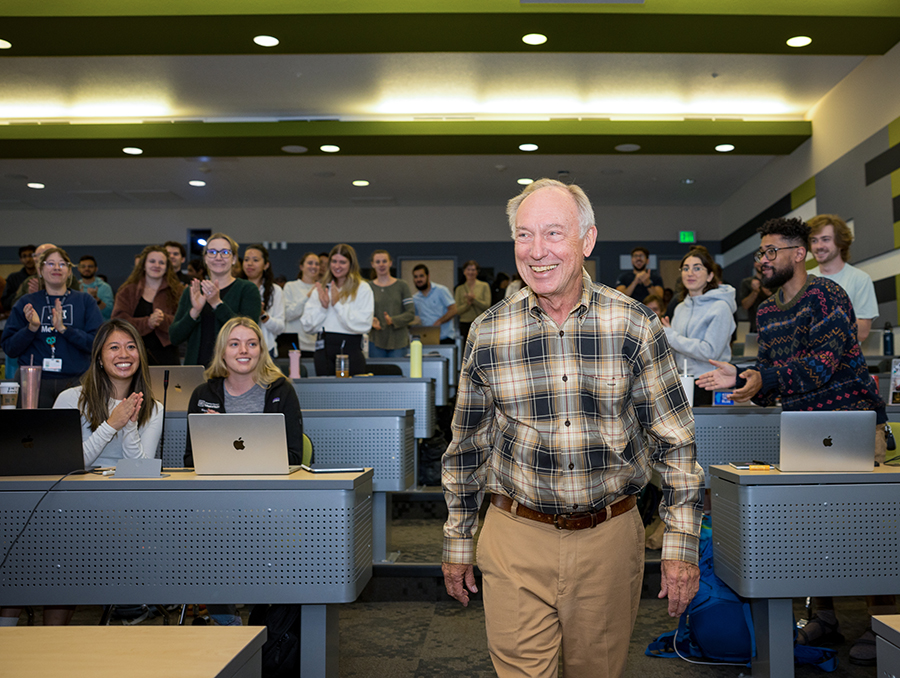
Thomas R. Kozel, Ph.D., was honored during his final lecture on Sept. 19, 2025, marking the culmination of a 54-year career devoted to teaching and research. Over more than five decades, he helped educate more than 2,600 medical school graduates and advanced health locally and globally through pioneering work in microbiology and immunology — including the development of life-saving rapid diagnostic tests and 48 years of continuous research funding from the National Institutes of Health.
“I came here to teach medical students — that’s what I was brought here to do,” Kozel said. “For more than 50 years, I’ve taught medical students, and I’ve loved it.”
In recognition of his impact at the University of Nevada, Reno School of Medicine (UNR Med), the City of Reno and the State of Nevada declared September 19, 2025, “Dr. Tom Kozel Day,” while Washoe County designated it “University of Reno, Medical Education Day.” He also received a Certificate of Appreciation signed by University President Brian Sandoval, J.D., Provost Jeffrey S. Thompson, Ph.D., and UNR Med Dean Paul J. Hauptman, M.D.
A career that grew with the medical school
Kozel’s path to a life in science began early. As a sophomore at Fort Dodge High School in Iowa in 1961, there were already signs of the curiosity and ambition that would define his career. In 1962, he was selected as a delegate to the National Conference on the Atom in Chicago and went on to excel in debate and science fairs, winning the senior high division of the 1963 Hawkeye Science Fair.
After graduating from Fort Dodge High School in 1963, Kozel enrolled at the University of Iowa, where he earned his B.A., M.S., and Ph.D. in microbiology. While pursuing his doctorate, he distinguished himself through scientific ingenuity and initiative, successfully securing his first NIH award. His work quickly drew attention, and before he even applied for his first professional position, Kozel was already being recruited.
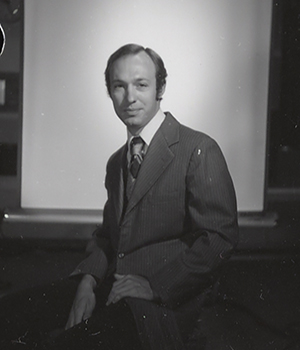 Kozel as an early faculty member at the University of Nevada School of Medical Sciences. Courtesy of University Archives.
 At the same time, the newly formed University of Nevada School of Medical Sciences, later to become the University of Nevada, Reno School of Medicine, was assembling its founding faculty. Russell Brown, Ph.D., the school’s first section chief for microbiology, turned to his former graduate school colleague, Roger Porter, Ph.D., chair of microbiology at the University of Iowa and one of the world’s leading bacteriologists, for recommendations.
As Kozel finished his Ph.D. and began thinking about his future, he recalls Porter telling him, “Tom, you’re going to Reno, Nevada.” Kozel went home, told his wife about the offer — and then pulled out a map to locate Reno.
In 1971, Kozel accepted the position, becoming one of the medical school’s earliest faculty hires. He arrived just weeks before the first class began.
“In many ways,” he later reflected, “my career development tracked the evolution and maturation of the medical school. I vividly remember my first lecture. I went to the blackboard and sketched out the results of a stunning new report that described the duality of our immune system — the existence of B cells and T cells. Little did I know that, 10 years later, this discovery would be fundamental to our understanding of AIDS.”
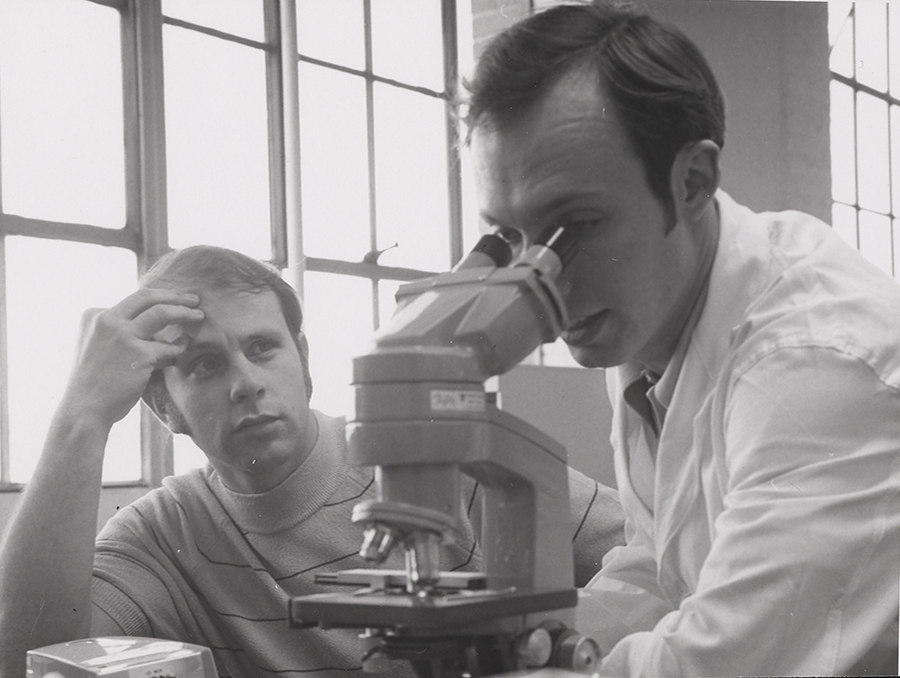 Medical student Mike Natalino, Class of 1973, and Kozel working in the laboratory with a microscope. Courtesy of University Archives.
Shaping a student-centered medical school
Not long after joining the faculty as an assistant professor, Kozel was appointed chair of the Medical School Admissions Committee, where he helped establish a student-centered philosophy that would define the medical school’s culture for decades.
In 1973, 793 applicants competed for just 48 seats. After grades and MCAT scores narrowed the pool to about 100 candidates, Kozel led the admissions committee through a second, more rigorous review focused on thoughtful evaluation and in-depth, personal interviews designed to look beyond test scores alone. The goal, he explained, was to better understand each applicant as a person.
“We try to get a feeling for the applicant. An idea of what he or she wants out of life, what his or her goals are,” he said. “It gives the applicant a chance to tell the administration things which are impossible to put on an application form.”
This same philosophy — emphasizing personal connection, curiosity and real-world preparation — carried over into the classroom.
Recognizing the importance of exposing students to a broad range of professional possibilities, Kozel developed one of the medical school’s most popular courses, “Profession of Microbiology.” The course introduced students to the wide range of career paths available by inviting practicing microbiologists to share insights from their work. Students often described the class as one of their most memorable and inspiring experiences — a lasting testament to Kozel’s dedication to advancing microbiology education.
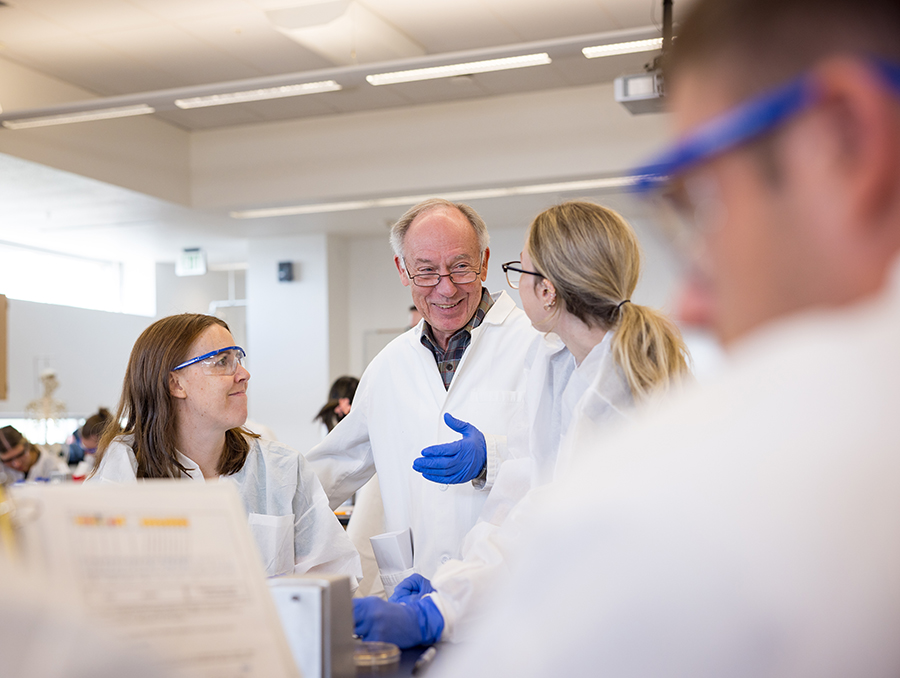 Kozel brought infectious enthusiasm to every course he taught, including the MED636 (Block 6) microbiology lab, which trains medical students in the isolation, diagnosis and characterization of bacterial pathogens.
 A research path that changed global health
As he helped shape the medical school’s student body, Kozel was also building a research program that would become recognized internationally. In 1979, he received an NIH grant to study Cryptococcus neoformans, a fungal yeast few researchers were studying at the time.
His interest dated back to his student days. “I did my senior thesis with it and have been working on it on and off ever since,” he said in a 2011 interview. “Back then, nobody cared about it, so I was the only guy doing the work.”
That changed dramatically with the emergence of HIV/AIDS in the early 1980s. “It was a rare infection — back in the 70s there were maybe 300 cases a year — and then HIV/AIDS came along in 1981, and we were the only people who knew about it.”
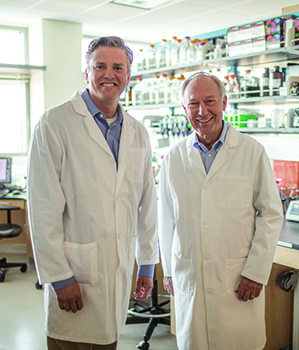 Kozel pictured with DxDiscovery co-founder and Chair of the Department of Microbiology and Immunology, David AuCoin, Ph.D. DxDiscovery, an early-stage biotechnology company, is focused on antibody diagnostics and therapeutics for infectious diseases.
 Recognizing the importance of focused research, Kozel took a sabbatical from 1980 to 1981 at The Rockefeller University, working in the lab of Emil Gotschlich, M.D., the developer of the meningitis vaccine. The experience proved pivotal. Reflecting decades later, Kozel said, “of all the places in the universe, I ended up in the one that could affect my career the most.”
His work on Cryptococcus helped elevate the organism from obscurity to a central focus of global infectious disease research. It also led to one of his most impactful contributions: the development of rapid diagnostic tools.
Using monoclonal antibody technology, Kozel built extensive antibody libraries to detect fungal pathogens. His research evolved into the creation of a lateral flow immunoassay — a simple, rapid dipstick test — for cryptococcal meningitis. Partnering with Immuno-Mycologics (IMMY), the test was approved by the FDA in 2012 and later recommended globally by the World Health Organization.
Across 48 years, his NIH funding was renewed continuously — becoming the longest-standing NIH grant in Nevada and one of the longest-running in the nation.
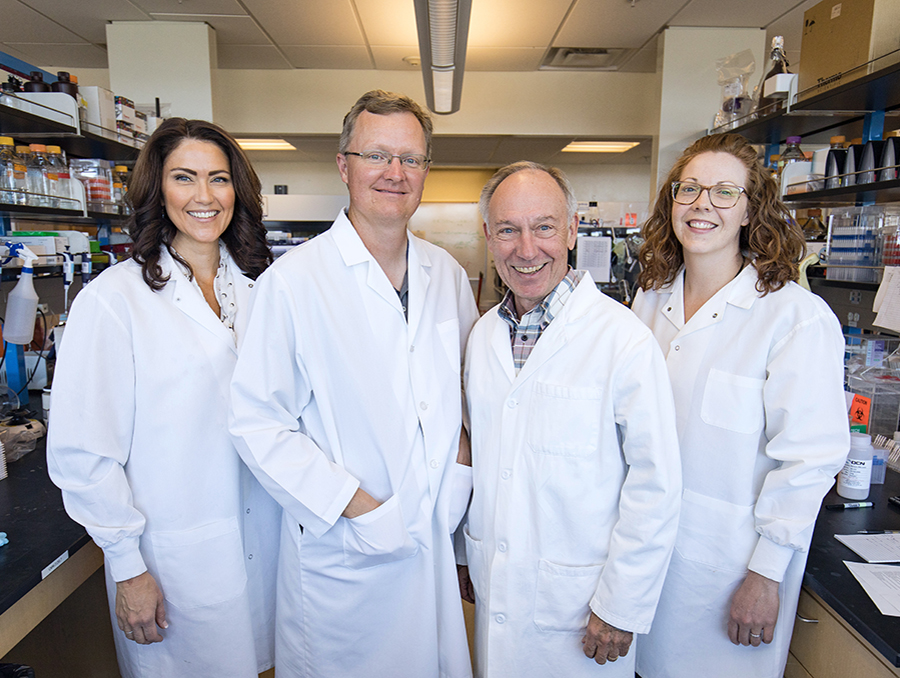 Kozel pictured with microbiology and immunology Staff Research Associates Marcellene Gates-Hollingsworth and Peter Thorkildson, along with Lab and Safety Training Coordinator Dana Reed, M.S.
 A beloved educator’s legacy
Despite international recognition, Kozel remained, at his core, a teacher. He was named Basic Science Teacher of the Year in 1982 and took pride in tracking student performance on licensing exams. Under his leadership, the Department of Microbiology and Immunology earned repeated recognition as the medical school’s top basic science department.
His philosophy was simple: “It’s great when something you do helps people.”
Over 54 years, Kozel taught every medical student who graduated from the institution, authored 148 publications, and amassed more than 11,800 citations, but his greatest legacy may be less tangible: a culture of curiosity, rigor and purpose that continues to define UNR Med. Inseparable from the institution he helped build, his impact lives on through the physicians he trained, the scientists he mentored, and the discoveries that continue to save lives around the world.
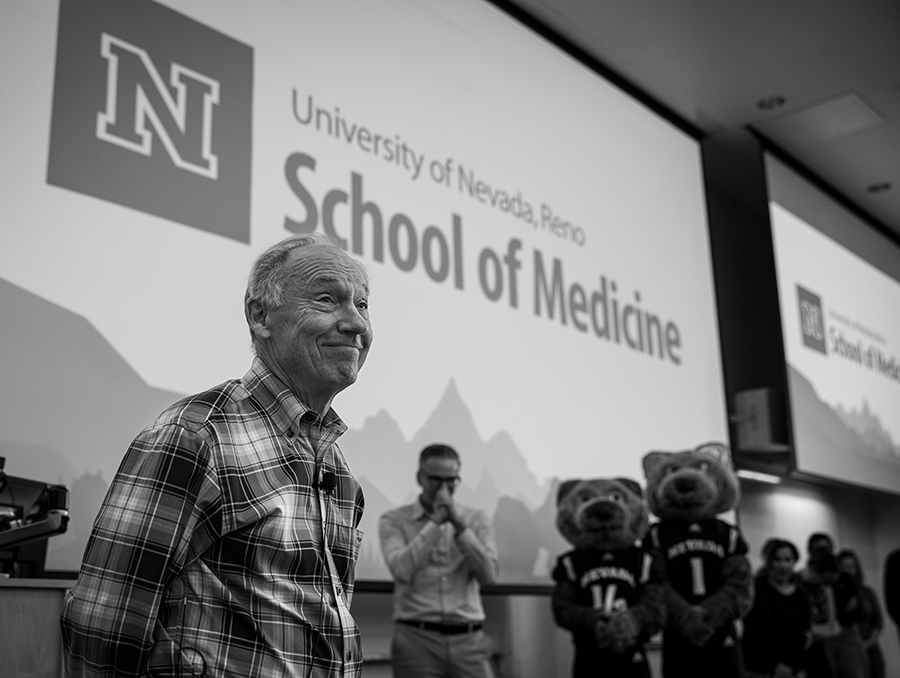 Kozel’s decades of research and teaching shaped generations of physicians and scientists while advancing global health through discovery.
 Thomas R. Kozel Milestones
- 1971 – Founding faculty member at the University of Nevada School of Medical Sciences – Assistant Professor of Microbiology
- 1972 – Appointed as Director of Medical School Admissions Committee and received funding for first NIH grant at the School of Medical Sciences
- 1976 – Tenured as Associate Professor of Microbiology and promoted to Chair of Microbiology and Immunology
- 1980 – Sabbatical at The Rockefeller University, Visiting Associate Professor
- 1982 – Awarded Outstanding Basic Science Professor by the Class of 1982
- 1983 – Promoted to Professor of Microbiology and Immunology
- 1984 – Received recognition as University of Nevada, Reno Foundation Research Professor in first cohort of awardees
- 1995 – Received Method to Extend Research in Time (MERIT) Award given by the National Institute of Health through its advisory Allergy and Infectious Diseases Council
- 1995-2005 – Editor, Infection and Immunity
- 2000 – Oxford University, Visiting Scientist
- 2005 – Chair, Executive Committee for Biomedical Sciences Building
- 2006 – Received Dean’s Distinguished Service Award, University of Nevada School of Medicine
- 2012 – Awarded University of Nevada, Reno Outstanding Researcher and formed DxDiscovery
- 2014 – Awarded the Medical Mycological Society of the Americas Rhoda Benham Lifetime Achievement Award
- 2018 – Rapid-diagnostic test developed by Kozel and his team added to World Health Organization’s Model List
- 2024 – Awarded University of Nevada, Reno Distinguished Faculty Award
Celebrating Kozel's remarkable career
On January 30, 2026, Kozel was honored at a special retirement celebration recognizing his extraordinary service as a founding faculty member, beloved educator and distinguished scientist. During the event, Dean Hauptman presented Kozel with a Festschrift, a rare and meaningful academic tribute.
Dating back more than a century, a Festschrift is created to honor an individual’s scholarly achievements and celebrate a lifetime of contributions. Part reflection and part joyful commemoration, it highlights not only a scholar’s professional impact, but also their personal influence on the many students, trainees and colleagues they have mentored.
“When Dr. Tom Kozel announced his intention to retire, it was absolutely clear that a Festschrift would serve as an appropriate tribute and recognition of his 54 years of service to the University of Nevada, Reno and to the greater scientific community,” Hauptman said.
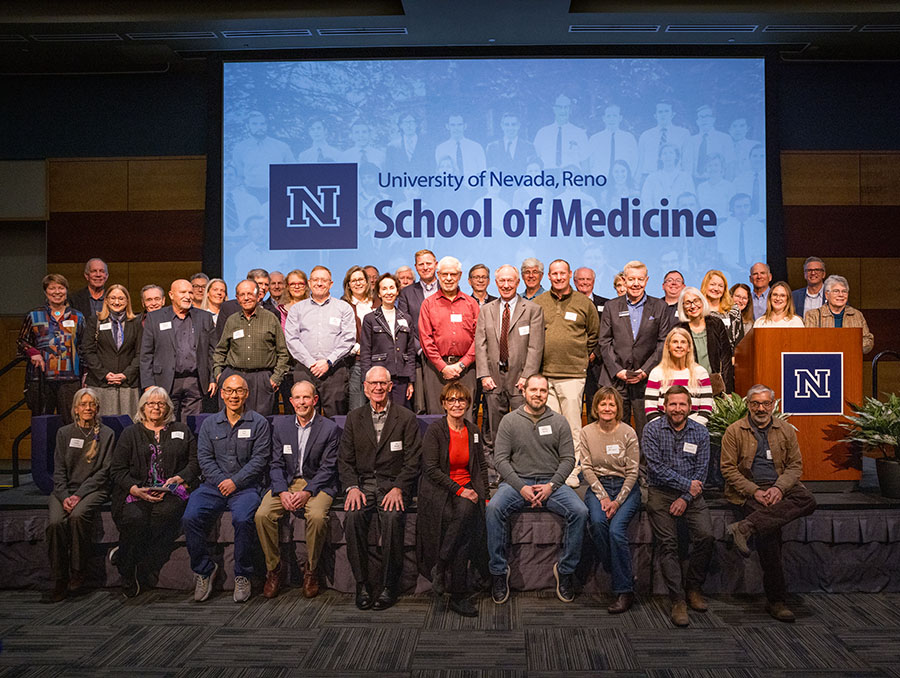 A powerful reunion across generations — Kozel pictured with medical school alumni from the past five decades during his retirement celebration.
Advancing excellence in medical education
To honor Kozel’s lifelong commitment to medical education, mentorship and innovation, UNR Med has established the Thomas R. Kozel Lectureship in Medical Education Endowment.
This endowed lectureship will bring distinguished educators and scholars to campus to engage faculty in meaningful dialogue and professional development focused on excellence in medical education. Through guest lectures and educational programming, the lectureship will support faculty as they strengthen teaching practices, foster inclusive learning environments, and prepare future physicians for a rapidly evolving world.
Those who wish to honor Kozel’s legacy are invited to contribute to the endowment.
Contribute to the Thomas R. Kozel Lectureship in Medical Education


