Stefan Lovgren works with the University of Nevada, Reno’s Tahoe Institute for Global Sustainability. In this story, Lovgren reports on the ways climate change may impact freshwater fish from Africa to the Arctic. This article was first published with Mongabay.
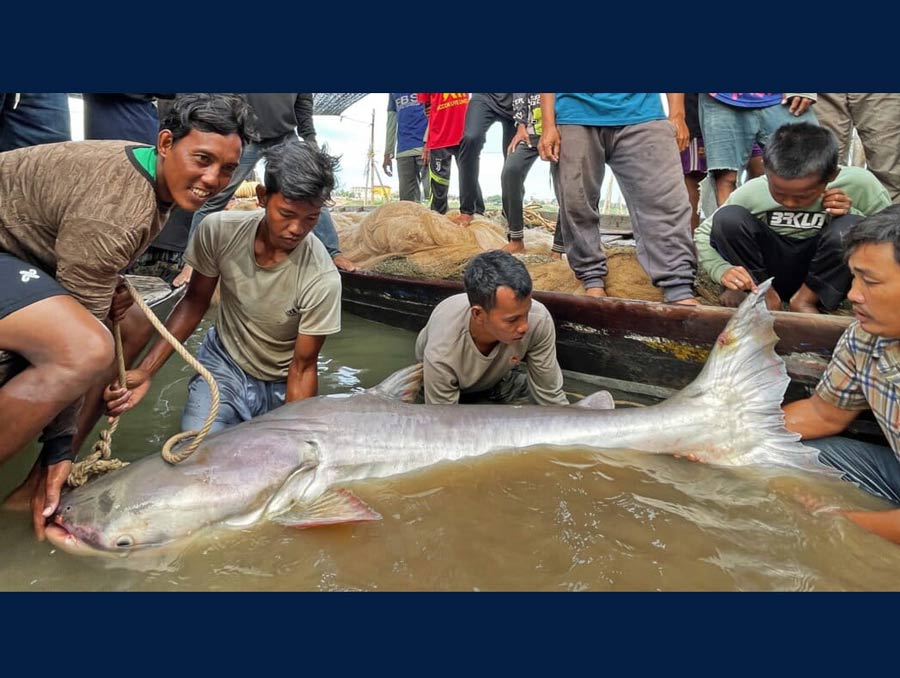
Southeast Asia’s Mekong River is one of the world’s most diverse and productive freshwater ecosystems, home to more than 1,000 fish species, including both the critically endangered Mekong giant catfish (Pangasianodon gigas) and giant barb (Catlocarpio siamensis). Many of these species migrate long distances and depend on the timing and extent of the annual flood pulse that expands habitat and triggers spawning.
But that seasonal rhythm is shifting as monsoon seasons become increasingly erratic — the result of climate change, with upriver dams adding to the water level fluctuation problem. There have been years in which Cambodia’s Tonle Sap Lake, the region’s major nursery ground, has failed to expand as it did in the past, reducing habitat for migratory fish.
These changes in annual rainfall are unfolding on top of multiple stressors, including dam building, pollution and overfishing — altering habitats and driving species declines. Escalating climate change is adding a new layer of instability to the Mekong system. But how such pressures combine remains poorly understood.
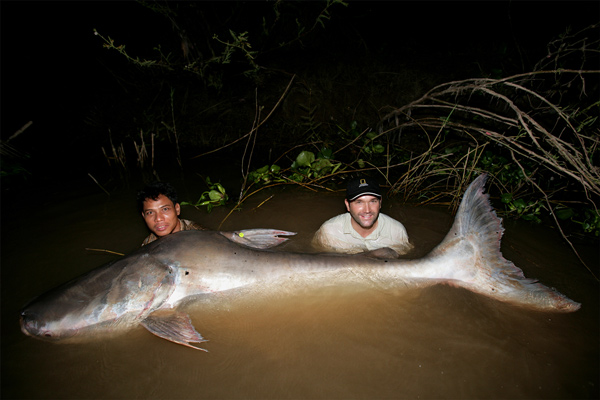
“Climate change is a great unknown,” says Zeb Hogan, a biologist at the University of Nevada, Reno, who has studied Mekong fish for decades and recently co-authored a study on declining fish sizes in the Mekong. “We expect altered temperatures and flows, but we don’t yet fully understand how those shifts will interact with other pressures."
“Migratory fish populations, many of which are already in trouble, could be pushed into even steeper and more widespread declines,” he adds.
Climate impacts on freshwater fish have received less attention globally than impacts on marine and terrestrial species, partly because rivers and lakes are often harder to monitor, long-term studies are often lacking, and perhaps because of past false assumptions that flowing water is buffered against heat.
That view may now be shifting as widening research increasingly shows climate change doesn’t just raise water temperatures in freshwater bodies but also alters the timing and intensity of floods, changes how lakes mix, disrupts nutrient cycling and reduces oxygen levels — factors that shape how fish grow, reproduce and move through environments.
Scientists say these consequences are proving to be far more complex than expected. Rather than a single, predictable response, freshwater ecosystems appear to be undergoing a patchwork of changes, with different species and regions reacting in very different ways. Early evidence points to a major reorganization of food webs and community dynamics, but much remains uncertain, especially as climate extremes such as heat waves, droughts and sudden floods become far more frequent and intense — with 2023, ‘24, and likely ’25 the three hottest years on record.
“There are other drivers of change, but [global warming] is taking place and fish populations are changing their abundance accordingly,” says Martin Genner, an evolutionary ecologist at the University of Bristol in the U.K. “There is no other biological explanation for this pattern … other than warming.”
Genner co-authored a 2024 PNAS study that found freshwater fish populations tended to grow in cooler regions where warming created more suitable conditions while declining in warmer areas where heat, low oxygen or reduced habitat made survival harder. The findings provided some of the first large-scale evidence that climate change is driving systematic shifts in freshwater fish populations, often in the same declining direction predicted for marine and terrestrial species.
Changing conditions in U.S. streams and lakes
The United States offers some of the clearest evidence of how freshwater fish are responding to environmental change because of its extensive long-term monitoring data. A recent Nature study analyzed roughly 30 years of federal data from nearly 3,000 stream sites and found sharp shifts in how fish species are distributed. In cold streams, fish abundance fell by more than half and species richness by about a third as climate change escalated. Warm streams showed the opposite pattern, with large increases in both abundance and species counts, while mid-temperature streams changed little.
This doesn’t necessarily contradict the global pattern described in the PNAS study but shows how things can play out differently in various regions and types of stream. In the U.S., many cold streams are warming quickly, with heavily stocked sport fish becoming more dominant, putting extra pressure on native fish that depend on colder water. Meanwhile, in warmer streams, a mix of heat-tolerant species is moving in and sometimes thriving as conditions change.
Researchers in Wisconsin have been studying lakes to ask what a warming world feels like from a fish’s point of view. Analyzing 40 years of data from nearly 13,000 Midwestern lakes, they measured how often each lake reaches the “comfort zone” for 60 fish species. Rather than mapping where fish live, they tracked how many days a lake provides the temperatures fish need to feed, grow and survive.
What they found challenges some of the simple stories often told about climate change and species impacts. “In many cases, we’ve got the losers [which] are losing big and the winners [which] are having these really marginal increases,” says Olaf Jensen, a fisheries ecologist at the University of Wisconsin-Madison.
His colleague Luoliang Xu, a postdoctoral researcher who led the study, calls it an “asymmetric impact of warming.” While cold water fish are rapidly losing the conditions they need to thrive, warm water fish gain only a few extra “good” days each year, not nearly enough to balance the losses, the analysis shows.
The root of the pattern lies in how lakes warm. As summers heat up, the deep, cold layers that once sheltered fish are warming faster than the surface. “We find that the lowest temperature is warming faster than the highest temperature,” Xu says.
That leaves cold water species squeezed out: the upper water gets too hot, and the deep water isn’t cold enough for long enough. “Really cold water species like ciscos [also known as lake herring and members of the salmon family] … those populations are blinking out,” Jensen says. Ciscos are crucial forage for larger predators like trout in northern waters, so their loss can ripple through these freshwater ecosystems.
Deeper warming in Africa
Despite growing evidence that climate change is reshaping freshwater ecosystems, large knowledge gaps remain — especially in tropical regions of the Global South, which frequently lack the research funding of the Global North.
Untangling climate impacts from the degradation caused by dams, pollution, habitat loss and fishing pressure is difficult even in well-studied systems like the Mekong or U.S. lakes and streams. But in many rivers of the Global South, baseline data and basic monitoring of water temperature, fish abundance or species composition are sparse or nonexistent. As a result, scientists don’t just lack answers; they often lack the underlying data needed to ask the right questions.
Africa offers a stark example of the yawning gap between high vulnerability and limited data. In a 2024 report called “Africa’s Forgotten Fishes,” the World Wildlife Fund warned that freshwater systems on the continent are under growing pressure from warming, drying and more extreme rainfall. As rivers shift and lakes become more strongly layered by temperature (stratification that restricts mixing of oxygen and nutrients), habitat is expected to shrink for many species, raising the risk of local extinctions, the report said.
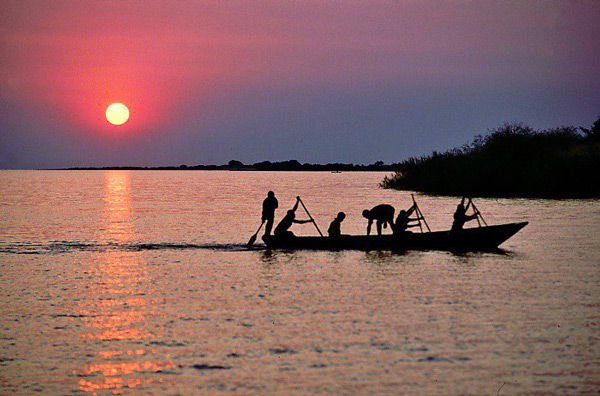
One of Africa’s most vulnerable freshwater systems is Lake Tanganyika, a vast, long, deep rift lake shared by Tanzania, the Democratic Republic of Congo, Burundi and Zambia. It contains nearly a fifth of the world’s unfrozen freshwater and supports exceptional fish diversity, from small dagaa to large cichlids important to regional fisheries. More than 40 million people depend on it, but heavy fishing, pollution, invasive species and rapid human population growth had already strained the ecosystem before climate change began to rapidly escalate.
A 2025 study in Geophysical Research Letters shows that climate warming is disrupting Lake Tanganyika’s productivity by strengthening what’s known as thermal stratification — the layering of warm water on top of colder, nutrient-rich water below. As the lake warms, this separation becomes harder to break, limiting the upward movement of nutrients that support plankton growth and, in turn, fish.
“Deeper warming in the lake is indicative of climate change impacts … and this stratification limits the upward movement of essential nutrients that phytoplankton rely on for growth, ultimately disrupting the entire aquatic food web,” says Tumaini Kamulali, a Ph.D. student and paleolimnologist at the University of Arizona in Tucson who studies Tanganyika’s climate change impacts and was the lead author of the recent study.
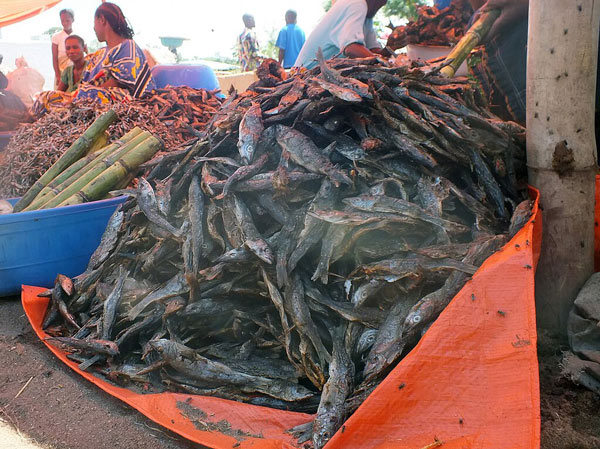
The biological consequences are already visible. “Fishers have observed a significant decline in fish abundance particularly over the past two decades … and our studies have modeled temperature changes during the same period, revealing an increase in lake temperature that correlates with the observations made by fishers,” Kamulali says.
As lake mixing weakens and nutrient-poor conditions expand, scientists expect lower productivity, declining fish biomass and rising economic risk in a freshwater fishery millions rely upon. Without major investment in monitoring and climate-ready governance, researchers warn, Lake Tanganyika could become a stark example of how warming erodes freshwater food security long before species disappear.
Intensifying summers in Alaska
Climate change is rapidly transforming Arctic freshwater ecosystems, with the best studied impacts documented in Alaska. The Arctic is warming at about twice the global average —roughly 0.4 Celsius (0.7 Fahrenheit) per decade versus 0.2 Celsius (0.4 Fahrenheit) worldwide — shifting seasonality, increasing snowmelt and permafrost loss. For freshwater fish, this means altered flows, warmer water and new chemical conditions that cold-adapted species have never encountered, redefining where and when they can feed, migrate and survive.
In Alaska, researchers are examining how rapid warming will alter growth and survival for two key native fish: Chinook salmon (Oncorhynchus tshawytscha) and Dolly Varden (Salvelinus malma). Dolly Varden, a salmonid that looks similar to trout, are highly adapted to cold rivers and a crucial subsistence species for many Indigenous communities.
One recent Nature study combined climate models, river temperature projections and fish bioenergetics to estimate how warming will influence growth during the short summer window when feeding juveniles gain most of their energy supplies.
“Summer river temperatures [are] higher than observed historically,” says Peyton Thomas, a research associate at the Institute of Arctic and Alpine Research at the University of Colorado Boulder, who led the study.
Mid-summer is typically the peak period for growth and food availability, but warmer conditions are not automatically proving beneficial. The study projects reduced growth for Chinook salmon, while Dolly Varden, which tolerate slightly higher temperatures, may see modest gains. But that advantage depends on food availability and seasonal flows, both of which are also changing.
Thomas says temperatures “may be too high mid-summer, and consumption patterns too low, for Chinook to actually grow,” potentially increasing juvenile mortality. It’s expected that responses will vary by species and watershed, creating a mix of short-term winners and losers as Arctic rivers continue to warm.
Another climate-driven shift is transforming Arctic rivers in a way that is both visually striking and ecologically alarming, according to another PNAS study published this year. In northwest Alaska, once-clear streams have turned bright orange as thawing permafrost exposes sulfide-rich bedrock. When sulfide minerals such as pyrite are exposed to air and water, they oxidize and form sulfuric acid, which leaches metals out of surrounding rock and flushes them into streams. This acidic rock drainage can release iron, aluminum and cadmium at levels toxic to aquatic life.
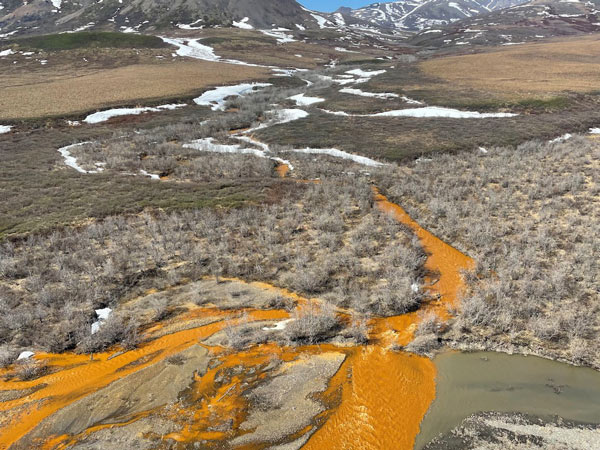
The metals damage ecosystems by altering habitat and directly harming fish, with high concentrations clogging their gills. As the metals settle, they coat streambeds and smother salmon spawning habitat. Some rivers are chemically degraded even without discoloration.
“We found some small headwater streams … with clear water, very low pH … and very high metal concentrations,” says Patrick Sullivan, an environmental scientist at the University of Alaska Anchorage.
The consequences may already be rippling through salmon populations with toxic metal concentrations detected in Alaska’s Salmon River, long an important chum salmon tributary. Similar orange streams have been documented at more than 75 sites across Alaska’s Brooks Range.
“We think this problem is going to become more widespread throughout the Arctic as permafrost thaw continues,” Sullivan says.
False certainties
Across continents, freshwater fish are reorganizing in different ways in response to warming, researchers say. That realization now comes from having enough long-term data, at least in some places, to detect change rather than simply infer it. But scientists also say the tools used to understand and manage fish have far from fully caught up with the complexity of these rapid changes.
“As we face unprecedented conditions, managers may not be able to rely on the approaches they’ve used in the past because they may no longer produce reliable results,” says Abigail Lynch, a fisheries scientist at the U.S. Geological Survey and lead author of a recent review in the journal Fisheries on climate impacts. She says forecasting, monitoring and management will need to shift toward anticipating climate variability rather than restoring past baselines, especially in places where data are scarce.
Others also caution against false certainty. “Anybody who says they know how this is going to turn out with respect to climate change and aquatic ecosystems should really leave the lab and look at some real populations,” Jensen says.


