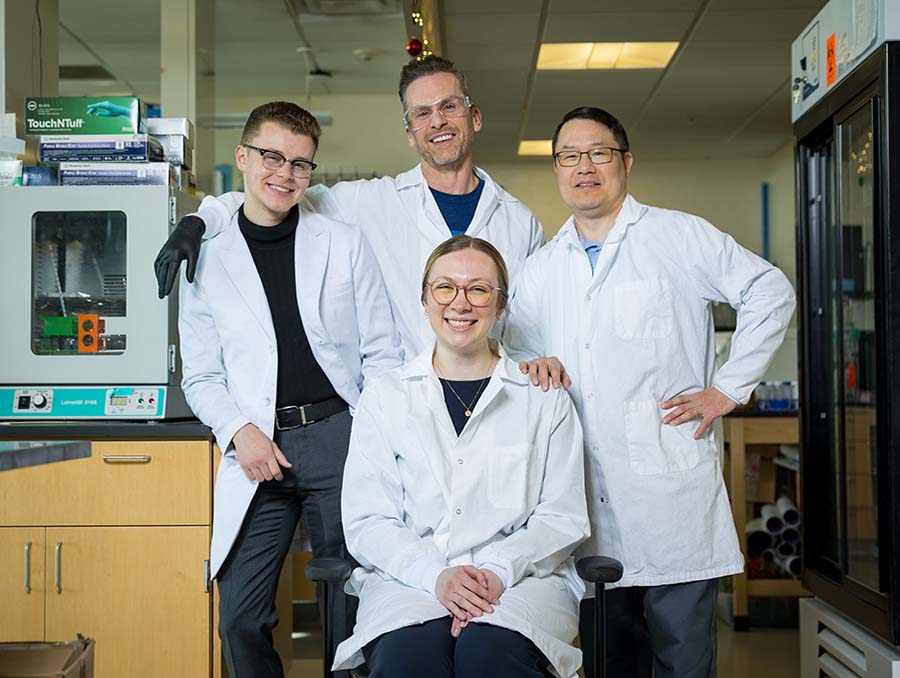
When Samuel Lee, M.D., Ph.D., started his career, he was drawn to internal medicine because of its wide range of health challenges — and later focused on infectious diseases and fungal research. Now, the Chair of the Department of Medicine and Chief of Internal Medicine at Renown Health, Dr. Lee leads a small but dynamic research lab at the University of Nevada, Reno School of Medicine (UNR Med) where undergraduate, medical and graduate students collaborate to study fungal infections and build their research careers.
“In a research lab, you have the opportunity to ask questions that have never been asked before and advance science,” Lee said. “It’s incredibly rewarding to mentor learners at all levels.”
With the growing need for antifungal drugs to treat invasive fungal infections like C. auris, Lee is determined to explore new solutions. While only three major classes of systemic antifungal drugs have existed for decades, he notes that momentum is finally shifting. Experts are beginning to invest more heavily in research and development, leading to discoveries in antifungal treatment. Lee emphasizes that the need remains urgent. Compared to antibacterial agents, the options for treating serious fungal infections are much fewer, making continued innovation essential.
His research laboratory is intentionally small. That limited size helps him give each student close mentorship. “You can spend more time one-on-one,” he explained. “It’s a smaller environment where there’s more time for teaching and interaction.”
For third-year medical student Hannah Schultz, working with Lee has been transformative. Before joining the lab, Schultz had only worked with public health data. But under Lee’s guidance, she has gained hands-on experience working with the emerging fungal pathogen C. auris in a BSL-2 enhanced protocol laboratory, a biosafety level 2 lab involving extra safety measures.
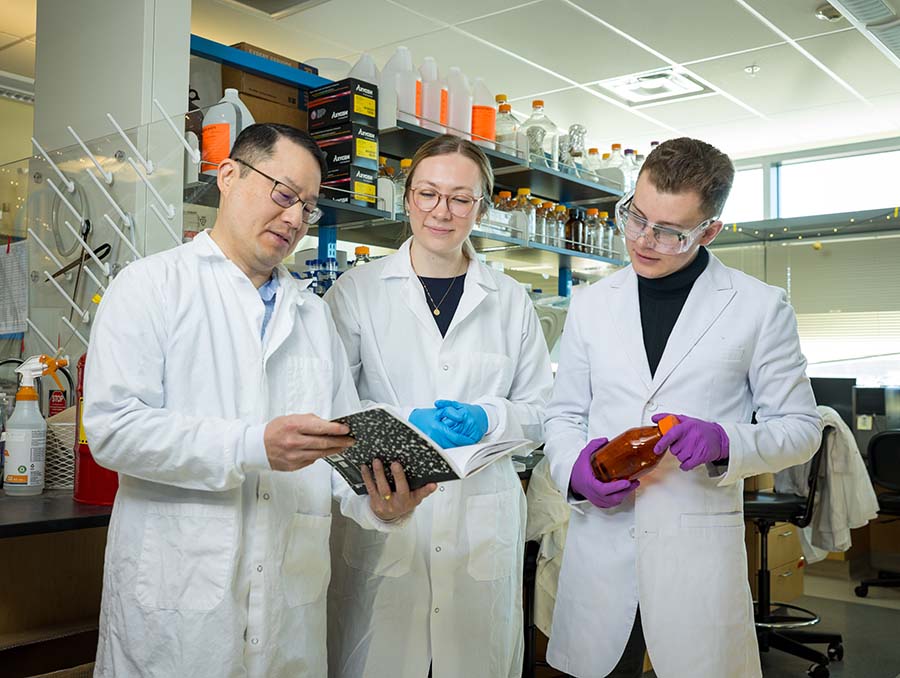
“Dr. Lee has been an amazing mentor throughout this entire process,” Schultz said. “He provided great insight into the research process and helped guide our team through the ins and outs of starting up a new lab.” Collaborating on research brought home the importance of scientific inquiry and community impact. Studying a lesser known but potentially serious pathogen made her feel like their work had meaningful relevance for Nevada and beyond. Undergraduate researcher Riley Gillis, who spent one summer in the lab studying C. auris, echoed the sentiment.
“It was excellent,” Gillis said. “I certainly see a lot of publication opportunities just because this is such an unstudied field.” Working in Lee’s lab also connected him to a broader network of infectious-disease professionals, offering opportunities that extend beyond a single summer rotation.
Lee’s students say the lab has opened doors — not only to research but to publications, grant applications and real-world scientific work that has local significance. With fungal diseases like C. auris on the rise, their efforts may help shape public-health responses within Nevada and beyond.
For Lee, the lab represents more than research output. It’s a community of students learning to be physician-scientists — building skills, relationships and careers. “I’ve always enjoyed interacting with learners and helping train the next generation of physicians,” he said.


