
The University of Nevada, Reno’s Fleischmann Planetarium is a great place to see the stars, planets, moons and more in our galaxy, but it’s not the only place in Nevada where you can see the Milky Way. In fact, Nevada is unique in its access to the night sky. Planetarium Director Paul McFarlane shares more about the dark skies in Nevada.
What is a dark sky designation?
There are various levels of dark sky conservation. Massacre Rim Wilderness Study Area in the northwest corner of Nevada is considered an International Dark Sky Sanctuary, which is a particularly remote and dark place. Great Basin National Park is considered an International Dark Sky Park, which is a conservation area that implements good outdoor lighting and provides dark sky programs, according to DarkSky International.
What is light pollution, and how does it put dark skies at risk?
Outdoor lighting is a major contributor to light pollution. Light pollution can have many negative consequences, even resulting in disruptions to circadian rhythms for wildlife.
How are dark sky areas protected?
Increased awareness of the problems of light pollution and policy can be important to protecting dark skies, according to DarkSky International. The group recommends using low-level, warm-color lights outdoors to minimize light pollution. Legislation has been passed in places like Flagstaff, Arizona, to protect dark skies, reduce energy use and protect wildlife.
"We can try to make more informed choices about how we use energy resources and natural resources," Paul McFarlane, director of the Fleischmann Planetarium, said.
What parts of Nevada are designated dark sky areas?
Massacre Rim Wilderness Study Area and Great Basin National Park are some of the darkest places in the state, but much of Nevada is great for stargazing.
Why is Nevada unique in its access to dark skies?
Nevada has cold, clear, dry air, McFarlane said, which all contribute to better stargazing conditions. The state's high elevation means there's less atmosphere blocking the view of the stars. Nevada's urban areas are concentrated in two major cities, and there are vast swaths of the state that are undeveloped. Nevada's status as the most mountainous state in the contiguous U.S. also means that much of the light pollution from urban areas is blocked.
How can people learn more about dark skies?
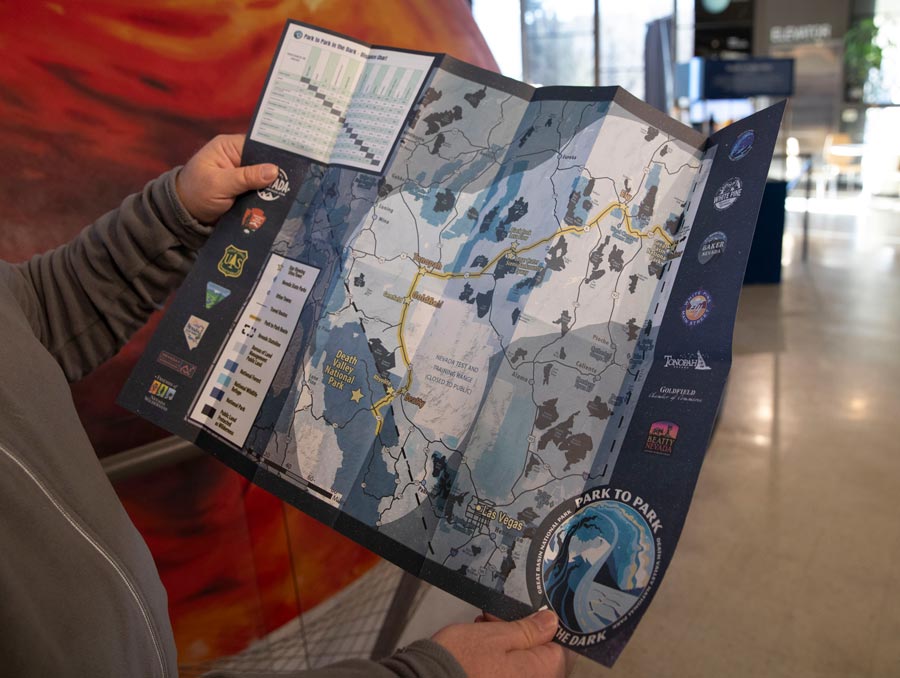
For more information about dark skies in Nevada, visit the Park to Park in the Dark website or check out the banners at the Planetarium. Or, for stargazing a bit closer to home, visit the Planetarium for a full-dome show which includes an immersive tour around the sky.
This content was originally shared in the December edition of Museum Monthly, a monthly newsletter that shares updates and content about the three College of Science museums: the Fleischmann Planetarium, the W. M. Keck Earth Sciences and Mineral Engineering Museum, and the Museum of Natural History.


