
A new qualitative study is taking a closer look at how women in southern Nevada are advised to stay physically active during pregnancy and postpartum. Funded by the University of Nevada, Reno Extension, this study is led by UNLV Professor Kara Radzak in collaboration with an Extension team headed by Extension Specialist Annie Lindsay, Ph.D.
“This is one of several projects that Extension is happy to support as part of a collaboration between Extension and UNLV faculty,” said Jake DeDecker, Extension director. “This project was identified as meeting an important need in Clark County as it provides Nevada mothers with a much-needed resource.”

The project was inspired by Radzak’s personal experience. As a lifelong athlete with a background in athletic training and sports medicine, Radzak was curious to know how much she could put her body through after giving birth to her oldest son in 2018.
Radzak, an associate professor in the Department of Kinesiology and Nutrition Sciences, housed within UNLV’s School of Integrated Health Sciences, browsed through PubMed for resources and evidence-based guidelines that might prove helpful to her recovery, to little avail.
In addition to funding provided by Extension, UNLV’s Sports Innovation Institute has provided funding to support other ongoing perinatal physical activity projects. These endeavors have led to the creation of the Supporting Movement Optimized Motherhood Lab, or Supporting M.O.M. Lab, where Radzak and her research team work on projects related to physical activity during peripartum periods.
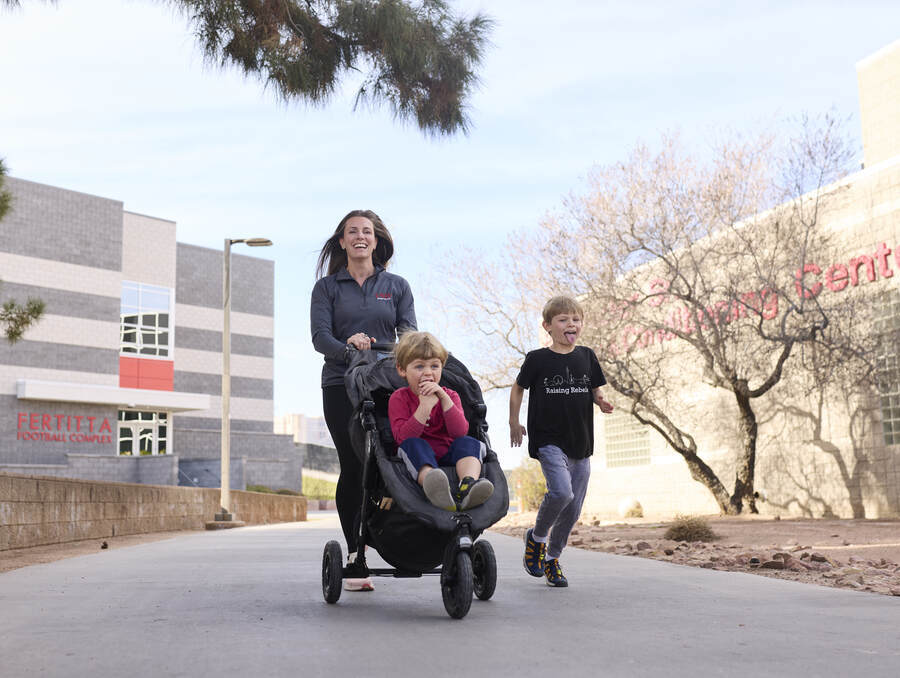
“This work is 100% personal because I was the woman getting fed algorithms,” Radzak said. “I saw a lot of stuff out there that, as a clinician, I knew wasn’t true. We need to give these women concrete guidelines on what to do.”
By the time she had her second son in 2021, more research was available, but she also looked on social media to see what information was being fed to women just like her. What she noticed was an algorithm chock full of dubious information.
The experience was inspiration for the study and collaboration supported by Extension funding.
Filling in the gaps
As part of their study, Radzak and her team interviewed moms, as well as health care providers, in Clark County to better understand where they felt the information was lacking, and what guidance they hoped to get or provide regarding exercise during pregnancy and postpartum periods.
“Women want their providers to have that information for them, but that isn’t always the case,” she said. “We want to help the providers, so they have that information when their patients ask them for it. This needs to be a team effort.”
By interviewing mothers as well as health care providers, Radzak hopes they’ll be able to help close the informational loophole, so mothers don’t feel lost sifting through information they see on social media.
“There is good research out there and we need to easily get it into the hands of those who need it,” Radzack said.
Challenging old stereotypes
In the realm of elite athletics, more women are breaking down barriers set by the old guard.
Women such as tennis superstar Serena Williams, Olympic gold medalist Allyson Felix and professional soccer player Alex Morgan are just a few athletes who have been candid about having a baby as an elite athlete, and how giving birth did not mean the end of their athletic career.
“We are seeing high-profile athletes challenging this idea that motherhood is a career limiter,” Radzak said. “Women are pushing the barriers. When I had my second son, there was more information available, but I felt like this was still an area that needed to be addressed from a sports medicine lens.”
Most of the work being done in the Supporting M.O.M. Lab focuses on women who are active throughout their day, not just those who come from an elite athletic background.
“We know that if you’re active during pregnancy, there are better health outcomes for both mom and baby,” Radzak added.
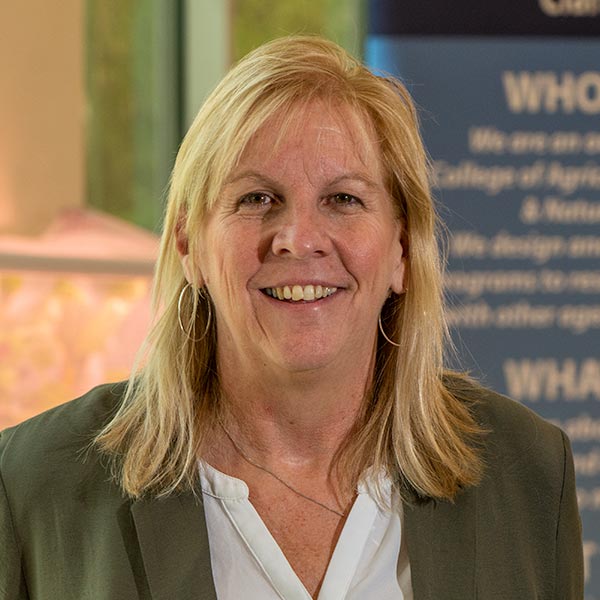
In addition to the physically active everyday woman, Radzak is part of a collaborative team collecting data about women in the military returning to service after having a baby. This, she added, is another area that is desperate for more information.
Once their research is finished, a centralized toolkit where health care providers and pregnant and postpartum mothers can easily access information about peripartum exercise and the postpartum return to exercise processes will be posted on Extension’s Healthy Kids Resource Center.
“As an Extension specialist working in the community, I have seen the need for greater support and encouragement of physical activity during the peripartum time period and how mom's health and health behaviors impact their children,” Lindsay said. “I've appreciated the collaboration with Dr. Radzak on these initiatives, and we are looking forward to sharing information obtained from these studies this spring as we build more resources for moms of young children.”
Radzak agreed.
“Research has really taken off in the pregnancy and postpartum space, and now we’re able to collect our own data to give people the information they need,” she said. “There are a lot of female researchers with stories like mine who want to see exercise science and sports science move forward. It feels great to do research in an area that needs it.”


