Tick season has arrived, and emergency room visits for tick bites are already at their highest level nationwide for this time of year in nearly a decade.
While tick-related emergency visits are far less common in the West, averaging about 16 per 100,000 visits compared with an average of 163 per 100,000 in the Northeast and Midwest, according to the Centers for Disease Control and Prevention, risks may grow as tick populations expand into new areas and people travel to regions where tick-borne diseases are more common.
In response to the devastating impact tick-borne diseases can have on human health and livestock, University of Nevada, Reno researchers are developing novel solutions that are designed to control tick populations and prevent ticks from transmitting disease-causing pathogens. A $1 million gift from the Offerdahl Family Foundation will accelerate that work and support construction of a biologically secure research facility for studying genetically modified ticks.
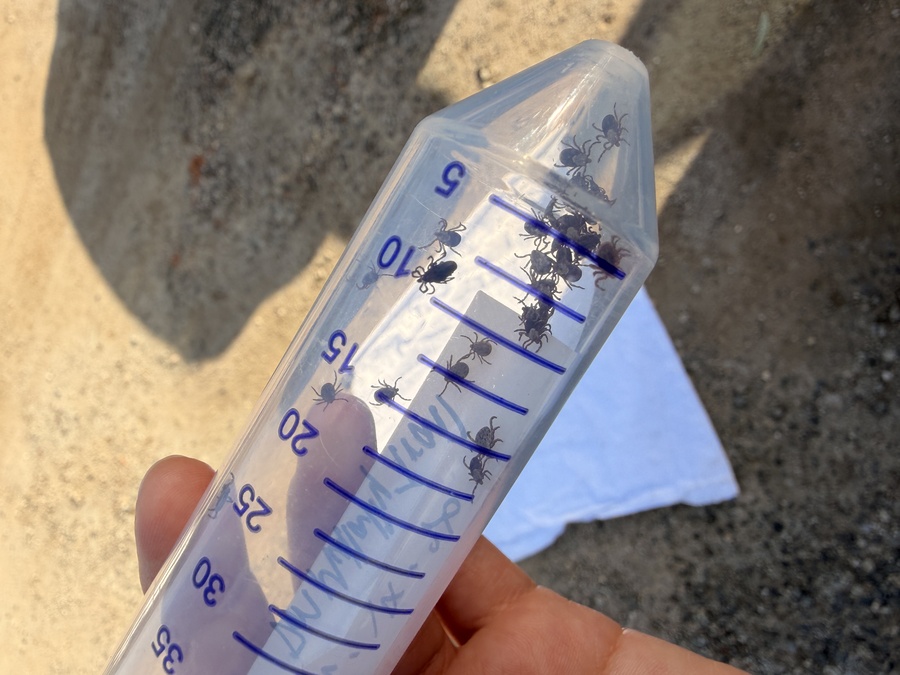
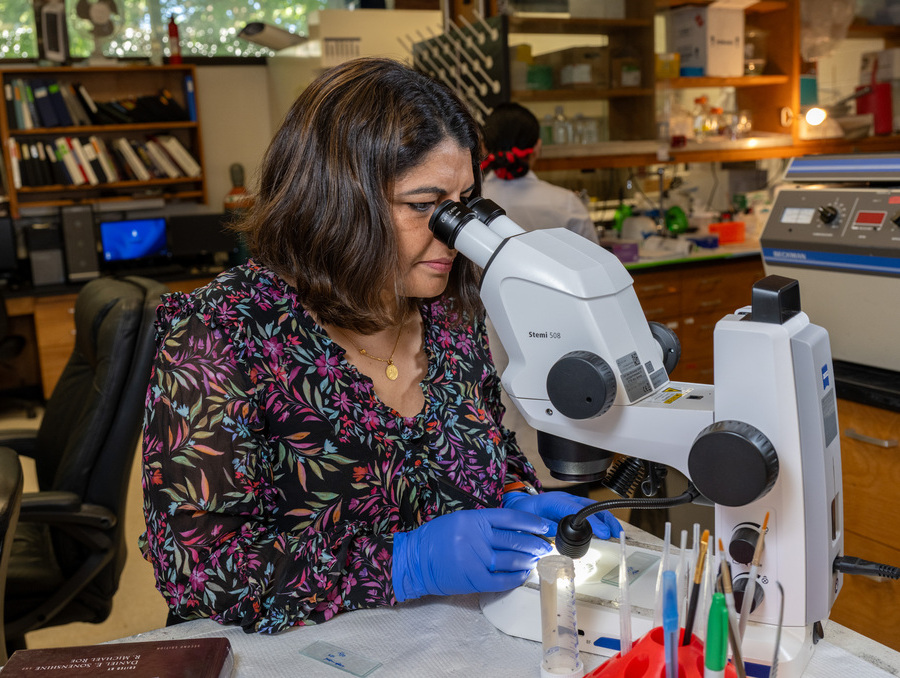
Led by Monika Gulia-Nuss, a molecular biologist in the University’s College of Agriculture, Biotechnology & Natural Resources, the Gulia-Nuss Lab has pioneered the first successful gene-editing and embryo microinjection techniques in live ticks, helping establish genetic tools in a field where embryo-stage gene editing was once thought impossible. The breakthroughs have opened new avenues for studying the genes and biological mechanisms that ticks use to feed, reproduce and transmit disease-carrying pathogens, advancing efforts to develop interventions such as tick vaccines. The work is especially important for blacklegged ticks, which can transmit multiple pathogens including bacteria that cause Lyme disease and cattle fever ticks, parasites capable of killing nearly every untreated cow they infect.
Yet, as the research progressed, the lab encountered a major bottleneck: the lack of approved containment space needed to safely rear and study the disease-carrying arthropods.
“We are very grateful to Richard Offerdahl, who recognized both the urgency of tick-borne disease research and the importance of building the infrastructure needed to do this work safely and effectively,” said Gulia-Nuss, a professor in the College’s Department of Biochemistry, Molecular Biology & Biotechnology. “This facility will bring us much closer to practical solutions, including anti-tick vaccines that prevent ticks from transmitting pathogens, as well as future population-control strategies.”
The new Arthropod Containment Level 2+ facility, expected to be operational by the end of the year, will help the lab secure a U.S. Department of Agriculture handling permit to rear and study genetically modified ticks through multiple life stages, and enable larger, replicated studies with live ticks under federally approved containment conditions.
Exploring approaches to control tick populations
A major focus of the Gulia-Nuss Lab’s research over the past decade has been understanding the genes and biological processes that make ticks effective disease carriers. That work has provided the foundation for a range of potential control strategies, including the development of anti-tick vaccines and genetic approaches to reduce tick populations.
Building on this work, researchers are identifying genes that play critical roles in tick survival, reproduction and feeding, helping pinpoint vulnerabilities that could be targeted through future population-control strategies. This approach supports the development of more precise and environmentally sustainable alternatives to broad-spectrum chemical tick treatments and may help reduce the spread of tick-borne diseases.
Developing a universal tick-control vaccine
In parallel with its genetic research, the Gulia-Nuss Lab is also exploring a universal “pan-tick” vaccine that targets the tick itself rather than individual pathogens.
Designed to work across multiple species, including blacklegged ticks that transmit Lyme disease and lone star ticks, which can trigger alpha-gal syndrome, a potentially life-threatening red meat allergy, the vaccine aims to prevent ticks from feeding successfully and interrupt disease transmission before pathogens reach the host.
After attaching to a host, ticks feed slowly over several days, increasing their body volume more than 100-fold as they consume blood. This process causes the gut, the tick’s largest organ, to expand and creates biological changes that allow disease-causing pathogens to multiply and move into the salivary glands, where they can be transmitted to the host.
Because this process takes time, often 24 to 36 hours for pathogens such as those that cause Lyme disease, researchers see a critical window for intervention. Their goal is to trigger a rapid immune response that disrupts feeding and causes ticks to detach before transmission occurs.
“We are developing a vaccine that recognizes proteins in tick gut as feeding begins, and host antibodies introduced during blood feeding bind to those proteins and disrupt the feeding cycle,” Gulia-Nuss said.
A global research network
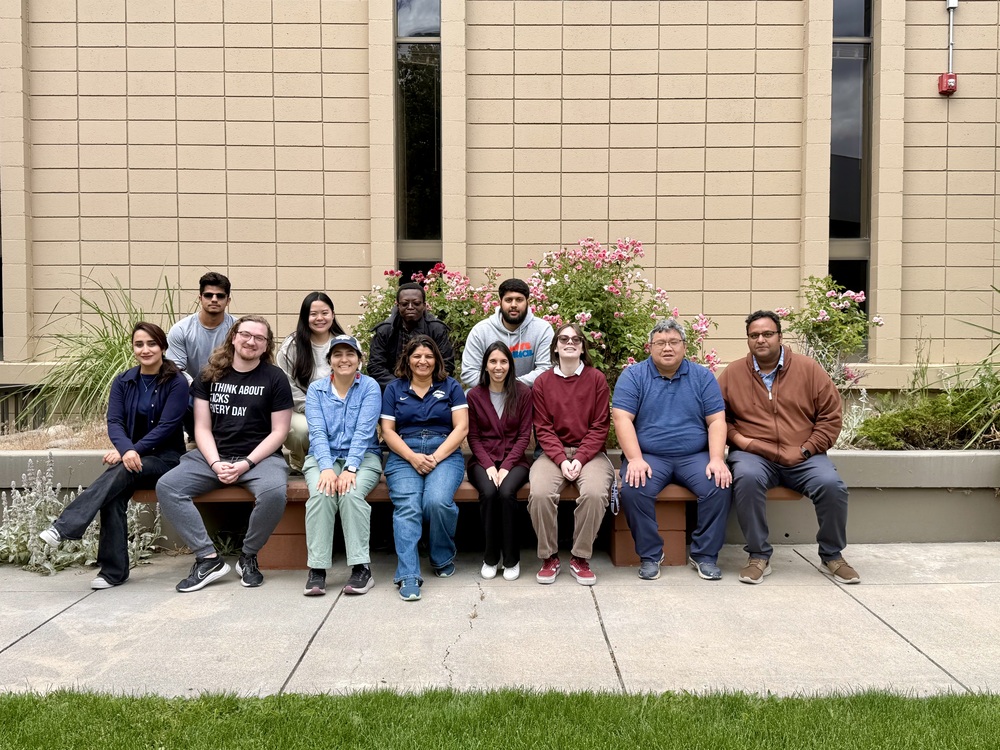
The Gulia-Nuss Lab, which also conducts research as part of the University’s Experiment Station, includes a multidisciplinary team of molecular researchers, including research scientists Arvind Sharma, Michael Pham and Larissa Martins, and graduate and undergraduate students. The lab also collaborates with Associate Professor Andrew Nuss, an entomologist in the College’s Department of Agriculture, Veterinary & Rangeland Sciences; Professor David AuCoin, chair of the Department of Microbiology and Immunology; and Juli Petereit, a bioinformatician and director of the University’s Nevada Bioinformatics Center. The lab also collaborates with experts from the U.S. Department of Agriculture; University of Wisconsin, Madison; the Rockefeller University; and Northern Arizona University.
Recently appointed a Fulbright Alumni Ambassador, Gulia-Nuss also maintains a partnership with Instituto Nacional de Investigación Agropecuaria and the Pasteur Institute, Montevideo in Uruguay, where she previously completed a Fulbright US Scholar award, one of the U.S. government’s most prestigious international academic exchange programs supporting global collaboration in research, teaching and education.
Through the collaboration, she has trained researchers in advanced techniques such as tick embryo injection protocols aimed at reducing tick-borne pathogens, cattle losses and the economic impact of cattle fever ticks. The partnership now supports parallel studies and cross-validation of research findings between the two countries.
Future impact
For Richard Offerdahl, trustee of the Offerdahl Family Foundation, research related to tick-borne diseases became personal after watching his niece struggle with Lyme disease. Supporting the Gulia-Nuss Lab, he said, offered an opportunity to help advance long-term solutions to a growing global health and agricultural threat.
“Ticks are expanding into new regions, carrying more pathogens and affecting both human and animal health in ways we still do not fully understand,” Gulia-Nuss said. “This support allows us to move beyond developing tools and begin testing solutions that could one day reduce the burden of tick-borne disease for communities, livestock producers and families around the world.”


