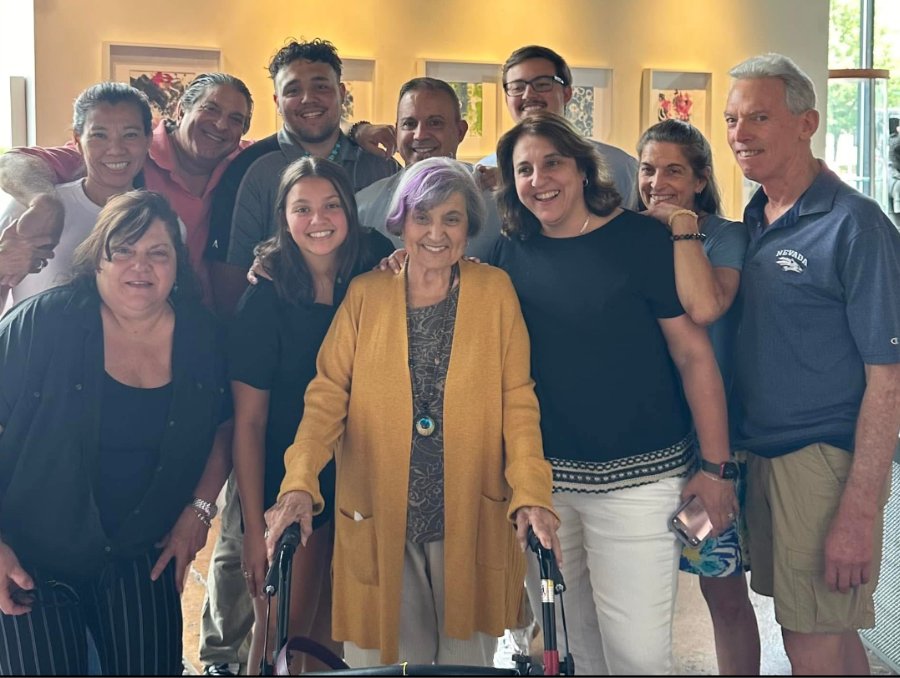
On Halloween, while other mothers passed out candy, Rosalie D. Marinelli, EdD, passed out toothbrushes.
Her daughter, Patricia, remembers being embarrassed at first. Then she heard children in the neighborhood asking to visit “Mrs. Marinelli” so they could get their toothbrushes.
It was a small moment, but one that captured Marinelli’s lifelong approach to teaching. Whether she was helping children learn the importance of dental hygiene, leading college students through difficult conversations about health, or mentoring future health professionals, Marinelli believed education could help people live healthier lives.
“My mom’s love and life was dedicated to teaching, and she loved her students,” Patricia said.
Following Marinelli’s passing earlier this year, her family began looking for a way to honor a life shaped by teaching, mentorship and service.
Marinelli, associate professor emerita at the University of Nevada, Reno, is remembered by former colleagues, students and friends as a gifted teacher, trusted mentor and deeply caring health educator whose influence continued long after students left her classroom. Now, that legacy will continue through a scholarship being established in her name to support future students pursuing health-related fields.
Always a teacher at heart
Marinelli’s path to higher education began after years of caring for her family. She was a stay-at-home mother until her youngest daughter was six years old, then returned to school and earned a bachelor’s degree in dental hygiene. She continued her education, earning a master’s degree in geriatric dentistry and later a doctorate in health education because she wanted to teach at the college level.
“Mom was always a teacher,” Patricia said.
“For Rosalie, it was about helping students be professionals and caring in the health field,” said Nora Constantino, Ph.D.
That commitment showed up long before Marinelli entered a university classroom. Patricia remembers her mother visiting elementary schools to teach children proper brushing and dental hygiene.
Marinelli’s work also extended into community-based health education. For her master’s thesis, she and three classmates, a registered nurse, a nutritionist and a social worker, started a women’s health clinic in Long Island, New York. The clinic provided education to women in health, nutrition and mental health through classes, conferences and individual sessions.
Later, Marinelli and her husband developed a mentor and mediation program through the court system in Reno for parents going through divorce. The program focused on helping parents support their children in healthy ways during the divorce process.
“My parents strongly believed the children should not be used as a pawn to get back at one another,” Patricia said.
For Patricia, each of those experiences pointed back to the same thing: her mother’s belief in education as a way to help people move forward.
Educating with humor, honesty and purpose
“She loved students and she loved teaching,” said Nora Constantino, Ph.D., professor and department chair of kinesiology, who was a former colleague and close friend of Marinelli’s. “She also was a health educator, so she was really practical.”
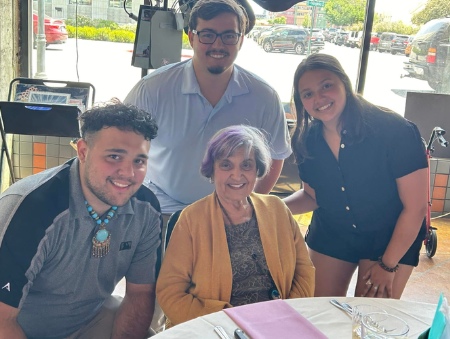
For Constantino, Marinelli’s teaching was memorable because it was honest, active and grounded in real life. In classes on personal health, health communication, ethics and HIV/AIDS, Marinelli helped students move beyond abstract concepts and consider what it meant to care for people in a health field.
“She was very much an active teacher,” Constantino said.
That active approach could be funny, bold and disarming. When teaching about contraception and sexually transmitted infections, Marinelli used a purple acrylic penis for condom demonstrations.
“She purposely got the purple one because then it’s more casual and doesn’t make you as uncomfortable,” Constantino said. “She just had a great sense of humor.”
She also brought that same openness to more difficult conversations. In personal health courses, Constantino said Marinelli often used discussion-based exercises to help students examine topics such as personal safety, sexual assault and family violence. The goal was not only to teach content, but to help students understand the complexity of human behavior and the systems that shape people’s health.
“She made it clear that public health isn’t abstract. It’s about real people, real challenges and real consequences,” said Patrick Ronan.
In one course exercise, students were asked to choose a behavior and try to change it for a period of time, then reflect on the experience. For Marinelli, the assignment was a way to help future health professionals understand that behavior change is difficult and that public health requires empathy, context and accountability.
That approach is still evident in the School today. In KIN 120: Personal Health and Wellness, Angela Heinemann, Ph.D., a teaching associate professor of kinesiology, asks students to complete a semester-long behavior-change project focused on one realistic health behavior they want to improve that she recently discussed in an episode of the School of Public Health's Brewing Better Health podcast.
“They need to understand how hard it is for one person to change their behavior because we want to educate professionals that don’t blame the victim,” Constantino said. “That understand that there are systemic things that prevent them from being as healthy as they should have the right to be.”
Marinelli’s commitment to students extended beyond lectures and assignments. She wrote letters of recommendation, mentored students interested in health careers and gave direct feedback when she thought they needed to strengthen an application or reconsider their next step.
“For Rosalie, it was about helping students be professionals and caring in the health field,” Constantino said.
That care was often paired with candor. Constantino said Marinelli could be blunt, but her honesty came from a desire to help students grow.
“She would say, ‘I don’t think you’re going to get in and here’s why. Maybe these are some things you could do to strengthen your application,’” Constantino said.
A lasting influence on students
That lesson stayed with Travis Humphreys, CPO, who was Marinelli’s student in 1990 and served as her teacher’s aide in 1991. Now with Ability Prosthetics and Orthotics, Humphreys said Marinelli helped him understand that health care begins with listening.
“Dr. Marinelli taught me how to listen to people, which helped me understand their feelings and thoughts. This, as a health care provider, taught me the true meaning of ‘care.’ It brought me to their level, and we worked together as a team to provide the best solution. Without her expertise, I would not have been able to understand patients the way I have. I give thanks to her. I am very happy she is being recognized not only as a person, but what gift she has given to many of her students to carry out through their careers and life.”
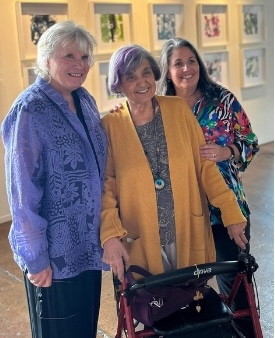
Jason R. Doucette ’95, DMD, DASBA, DABDSM, remembers Marinelli as a relatable instructor who was also direct, confident and deeply respected by her students.
“She was a great health communications instructor,” said Doucette, of Innovative Dental Sleep & TMJ Solutions of Reno. “I just remember she was relatable while also being headstrong and confident. She really meant business in that class, and everyone respected her.”
Their connection continued after Doucette left Nevada. After he graduated from dental school at Oregon Health Sciences University in Portland, Oregon, Marinelli became one of his patients. For Doucette, it was especially meaningful that Marinelli, a former dental hygienist and professor, trusted him with her dental care.
For Patrick Ronan ’94, now a health care investor, life sciences executive and founder of Starvue Life Sciences, Marinelli’s classroom helped shape the way he thought about public health and service.
“She wasn’t just teaching concepts or frameworks,” Ronan said. “She was teaching us how to think about people, systems and responsibility.”
Ronan said Marinelli challenged students to look beyond the surface of a problem and ask harder questions about access, equity and long-term impact.
“She made it clear that public health isn’t abstract. It’s about real people, real challenges and real consequences,” Ronan said. “That perspective helped me understand that decisions in this field carry weight, and that thoughtful, informed action can meaningfully improve lives.”
For Ronan, seeing a scholarship established in Marinelli’s name feels like a natural extension of her work as an educator.
“It’s a fitting tribute to someone who was so committed to mentorship and to the idea that education should lead to purpose-driven work,” Ronan said. “I think she would be deeply proud to know that her legacy continues in this way, supporting students who share that same sense of mission.”
Shaping public health education at Nevada
Marinelli also helped build a foundation for public health education at Nevada. Among the courses she taught was an HIV/AIDS course that remains part of the curriculum today. Constantino said Marinelli’s early work in HIV/AIDS education reflected her willingness to teach openly and compassionately about topics that were often surrounded by fear, stigma and misunderstanding.
Kristen Clements-Nolle, Ph.D., MPH, foundation professor and graduate director of epidemiology in the School of Public Health, now teaches the course Marinelli started.
“Dr. Marinelli did not shy away from difficult topics,” Clements-Nolle said. “She developed an undergraduate course focused on HIV/AIDS at a time when many people wanted to ignore or forget the issue. The course is still offered every semester, and the lessons learned are as important to public health students now as they were during the height of the AIDS pandemic.”
“She believed that every person should have the right to be healthy, that they should have the right to live somewhere where they could be healthy,” Constantino said. “To me, she embodied public health in everything she did.”
That belief also reflected Marinelli’s commitment to equity. Constantino described her as an ardent feminist who believed deeply in women’s rights and in the importance of creating conditions where people had a fair chance to live healthy lives.
“She was all about, we start with the people that need the most help to bring them up,” Constantino said. “She was about equity more than equal.”
“Dr. Marinelli taught me how to listen to people, which helped me understand their feelings and thoughts. This, as a health care provider, taught me the true meaning of ‘care.’ It brought me to their level, and we worked together as a team to provide the best solution. Without her expertise, I would not have been able to understand patients the way I have," said Travis Humphreys.
Mel Minarik, Ph.D., MPH, FACHE, teaching associate professor emerita in the School of Public Health, said Marinelli was deeply connected to her students as individuals, not just as names on a roster.
“Rosalie was one of the kindest, most wonderful instructors we had with students,” Minarik said. “She always cared about the individuals. She knew a lot about their background. She knew about their history. She knew about what they were interested in professionally.”
For Minarik, who was both a colleague and close friend, Marinelli brought warmth, humor and generosity to the department.
“It was just so sweet to always be around Rosalie,” Minarik said. “In fact, I inherited her office after she retired, and I really felt very privileged to be able to do that. She was just a joy to work with and funny as heck.”
One commencement ceremony gave Minarik a lasting example of that humor. At the time, students handed a written name card to the reader before crossing the stage. Some students used the moment to slip in a joke.
During one ceremony, a student wrote “Mickey Mouse” on the card. When the name was read aloud, Marinelli turned to Minarik in disbelief.
“She said, ‘Now who would name their kid Mickey Mouse?’” Minarik said. “She was just beside herself. She always had such a great sense of humor.”
A life remembered with love
Outside the classroom, Marinelli was known for the same energy and warmth she brought to her teaching. Constantino described her as vibrant, feisty and full of life, someone who “never met a stranger” and was always ready to take care of the people around her.
“She was everybody’s mother,” Constantino said. “She was a third grandmother to my kids.”
Constantino remembers Marinelli as someone who could be both loving and firm, the kind of friend who would show up when someone needed help and speak up when something was wrong.
“She wants to take care of everybody,” Constantino said. “She just was so loving.”
For Constantino, Marinelli’s legacy is inseparable from the way she lived: with humor, conviction, honesty and a deep belief in the dignity of others.
“She just was a dynamo, just full of energy,” Constantino said.
A scholarship to continue her legacy
Marinelli’s legacy will continue through a scholarship being developed in her name to support future students in the School of Public Health. For those who knew her, the scholarship is a fitting tribute to a professor whose life’s work centered on teaching, mentorship and service.
Just a few days after what would have been Marinelli’s 91st birthday, the scholarship is helping turn remembrance into something she would have loved: support for future students.
After reaching out to the University about possible ways to honor Rosalie, Patricia said the idea of a scholarship immediately felt right. She is now working with her sisters, Nikki and Joann Marinelli, and her husband, Doug Cardwell, to establish the scholarship in Rosalie’s name.
“Nevada meant a lot to my mom, and to be a part of it felt right,” Patricia said. “Mom would love to continue helping students reach their dreams.”
The scholarship will support students pursuing degrees in health-related fields, reflecting the area Marinelli loved to teach and the careers she helped inspire in others.
“I am very proud of my mom’s life, her many passions and accomplishments,” Patricia said. “What better way to honor her life than to continue to help students pursuing a degree in a health-related field.”
Ronan said the scholarship feels like a natural extension of Marinelli’s impact as an educator. “It’s a fitting tribute to someone who was so committed to mentorship and to the idea that education should lead to purpose-driven work,” Ronan said.
Dean Muge Akpinar-Elci, M.D., MPH, said the scholarship honors Marinelli’s legacy while supporting the next generation of students preparing to improve health in their communities.
“Dr. Marinelli’s legacy reflects the heart of public health education: preparing students to listen, to lead and to serve their communities with compassion,” Akpinar-Elci said. “This scholarship is a meaningful way to honor her life’s work while helping future students carry that commitment forward.”
Those who would like to support the Rosalie Marinelli, EdD Scholarship for Public Health can make a gift through the University of Nevada, Reno Foundation’s memorial giving page by entering “Dr. Rosalie Marinelli” in the “Honoree’s Full Name” field. Gifts by check can be made payable to the “University of Nevada, Reno Foundation” with “For Dr. Rosalie Marinelli’s scholarship fund” written in the memo line. Mail it to: University of Nevada, Reno School of Public Health, ATTN: Meg Merenda, 1664 N. Virginia Street, Mail Stop 0274, Reno, NV 89557.
As the School continues to grow, Marinelli’s influence remains part of its foundation through the students she taught, the colleagues she inspired and the public health values she modeled.


