What does poetry have to teach us about caring for others?
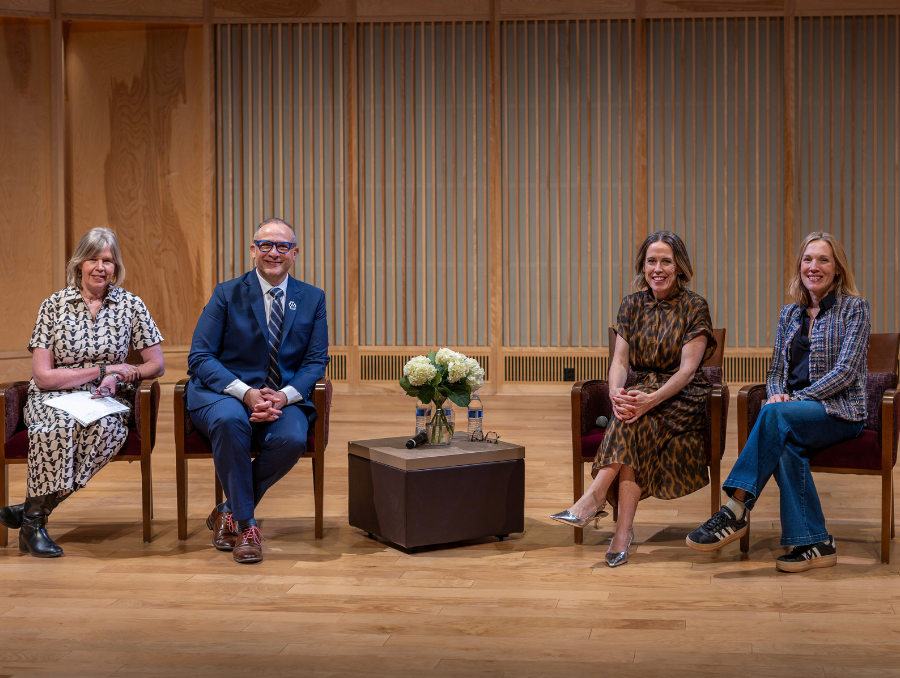
That question brought students, faculty, alumni and community members together at the University of Nevada, Reno for Poetry of Care, an evening exploring the connections between health care, the humanities and the arts.
Hosted by the Orvis School of Nursing, College of Liberal Arts and John and Geraldine Lilley Museum of Art, the Sept. 24 event featured Shirley Stephenson, Ph.D., a nurse practitioner, researcher, writer and poet-in-residence at the Institute for Research on Addictions at the University of Illinois Chicago.
Through poetry, conversation and art, Stephenson invited attendees to consider care not only as a professional responsibility, but as a shared human experience.
Stephenson is the author of Lost to Care, a collection of poems that explores care and caregiving through the experiences of a clinician navigating relationships with patients, loved ones and health care systems. Drawing on personal and professional experiences, the collection examines compassion, loss, connection, addiction, illness and the complexities of caring within imperfect institutions.
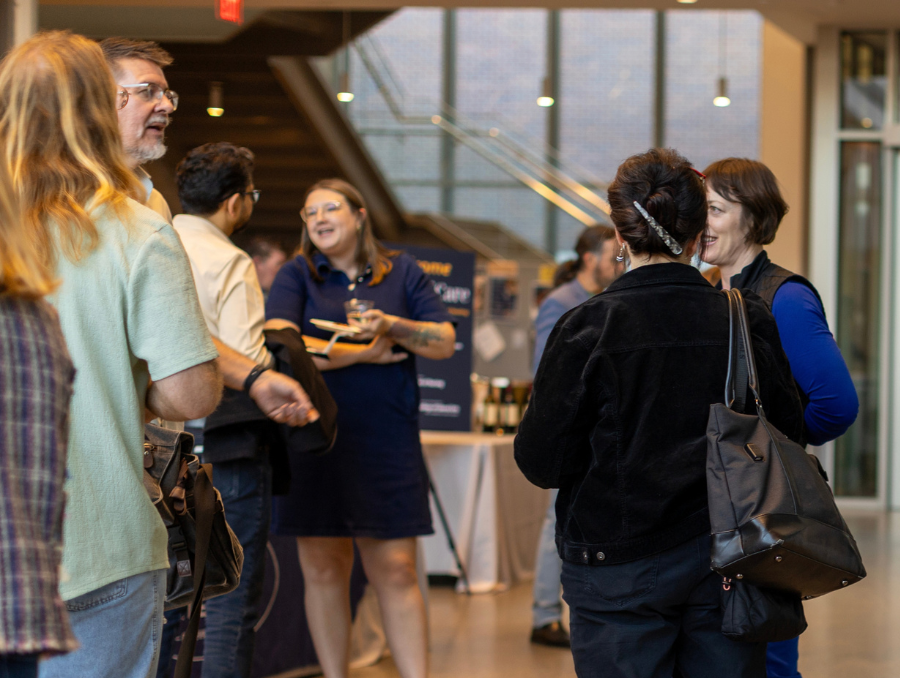
Photo courtesy of Lily Sommerfeldt.
The evening began with a reception at the John and Geraldine Lilley Museum of Art before moving to the Harlan O. & Barbara R. Hall Recital Hall.
Charles Yingling, DNP, dean of the Orvis School of Nursing; Katherine Fusco, Ph.D., chair of the Department of English; and Stephanie Gibson, M.A., director of the John and Geraldine Lilley Museum of Art, welcomed attendees and reflected on the ways health care, the humanities and the arts can inform and enrich one another.
Stephenson then shared her poetry and personal experiences, offering a perspective on care that extended beyond the clinical setting. Her presentation sparked a thoughtful conversation with attendees during a question-and-answer session, exploring the role of reflection, creativity and the humanities in understanding both the practice of health care and the people at its center.
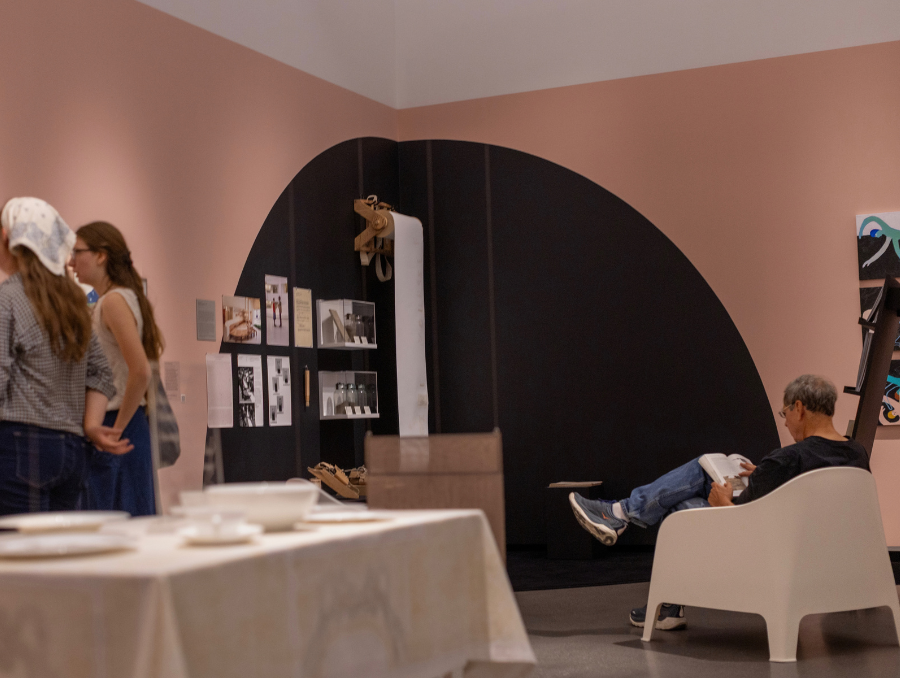
Photo courtesy of Lily Sommerfeldt.
The event concluded with curatorial tours of the John and Geraldine Lilley Museum of Art exhibitions, extending the evening’s conversation into the galleries and offering attendees another opportunity to consider the relationship between art, empathy and care.
The collaboration created a space to explore experiences central to health care that cannot always be captured through clinical knowledge alone.
Reflections from the classroom
Stephenson’s visit extended beyond the Poetry of Care event. Earlier in the week, she met with nursing students and students in an English creative writing course, bringing poetry into the classroom and encouraging students to explore another way of understanding their experiences.
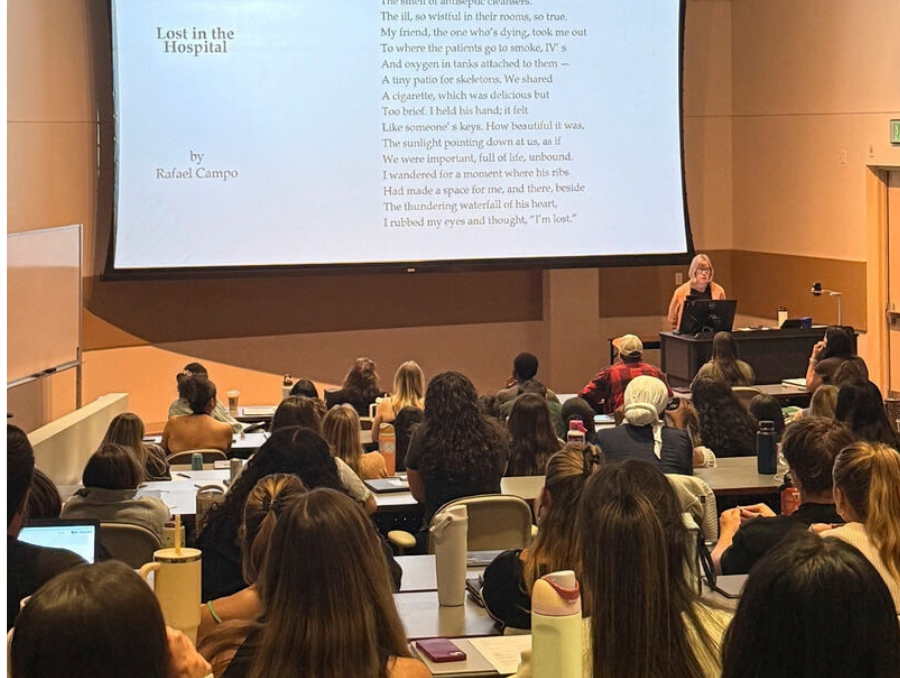
Stephenson read from her poetry before leading students through a writing exercise that encouraged them to pause, reflect and put their experiences into words. The exercise demonstrated how creative expression can offer another way to process experiences, deepen understanding and take a break from the stresses of everyday life.
For nursing students, the exercise offered an opportunity to look beyond the urgency of clinical tasks and consider the people, emotions and stories behind each patient encounter. It reinforced the importance of seeing patients as whole people and recognizing that meaningful care extends beyond clinical knowledge.
The experience reflects The Wolf Pack Way by creating space to learn, reflect and connect across disciplines and communities.


