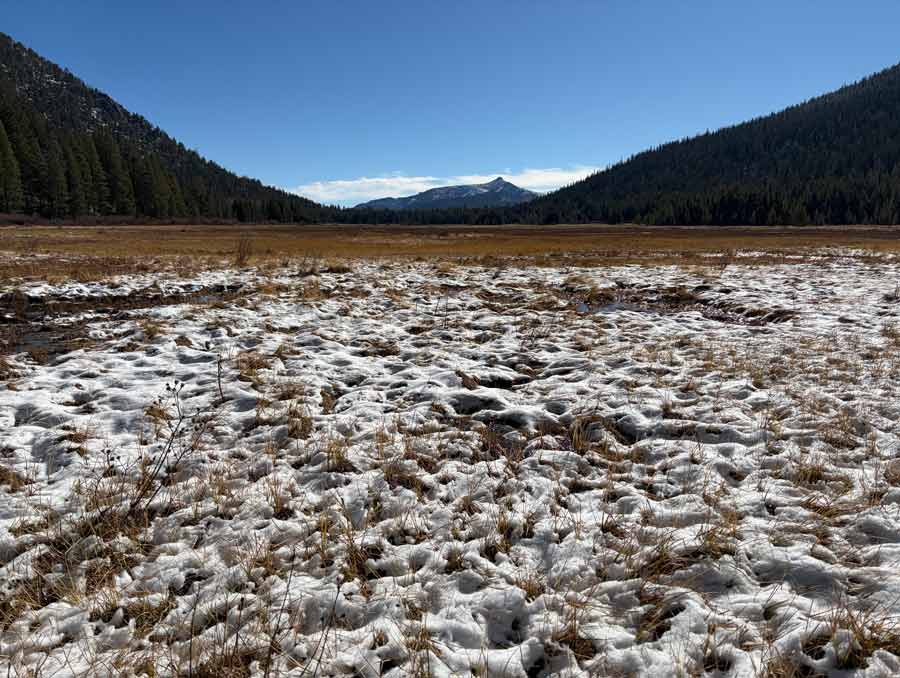
People living in and around the Sierra Nevada may be surprised to know that the mountain range has many peatlands.
“They are typically found in flat areas commonly known as meadows,” Julie Loisel, an associate professor in the Department of Geography, said.
In fact, ongoing studies performed by a team of scientists from the University found peatland deposits in the Sierra that reach 33 feet in depth, making this site one of the deepest peatlands in the United States. Peatlands, undisturbed, can store immense amounts of carbon, helping mitigate climate change. When the ecosystems are disrupted, however, they can release that carbon, contributing to climate change.
“Indeed, this peatland is one of the most carbon-dense ecosystems reported in the scientific literature, with over 10 times the amount of carbon contained in tropical rainforests,” Loisel said.
Loisel recently helped lead an effort to identify the most urgent questions related to peatlands like those in the Sierra Nevada. That effort was published this week in Nature Communications Earth & Environment.
Loisel is the co-lead of an international working group for peatland scientists, C-PEAT. This paper is a result of a meeting at which C-PEAT scientists asked how they could build toward common research goals and develop products useful to research funders, policymakers and land managers.
Loisel was on a core team of five peatland scientists spread out over three countries (the United States, the United Kingdom and Indonesia) who wanted to find the most urgent research questions facing peatland science to support the C-PEAT goals.
Alice Milner, the lead author on the paper and associate professor at Royal Holloway University of London, found papers in other fields that identified the 50 priority questions facing an area of research. Milner and the core team of coauthors decided to replicate that method and crowdsource the questions. The team wanted to survey as many peatland-focused roles as possible and analyze the submissions without biasing the results toward questions the authors themselves want to answer.
The list of over 100 coauthors reflects the support the core team had with study design, translation and distribution. The survey was translated into 20 languages and was distributed to scientists, policymakers, private industry and others.
The survey asked for some demographic data to understand the representativeness of the survey to the peatland research community, and asked respondents to provide their priority questions. The paper’s authors received over 750 questions from 467 respondents in 54 countries. The next step was distilling all the submissions to 50 questions.
“That was a process that took months,” Loisel said.
The coauthors first translated all the questions into English, then tried to identify duplicate questions and remove intractable questions. That brought the total number of questions down to 212, which were sent to a group of scientists, identified by the United Nations’ Global Peatland Initiative but not known to the paper authors, for ranking. Loisel submitted two questions: a locally relevant question she’s interested in for her research and a globally relevant question.
“The one I submitted for my research didn’t go very far,” Loisel said, laughing.
The biggest challenge, she said, was making sure that the questions represented the field well. A fisher in Indonesia concerned with survival of endemic species as habitats are degraded may not be interested in peatland protection in Poland and vice versa.
“Every question is important,” Loisel said.
What will it take to answer the 50 questions featured in the paper?
“Time, money and passion,” Loisel said, along with “more data.”
Global peatland extents are uncertain, so one of the key tasks will be to determine where peatlands are and aren’t.
“If you want to understand methane cycling in tropical wetlands, you need to have teams that go in the field, gather data,” she said. “And then you need modelers who can look at this data. And then you need remote sensing specialists who can scale up the data. You need all the different tiers of analysis.”
The questions were sorted into five themes, two of which Loisel is most excited to explore: peatland carbon dynamics and climate regulation, and peatland management and restoration.
Loisel’s research group is well-equipped to study the first theme, having mapped tropical peatlands and studied their carbon sequestration capacity. Their studies on peatlands in the Sierra Nevada will continue to explore the ecosystem’s extent.
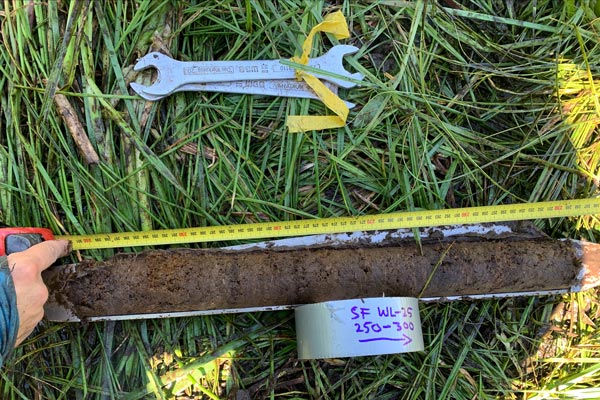
Peatlands can either be a carbon sink or a carbon source, depending on how the landscapes are modified.
“In the Sierra, we think about one percent of the land is covered by peatlands, though we need better maps and a lot of field work to confirm the presence of peatlands and get to know them better,” Loisel said.
She and her coauthors hope that this list of questions can help researchers earn funding to address the most pressing matters, and that the list can connect people working on similar problems.


