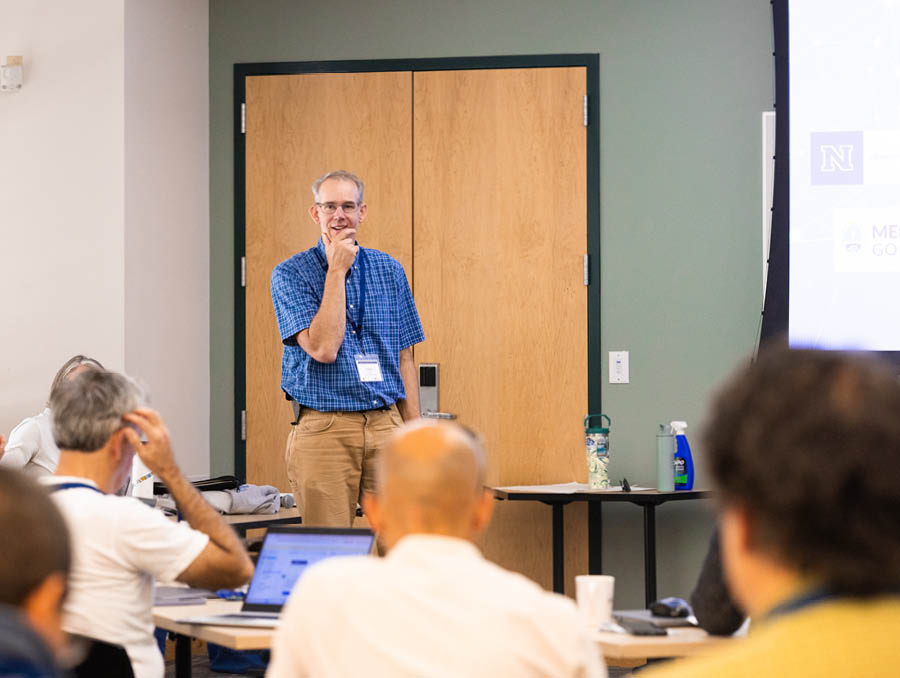
High-elevation regions across the globe, including at Lake Tahoe, are facing a growing number of challenges from a warming climate. Retreating glaciers and snowpacks are forcing mountain communities and ecosystems to reckon with both extremes: flooding from rapid melt today, and water scarcity as reserves go unreplenished tomorrow. In a workshop at the University of Nevada, Reno at Lake Tahoe, University scientists alongside global experts worked to collaboratively address these threats along with solutions.
“High-elevation regions serve as critical water towers that sustain billions of people and countless ecosystems downstream,” said Baker Perry, Ph.D., National Geographic Explorer, professor of climatology and the Nevada State Climatologist in the Department of Geography at the University of Nevada, Reno. “But we know very little about the past and current climates at the highest reaches of our own planet, leaving big gaps in our scientific understanding and ability to project future water resource availability in some of the most vulnerable places in the world.”
From June 1-4, Perry and Julie Loisel, Ph.D., who is also a National Geographic Explorer and associate professor in the Department of Geography at the University, gathered the world’s foremost high-elevation climate scientists, including representatives from institutions located in high-elevation communities of the Andes, Alps, Karakoram and Himalaya Mountains, industry representatives from Campbell Scientific and Kipp & Zonen, and early-career and graduate students investigating high-elevation climate science topics.
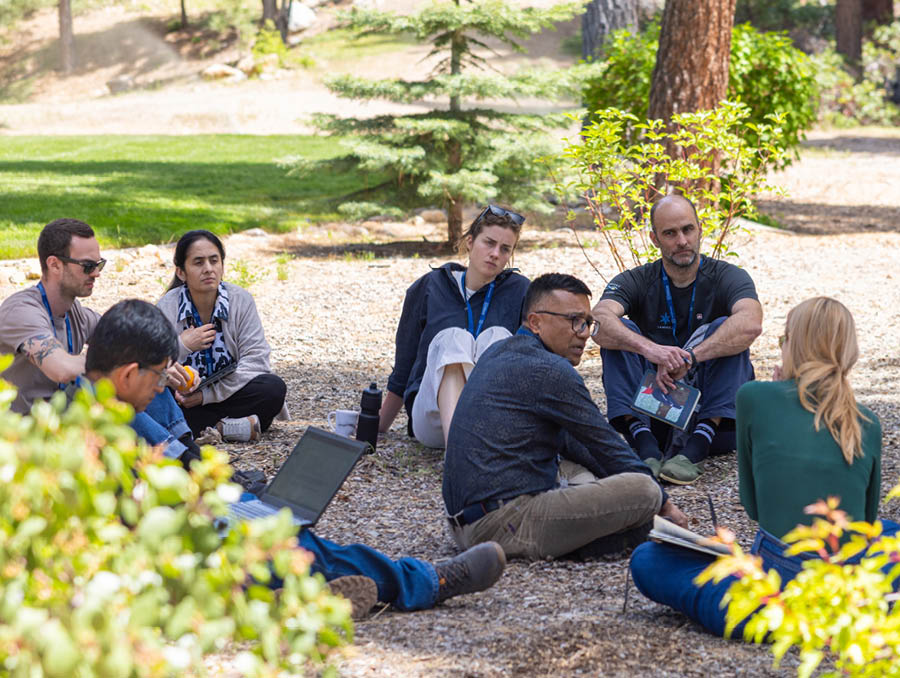
“The Tahoe campus was the perfect place to host the workshop – with dedicated meeting, dining, and lodging space in close proximity,” said Perry. “Afternoon outings to the mountains and lake provided ample opportunities to enjoy the natural landscape and helped to facilitate deep discussion among participants.”
Together, international and interdisciplinary collaborators worked to identify and discuss the fundamental challenges facing global high-elevation communities, find gaps in current research and develop the framework for a comprehensive peer-reviewed article that addresses surprises, challenges and solutions in high-elevation mountain regions. Critical to this meeting was representation from international researchers in low-income mountain countries, many of whom are experiencing the effects of high-elevation warming firsthand. By centering their perspectives, the team of scientists was able to address contemporary issues that are happening today and work toward actionable solutions for the future.
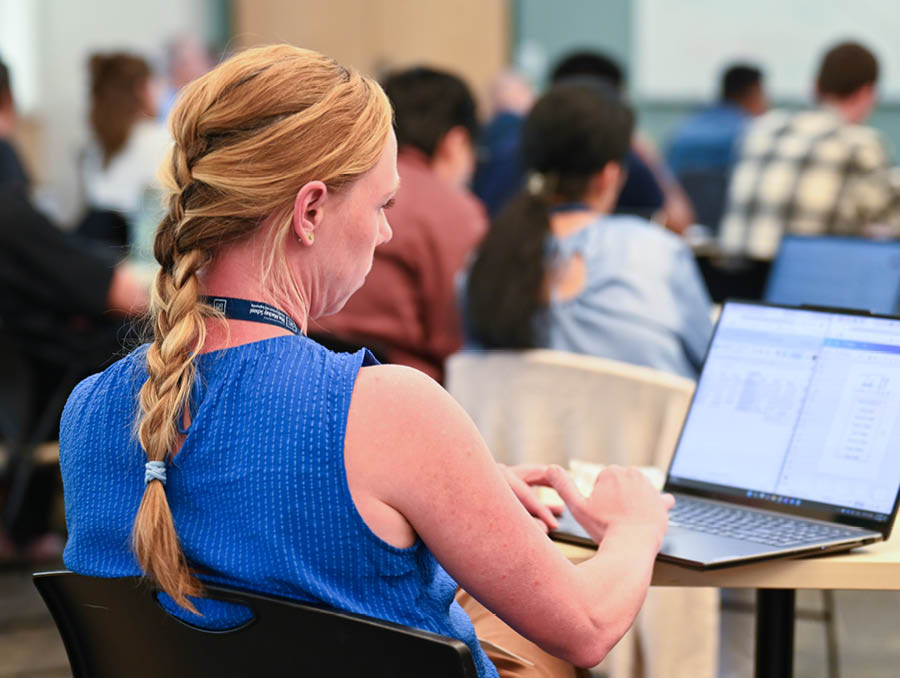
“What is exciting about this workshop is its emphasis not only on advancing scientific understanding but also on building networks of collaboration, mentorship and shared data that will extend well beyond these few days together,” said Louisa Hope-Weeks, Ph.D., dean of the College of Science at the University. “The intentional inclusion of international partners, early-career scientists, and interdisciplinary perspectives speaks to the kind of community we must build to tackle complex global challenges.”
The workshop also directly addressed important scientific questions related to Lake Tahoe and the Sierra Nevada, including the importance of high-quality observations of precipitation amount and type (e.g., rain vs. snow), understanding extreme events such as atmospheric rivers and improving the modeling of mountain weather and snowpacks. High-elevation mountain communities, including those at Tahoe, will ultimately benefit from the interdisciplinary and international collaborations that will improve understanding of the current climate and enable better projections of future climate and water resource availability.
"The workshop brought together scientists with complementary expertise, with some studying past climates from ice, lake and peat core records from the high-elevation regions, others focusing on current-day monitoring stations and integrating modeling knowledge into forecast future cryosphere changes,” said Loisel. “Interdisciplinary experts don’t often get a chance to talk shop and exchange notes. This is extremely valuable, because they all see different aspects of the issue.”
This workshop was made possible by sponsors including the Heising-Simons Foundation, National Geographic Society, Campbell Scientific, Kipp & Zonen, RM Young, Furtenbach Adventures, and the University of Nevada, Reno.


