Mountain snow and glaciers may seem distant from the cities, farms, and communities that depend on them, but these high-elevation regions store and release water for populations far downstream. When precipitation changes, snowlines rise, or glaciers retreat, the effects can move through entire watersheds.
And while scientists know these mountain water systems are changing, they cannot always determine how quickly or what those changes mean for future water supplies.
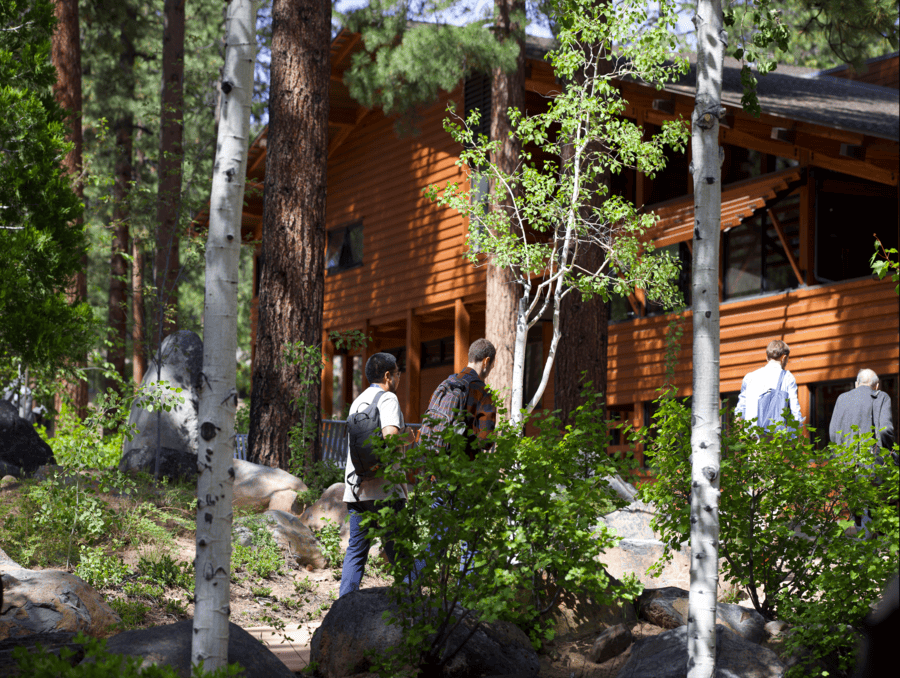
The shortage of observations shaped the High-Elevation Climate Science Workshop, held in early June at the University of Nevada, Reno at Lake Tahoe.
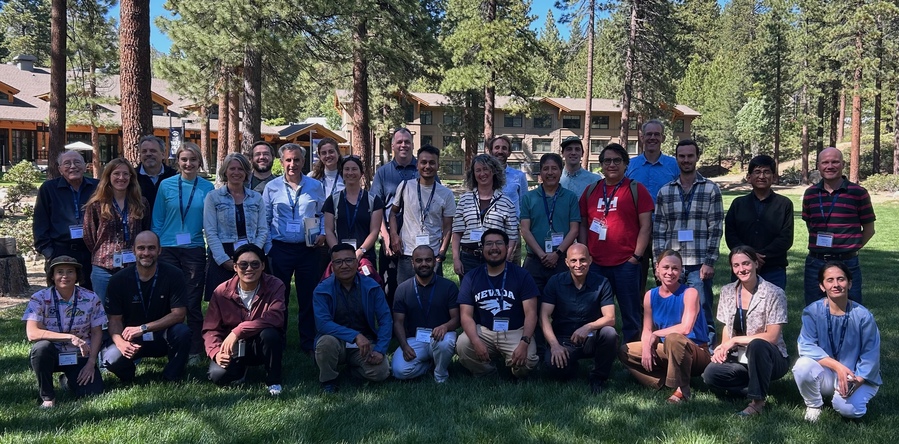 Participants in the High Elevation Climate Conference at University of Nevada, Reno at Lake Tahoe.
 Four University graduate students, Ludving Cano Fernandez, Navaraj Pokhrel, Iram Bano and Kristina Priotto, presented research on mountain environments in Bolivia, Nepal, Pakistan, Peru and the nearby Sierra Nevada.
For Fernandez, an atmospheric sciences doctoral student, the workshop’s location was integral to the overall experience.
“It was the perfect venue for a workshop like this,” Fernandez said. “You are in contact with nature. You are literally on a mountain.”
The students exchanged ideas with internationally recognized scientists, including Lonnie G. Thompson, a pioneer in high-elevation ice-core research and Distinguished University Professor in the School of Earth Sciences at The Ohio State University. Other participants included Alison Criscitiello of the Canadian Ice Core Lab and Anne Heggli, a mountain hydrometeorology researcher at the Desert Research Institute.
"This workshop reflects the kind of high-impact, hands-on learning we want for our graduate students," said University Executive Vice President and Provost Jeff Thompson. "The Lake Tahoe campus provides an unparalleled environment where students can engage with complex global challenges alongside leading researchers from around the world."
Baker Perry, Nevada state climatologist and professor of climatology, was intentional when putting on the conference.
“From my perspective, a motivation to bring people here for the workshop is not only for them to connect but for our graduate students to connect and get feedback in the research directions they are headed in," he said. "Some of these people may end up being committee members for these graduate students.”
Each of the graduate students arrived at the workshop with a distinct research focus and perspective on the challenges facing high-elevation environments.
Ludving Cano Fernandez
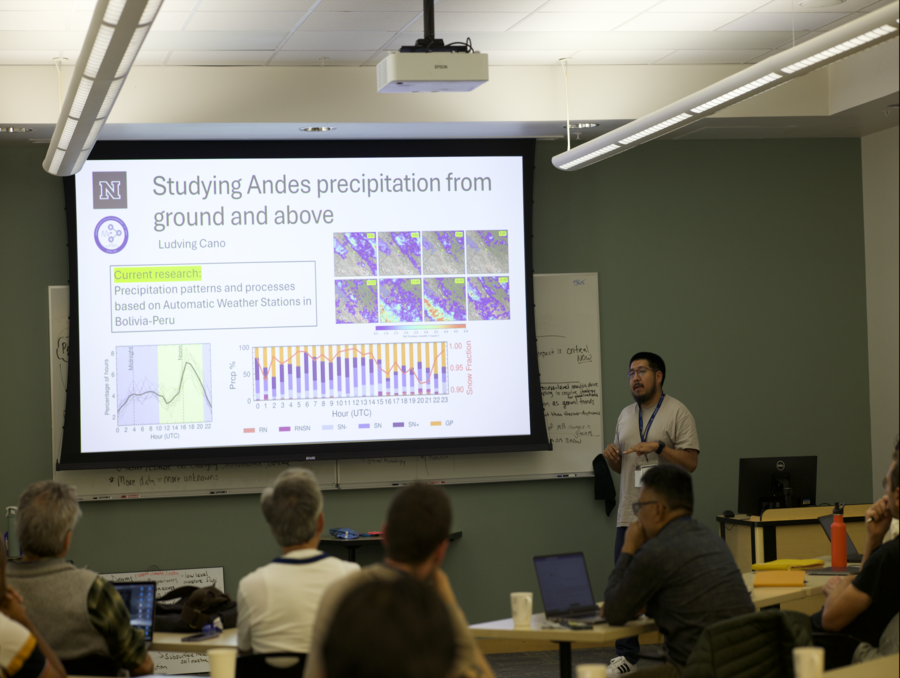
Ludving Cano Fernandez during his presentation on the Lake Tahoe campus.
Fernandez earned a bachelor’s degree in physics from Universidad Mayor de San Andrés in Bolivia before working at the Laboratory for Atmospheric Physics at the Global Atmospheric Watch station on Mount Chacaltaya. There, he conducted research on aerosol transport, LiDAR, remote sensing and meteorology in a high-mountain environment.
Fernandez now works with Perry to better understand precipitation and global solar radiation in high-elevation environments, where long-term observations remain limited.
“It’s super important to have a meeting with state-of-the-art scientists who work in mountains from every perspective possible, from glaciers to climate to modeling,” Fernandez said.
Iram Bano
For Bano, a hydrology doctoral student from Pakistan, the workshop’s focus connected directly to both her research and her background. She studies snow, glaciers, glacio-hydrological modeling, and the communities that depend on glacier-fed river basins.
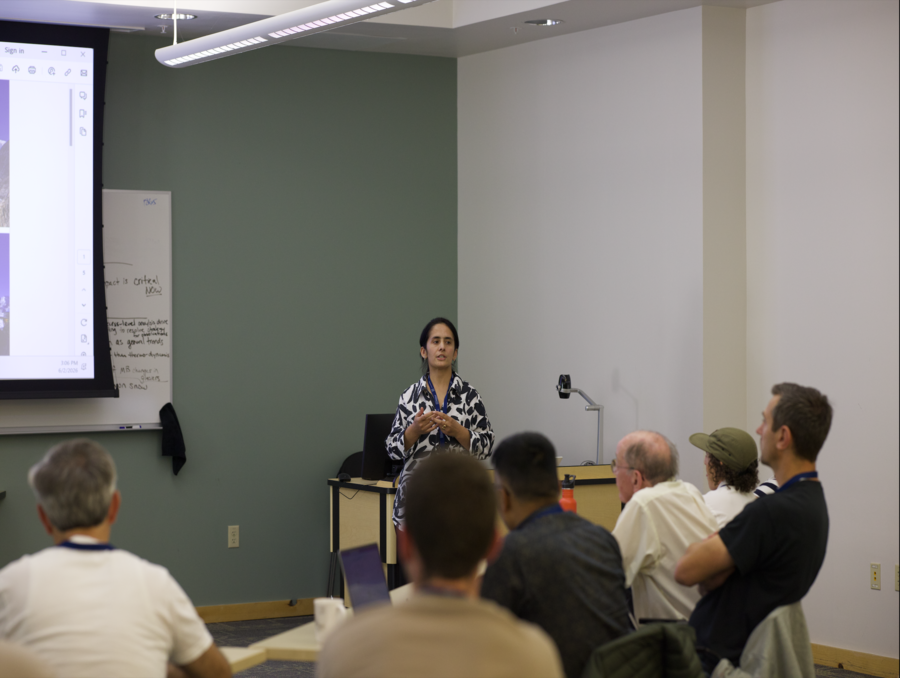
“I come from the high mountain region of Pakistan, and I work on snow and glaciers, so this workshop is very relevant to my research,” Bano said.
Conversations with modelers, field observers and hydrologists gave her an opportunity to consider how researchers in different mountain regions approach similar scientific questions.
“I come from the high mountain region of Pakistan, and I work on snow and glaciers, so this workshop is very relevant to my research."
She also saw a connection between the workshop’s subject and its setting.
“Mountains and the lake surround the Lake Tahoe campus, so it is closely connected to the mountain environments I study.”
Navaraj Pokhrel
Pokhrel, a geography doctoral student from Nepal, studies precipitation and cryosphere interactions in the Himalayas. His work considers how hydroclimatic extremes affect glacier mass balance, mountain hazards and water resources. He also installs and maintains high-elevation weather stations and radar systems.
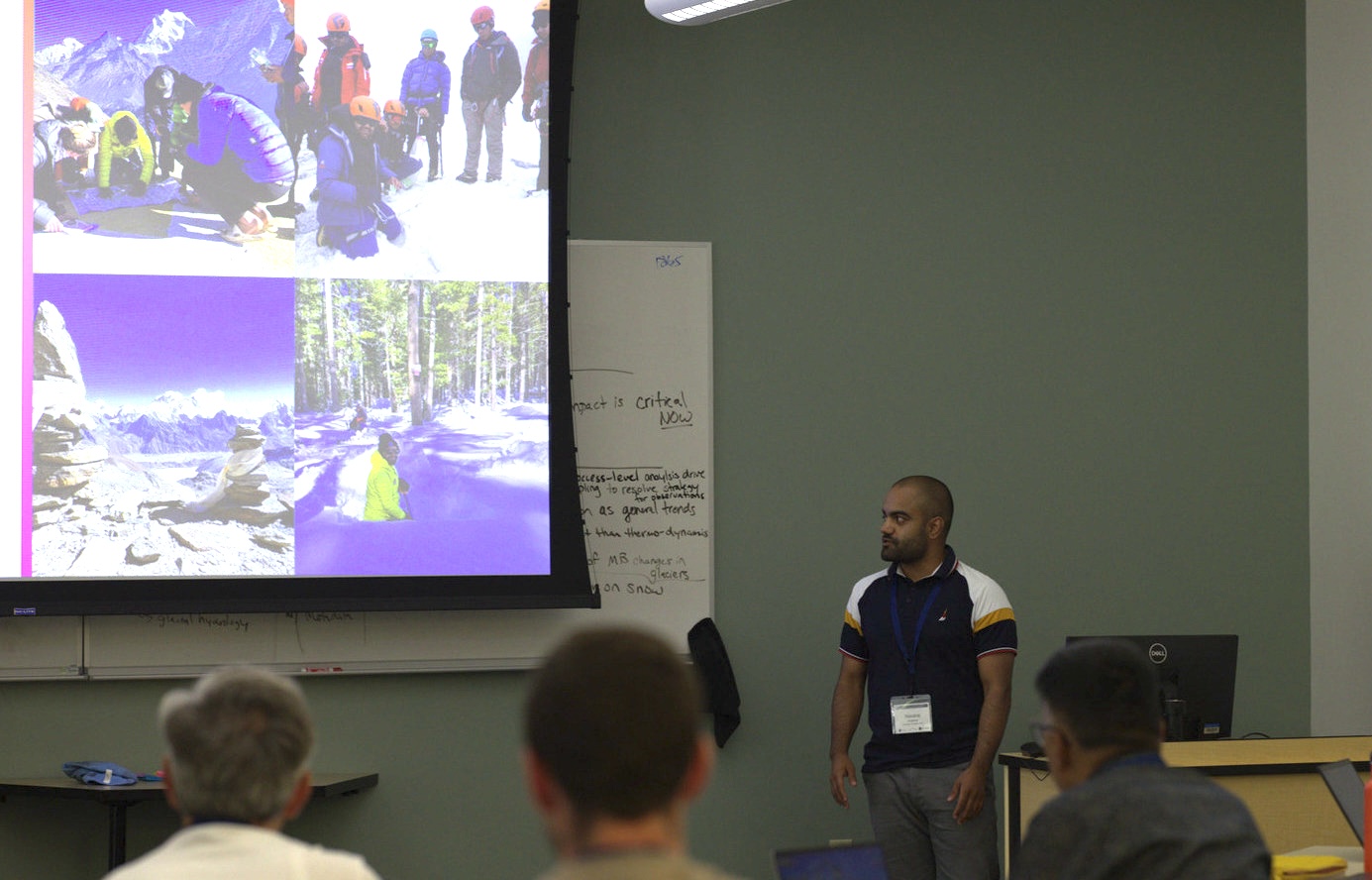 Navaraj Pokrel presents his research on the Lake Tahoe campus.
“The mountains are among the most vulnerable places, and they are being deeply affected by climate change,” Pokhrel said. “Mountains give us many signals about what is happening around the world.”
As an early-career researcher, Pokhrel also saw the workshop as a chance to form relationships that could guide future work.
“For me, it is really important to learn and build a network with people from around the world."
“For me, it is really important to learn and build a network with people from around the world,” he said.
Kristina Priotto
Kristina Priotto, a master’s student in geography, is preparing for fieldwork in northern Peru, where she will study acid rock drainage in watersheds affected by glacial retreat. As glaciers recede, sulfide-rich rock can become exposed to air and meltwater, releasing metals and other contaminants downstream.
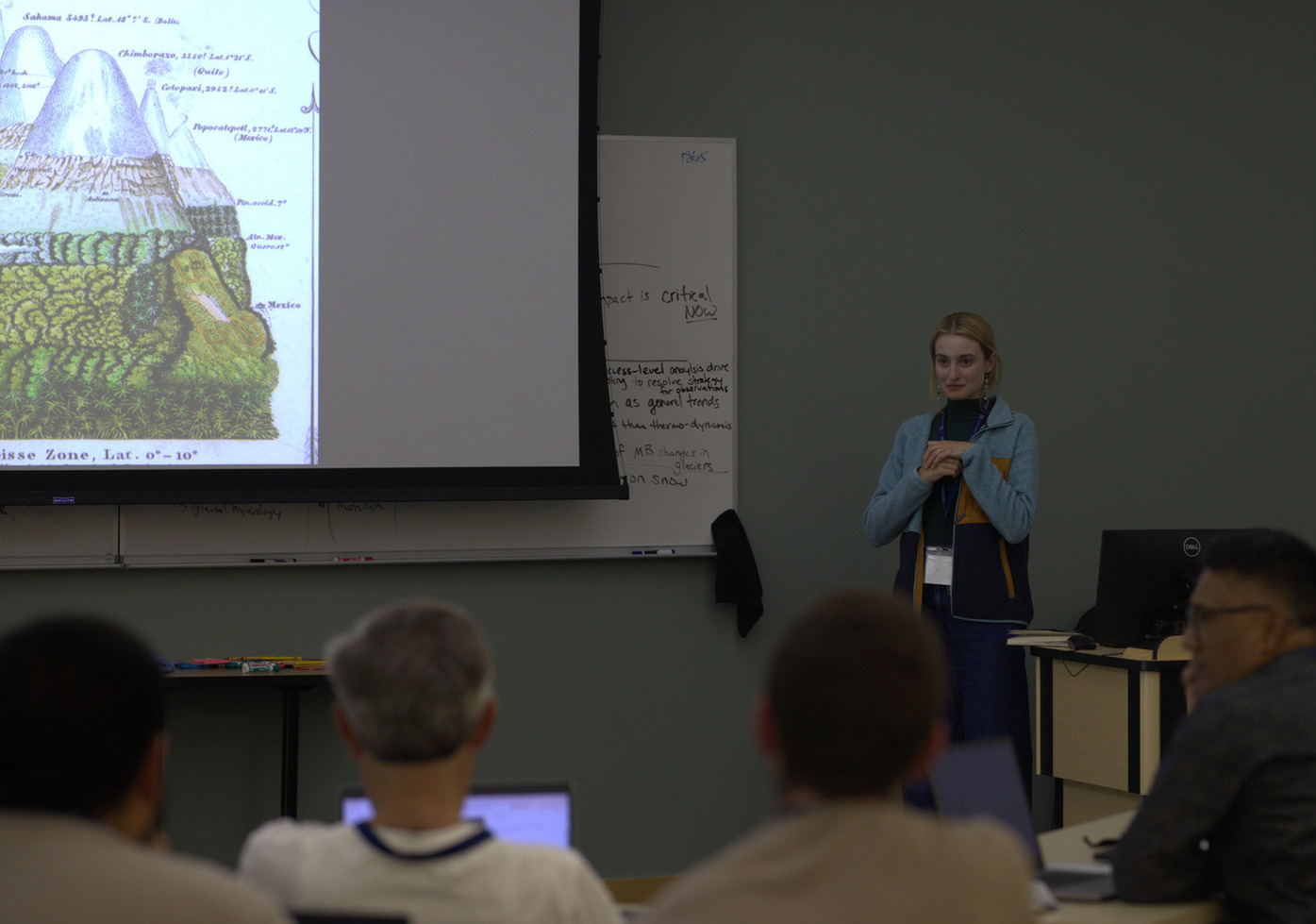
Priotto plans to collect peat and water samples while examining whether high-altitude wetlands known as bofedales can retain some of those contaminants.
“Data just looks different at higher elevations,” Priotto said. “There are so many other constraints that have to be taken into account. Elevation is one of them.”
The workshop gave her access to scientists studying the cryosphere across regions and disciplines.
“I have been really lucky to become exposed to this fantastic international group of scholars and their work,” she said.
Opportunities for conversation continued beyond the formal workshop sessions. The schedule included optional hikes, including an outing toward Rose Knob Peak, as well as an evening at Sand Harbor State Park.
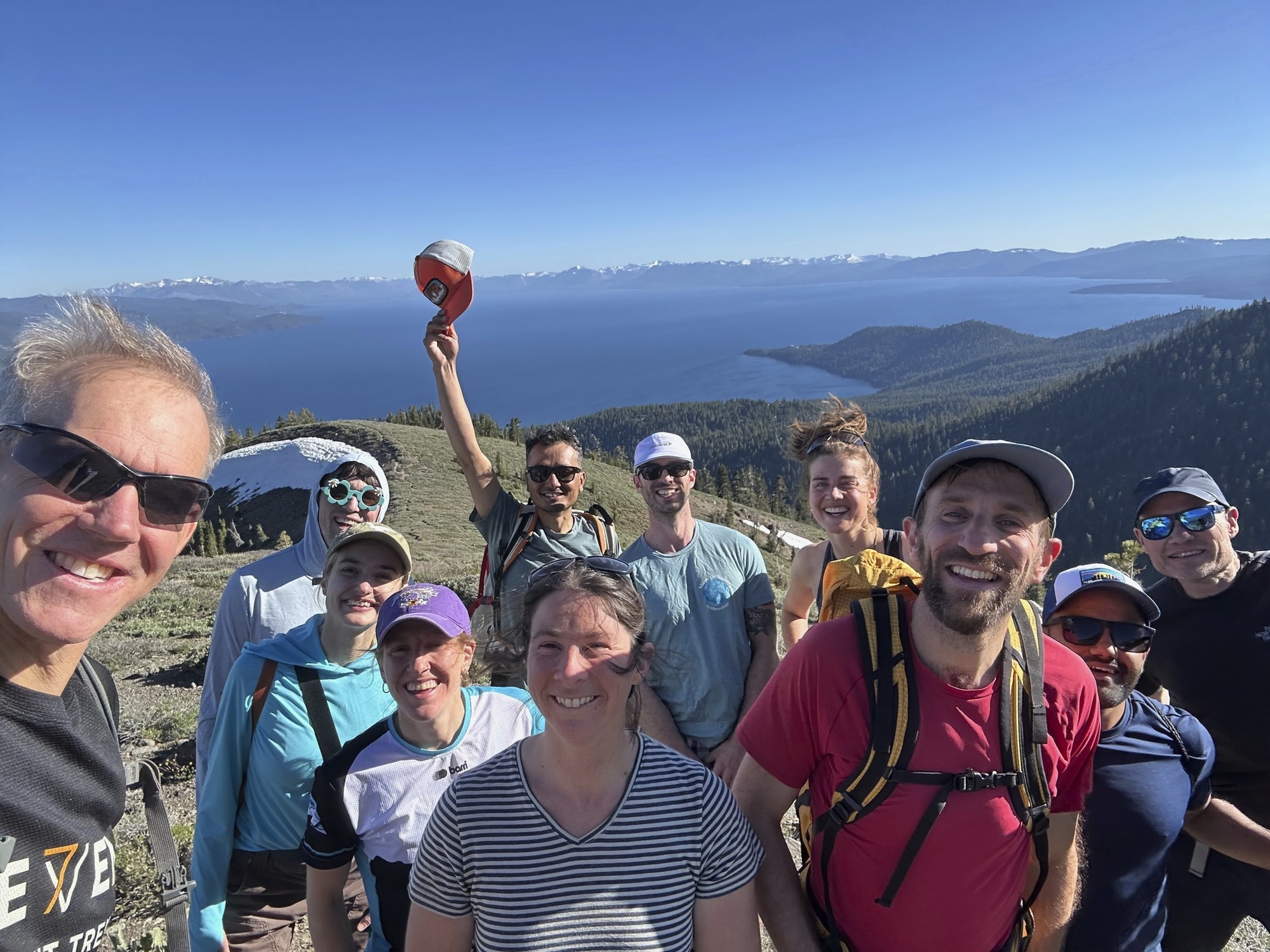
Conference participants spent time together after sessions indoors to enjoy the Lake Tahoe area.
Participants also attended a screening of the 2023 documentary “Canary,” which follows Thompson’s career studying high-elevation glaciers and recovering ice-core records that document changes in Earth’s climate.
Thompson participated in the workshop and emphasized that the exchange of knowledge moved in both directions.
“I’m really learning a lot from the younger generation, the people who are studying weather and climate and monitoring in these high-elevation zones,” Thompson said.
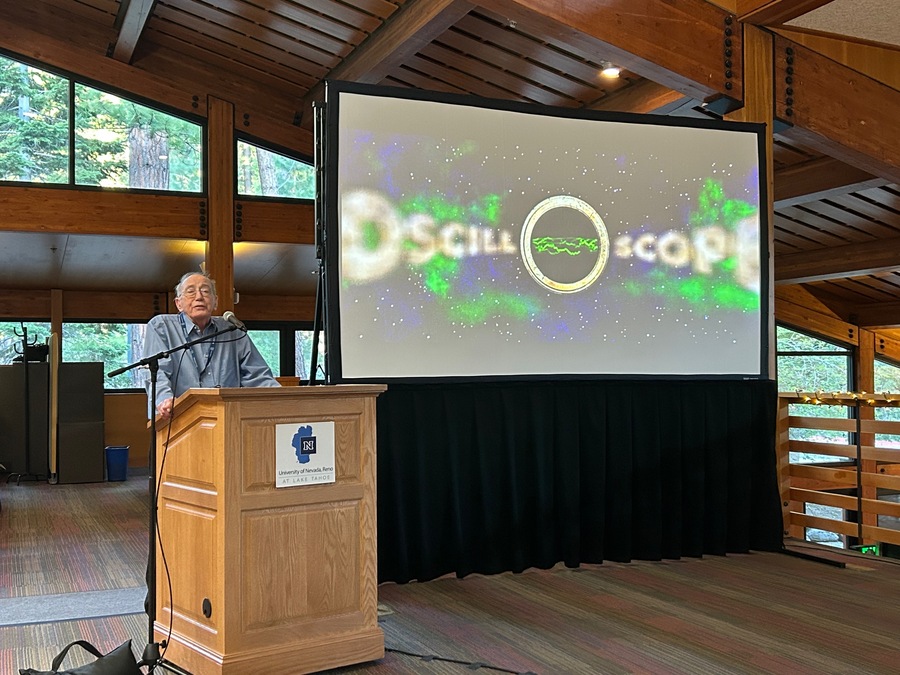
Perry’s work in the Andes and the Himalayas has focused on improving scientific observations in some of the world’s highest mountain environments. He has also co-led expeditions to install high-altitude weather stations on Mount Everest through partnerships involving the National Geographic Society, the Government of Nepal, Tribhuvan University and Appalachian State University.
“The past can inform how climate may change in the future,” Perry said. “What has happened in the past can help us make better projections for the future and better calibrate those models. We simply have not had the observations to understand what is happening right now.”
As scientists work to close gaps in observations of rapidly changing mountain environments, the next generation of researchers will help determine what is measured, which questions are asked and how knowledge moves from one mountain region to another.
Supporters for the workshop included the University of Nevada, Reno at Lake Tahoe, the National Geographic Society, Campbell Scientific, the Mackay School of Earth Sciences and Engineering at the University, R. M. Young Company, Furtenbach Adventures and Kipp & Zonen. The National Geographic Society’s involvement built on its broader support for high-elevation science and its history of collaboration with Perry’s research on Mount Everest.


