For Emma de la Torre, public health research is not abstract. It is personal.
During her first year working at a summer camp in Southern Colorado, de la Torre survived a traumatic accident that would shape her academic path and career goals. Six weeks into the job, she was run over by a van, sustaining a severe degloving injury to her right leg. The injury, categorized and treated similarly to a burn, required extensive surgical intervention and long-term recovery.
De la Torre underwent 10 surgeries in the immediate aftermath of the injury, spending weeks in a burn unit in Denver and months in rehabilitation. She has since undergone 16 surgeries in total and continues ongoing follow-up care.
“That experience changed how I think about medicine and access,” de la Torre said. “I started asking why outcomes can look so different depending on where you are and who you are.”
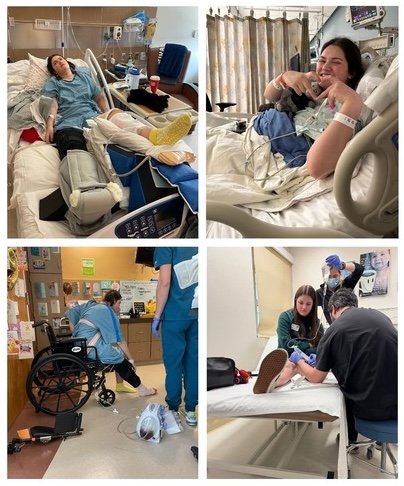
After returning to Reno, she struggled to find clinicians familiar with her level of injury. It took nearly a year before she was referred to a specialized burn center in Northern California.
The delay sharpened her awareness of disparities in access to care, even within the United States, and sparked questions that would later become the foundation of her undergraduate research.
“I had access to care, and even then, it was hard to find the right specialists,” de la Torre said. “That made me start thinking about what happens in places where those resources don’t exist at all."
Now a public health major at the University of Nevada, Reno School of Public Health, de la Torre is studying how gender-related inequities influence access to secondary burn care and how that access affects long-term disability outcomes globally. Her research focuses on South Asia, where disparities are particularly pronounced.
“I understand how frustrating it is not to have answers,” de la Torre said. “That’s what is motivating me to ask these questions and try to improve care for others.”
The project is still in its early stages and focuses on building a clearer understanding of how gender and access to care may shape long-term outcomes for burn survivors.
Working under the mentorship of Ann Weber, Ph.D., MPH, assistant professor of epidemiology, de la Torre is collaborating with fellow undergraduate student Janan Cimic and MPH student Beatrice Gyampo on the project. Together, the team is using data from the Global Burden of Disease Study to explore patterns in thermal burn injuries in countries including India and Pakistan.
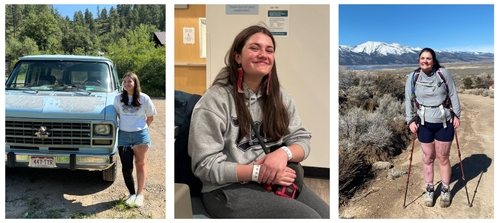
The collaboration highlights how undergraduate and graduate students work alongside faculty on active research, contributing to questions that extend beyond the classroom.
Existing research points to significant gender disparities in burn outcomes globally. In countries such as Pakistan, women are reported to experience higher mortality rates following burn injuries compared to men. While biological differences may play a role, the gap is widely understood to be influenced by social and structural factors, including access to care, education and health care infrastructure.
De la Torre’s work focuses on years lived with disability, a measure used in public health to understand how illness and injuries affect quality of life over time. Her research is exploring how access to specialized burn care may influence recovery, particularly for women in regions where resources are limited and gender norms may restrict women’s access to the care that is available.
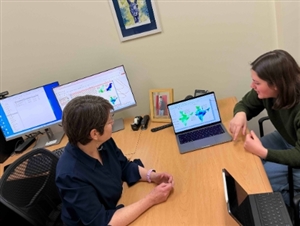 Ann Weber and Emma de la Torre meet to review data as part of an ongoing research project on global burn care.
 To support the project, de la Torre received a Nevada Undergraduate Research Award (NURA), a competitive faculty-mentored program at the University of Nevada, Reno that provides funding for undergraduate students to conduct original research. The award supports project development, data analysis and dissemination of findings, allowing students to move beyond classroom assignments and contribute to scholarly work. For de la Torre, the funding helped deepen the scope of the project and move the research forward.
“Emma’s research into sex-related disparities in disability among burn survivors is unique and, to my knowledge, an unexplored area in global health,” said Ann Weber, Ph.D., MPH, associate professor and faculty advisor at the University of Nevada, Reno School of Public Health. “My hope is that this experience will help prepare Emma to recognize, design and evaluate health policies that are responsive, evidence-based, and equitable – both globally and within the local communities that she serves.”
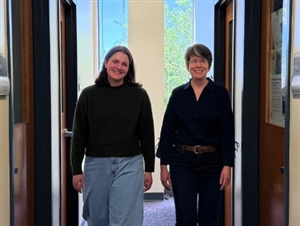 Emma de la Torre and Dr. Ann Weber.
For de la Torre, the work is both academic and deeply personal. She plans to pursue a Master of Public Health in health policy before attending medical school, with the long-term goal of becoming a burn and reconstructive surgeon.
“I see public health as action,” she said. “It’s a way to directly improve people’s lives.”
At Nevada, she has found the mentorship, funding and flexibility needed to turn lived experience into meaningful research questions with possible global relevance.
While the research is ongoing, her work reflects how undergraduate students at Nevada are contributing to complex public health questions that extend far beyond the classroom.


